Tarzan
Does this age rating seem accurate to you?
Detailed parental analysis
Tarzan is a Disney animated film with a contrasting atmosphere, blending exhilarating adventure sequences and moments of genuine emotional intensity that often exceed the expected register of family animation. The plot follows a human child raised by gorillas in the African jungle, whose world is upended by the arrival of explorers from the outside. The film appears to be aimed at young children, but its dramatic treatment makes it better suited to school-age children and their parents.
Violence
Violence is the most striking element of the film and the one that justifies the greatest precautions. From the opening minutes, a leopard kills Tarzan's biological parents and a baby gorilla: the bodies are shown, with visible blood, in a silent scene that makes a strong impact. A prolonged fight between adult Tarzan and this same leopard, above the water, is physically intense and visually aggressive. Later, the gorilla chief Kerchak is shot and dies on screen. The death of hunter Clayton, involuntarily hanged in the vines as a consequence of his own actions, constitutes the film's most graphic scene: whilst the death itself is suggested off-screen, the image of the silhouette suspended in darkness is striking for a young child. The violence is not gratuitous and serves a clear narrative logic of consequences and moral responsibility, but its emotional intensity is real and can leave a lasting mark on the youngest viewers.
Parental and Family Portrayals
The film opens with a double parental loss and builds its entire narrative around grief and family substitution. The gorilla mother Kala adopts Tarzan with unconditional tenderness, conveying a powerful message about chosen family and love that transcends difference. Kerchak, the gorilla father, embodies a distant and wary authority whose final acceptance, just before his death, constitutes one of the film's most emotionally weighted moments. The opening sequence, with the discovery of the biological parents' bodies, establishes from the outset a climate of loss that weighs on the entire narrative. These portrayals are rich and conducive to discussion, but the accumulation of failing or lost parental figures can resonate intensely for children sensitive to these themes.
Underlying Values
The film carries solid and clearly articulated values: belonging is constructed through emotional bonds rather than appearance or origin, and courage is manifested in the protection of loved ones rather than in conquest. Tarzan's quest for identity, torn between two worlds without fully belonging to either, is treated with genuine depth. Personal sacrifice and loyalty to the community are valued consistently throughout. The antagonist embodies a predatory and mercenary vision of nature, which gives the film an implicit ecological dimension without ever tipping into didacticism.
Discrimination
Jane is presented as a competent, curious and courageous scientist, which significantly nuances the occasional damsel-in-distress reflexes that the narrative lends her at times. The film does not entirely resolve this tension: Jane is an agent of her own story in many scenes, but the pattern of masculine protection reappears regularly. This is a concrete point to highlight with a child or adolescent to open a conversation about how female characters are constructed, even in narratives that aim to be progressive.
Sex and Nudity
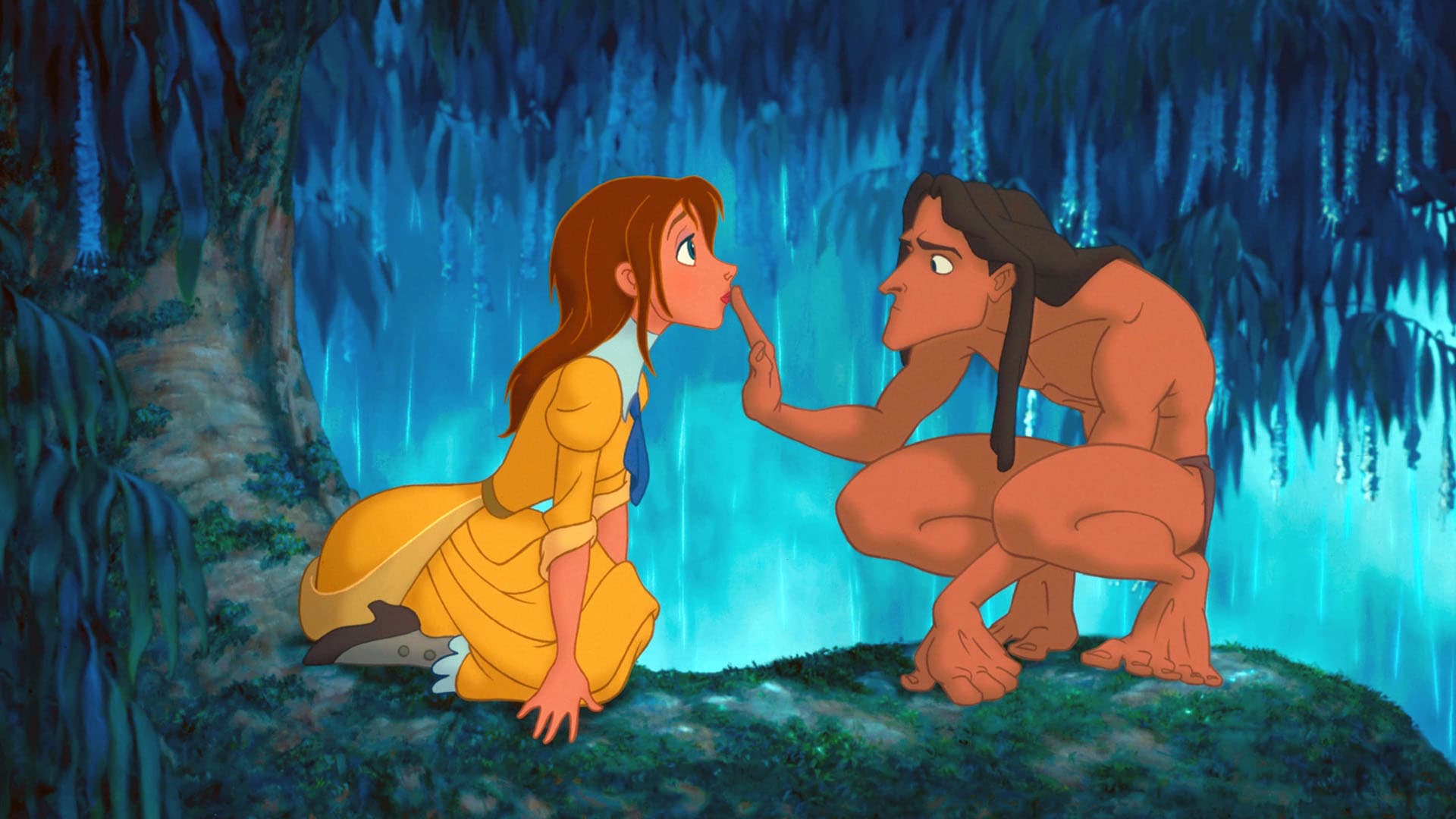
A brief scene shows Tarzan, out of naive curiosity and without sexual intent, attempting to explore under Jane's dress and bringing his face close to her chest. The scene is played as humorous and coded as animal innocence rather than as sexual behaviour. It remains incidental to the film's narrative economy, but may surprise a parent on first viewing.
Social Themes
The film portrays African nature as a space to be preserved against human exploitation and animal captivity. The scene of gorillas being captured in nets, with their cries of distress, is visually and emotionally intense and carries a clear message about the violence inflicted on wild animals. This thread offers a natural entry point to discuss with a child the relationship between humans and the animal world.
Strengths
The animation is of remarkable fluidity, particularly in scenes of Tarzan moving through the canopy, where movement and the film score come together with a precision that gives the film genuine cinematic energy. The emotional construction is more ambitious than the majority of mainstream animated films of its era: the film does not simplify the pain of rejection or grief, and trusts its young audience to absorb complex emotions. The relationship between Tarzan and Kala constitutes one of the most moving portrayals of maternal love in Disney animation, without facile sentimentality. The themes of identity and belonging are treated with sufficient narrative coherence to leave matter for reflection long after the credits roll.
Age recommendation and discussion points
The film is not recommended for children under 7 years old due to the emotional and visual violence of the opening and closing sequences, which can leave a lasting mark on sensitive children. From 7 or 8 years old, with a parent available to support their reactions, viewing is entirely appropriate. Two angles of discussion merit being opened after the film: what makes a family a real family, beyond blood and appearance, and why certain humans in the film choose to capture and exploit animals rather than observe them.
Synopsis
Tarzan was a small orphan who was raised by an ape named Kala since he was a child. He believed that this was his family, but on an expedition Jane Porter is rescued by Tarzan. He then finds out that he's human. Now Tarzan must make the decision as to which family he should belong to...
About this title
- Format
- Feature film
- Year
- 1999
- Runtime
- 1h 28m
- Countries
- United States of America
- Original language
- EN
- Studios
- Walt Disney Pictures, Edgar Rice Burroughs Inc., Walt Disney Feature Animation
Content barometer
- Violence3/5Notable
- Fear4/5Intense
- Sexuality1/5Allusions
- Language0/5None
- Narrative complexity1/5Accessible
- Adult themes0/5None
Values conveyed
- Courage
- Acceptance of difference
- Loyalty
- friendship
- belonging
- perseverance