Tales from Earthsea
ゲド戦記
Does this age rating seem accurate to you?
Detailed parental analysis
Tales from Earthsea is a fantasy animated film with a heavy and melancholic atmosphere, notably darker than the average mainstream animated production. The plot follows a young prince on the run who teams up with a wandering wizard to confront a mysterious evil threatening the balance of the world. The film is aimed at a teenage and adult audience, and will perplex or cause anxiety in younger children both through its contemplative pacing and certain scenes of violence.
Violence
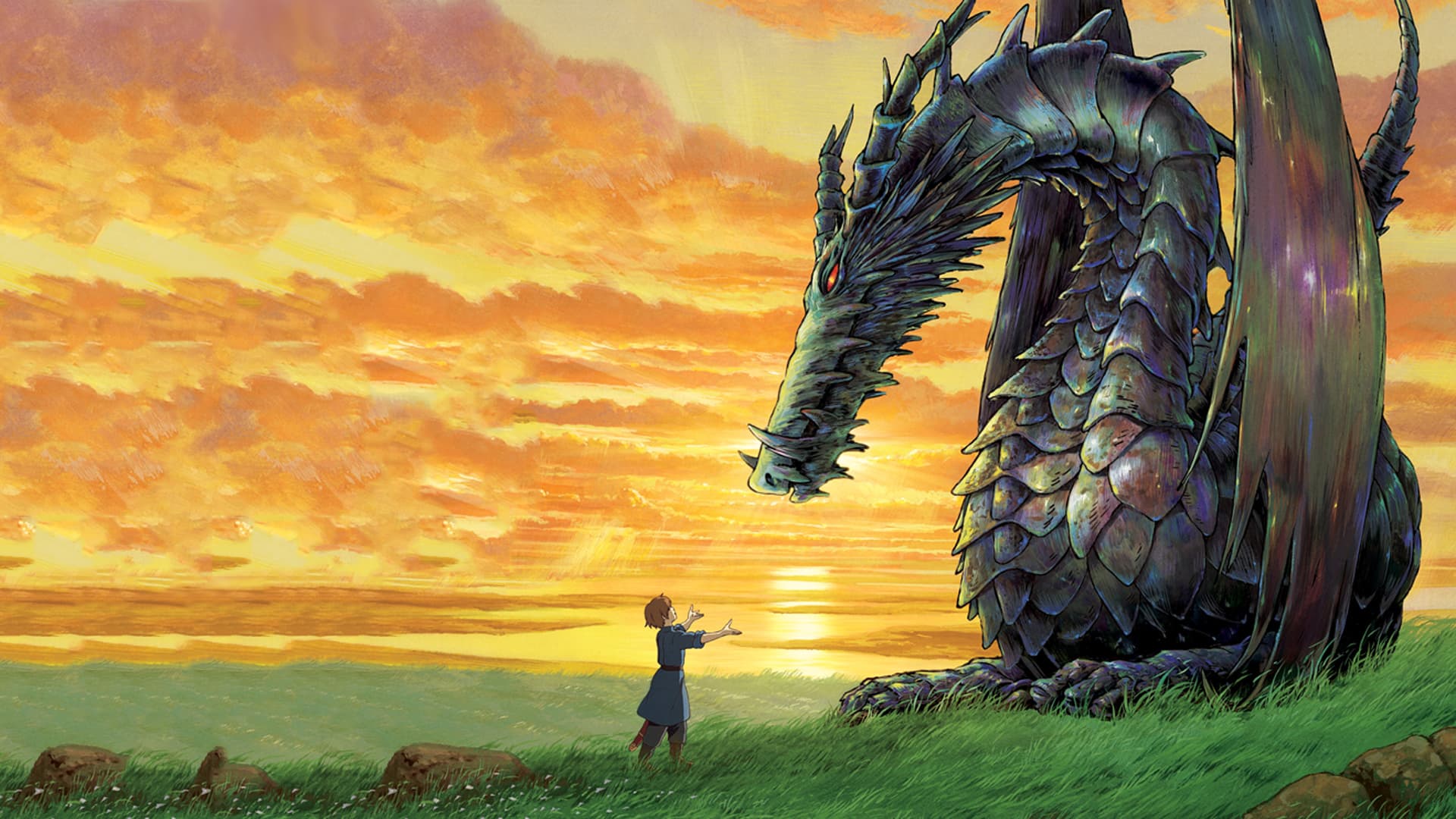
Violence is the most striking element for parents. The film opens with a patricide: a son stabs his father, who collapses into a pool of blood. We also see a severed hand fly through the air, a sword wound that bleeds profusely, and two dragons fighting and inflicting visible injuries on each other. These scenes are visually direct without being excessively gratuitous, but their impact is real and several occur early in the narrative. The violence carries narrative weight, it is not pointless, but its level of exposure is incompatible with a young audience.
Underlying Values
The philosophical heart of the film revolves around the acceptance of death and finitude as necessary conditions for a full life. This idea, drawn from Ursula K. Le Guin's novels, is treated in an abstract and barely explicit manner: the film poses its questions without resolving them pedagogically, which can leave an adolescent as puzzled as an adult. Other values structure the narrative, notably courage in the face of oneself, the temptation of absolute power as an escape from death, and the search for identity in a young man in profound crisis. These themes are rich but demand accompaniment to take on their full meaning.
Substances
Young people are shown under the influence of an addictive fictional drug, barely conscious, in a visibly prostrate state. The scene is not softened and clearly illustrates the state of dependency and self-abandonment. The substance is condemned by the narrative, but the depiction remains sufficiently raw to warrant anticipation with a young viewer.
Parental and Family Portrayals
The father-son relationship is at the heart of the film's dramatic trigger: the murder of the father by the son constitutes the inaugural act and haunts the character throughout the narrative. The paternal figure is both loved and destroyed, which immediately places the question of authority and kinship in a register of extreme tension. The film does not immediately provide the keys to understanding this act, which can trouble an adolescent without a framework for discussion.
Discrimination
The female characters in the film are confined to background roles: cooking, caring for the sick, captivity. A young girl is an exception in showing active courage, but this nuance remains marginal overall. Furthermore, the author of the original novels has publicly criticised the fact that characters explicitly described as dark-skinned in her books were depicted with pale complexions in the film, thus erasing an intentional identity component of her universe.
Social Themes
Slavery is present explicitly in the film: slave merchants capture innocents and hold them in chains. The trade is shown as a real evil woven into the world of the narrative, without being the central subject, but with enough presence to be perceived by a young viewer. It is a potential point of entry for discussion about servitude and freedom.
Strengths
The film draws its strength from its dense visual atmosphere and the ambition of its themes. Adapting Le Guin's novels represents a serious literary gamble, and the film retains philosophical substance that few animated productions dare approach: death as a structuring horizon, the temptation of power as a refusal of the human condition, inner dissociation. Certain dreamlike sequences, notably Arren's nightmare, reach a rare emotional intensity. The film is imperfect in its narration, sometimes disjointed, but it offers an experience that invites reflection rather than passive consumption.
Age recommendation and discussion points
The film is not recommended before age 12 due to its explicit violence and anxiety-inducing atmosphere, and is suitable from age 14 onwards for an adolescent comfortable with a dark and philosophical narrative. Two angles of discussion are worth opening after viewing: why does the film bind the acceptance of death so closely to the capacity to truly live, and what drives a character like Arren to commit the act that opens the film.
Synopsis
Something bizarre has come over the land. The kingdom is deteriorating. People are beginning to act strange... What's even more strange is that people are beginning to see dragons, which shouldn't enter the world of humans. Due to all these bizarre events, Ged, a wandering wizard, is investigating the cause. During his journey, he meets Prince Arren, a young distraught teenage boy. While Arren may look like a shy young teen, he has a severe dark side, which grants him strength, hatred, ruthlessness and has no mercy, especially when it comes to protecting Teru. For the witch Kumo this is a perfect opportunity. She can use the boy's "fears" against the very one who would help him, Ged.
About this title
- Format
- Feature film
- Year
- 2006
- Runtime
- 1h 55m
- Countries
- Japan
- Original language
- JA
- Directed by
- Goro Miyazaki
- Main cast
- Junichi Okada, Aoi Teshima, Bunta Sugawara, Yuko Tanaka, Teruyuki Kagawa, Jun Fubuki, Takashi Naito, Mitsuko Baisho, Yui Natsukawa, Kaoru Kobayashi
- Studios
- Studio Ghibli, dentsu Music and Entertainment, GNDHDDT, Hakuhodo DY Media Partners, Mitsubishi, Nibariki, Nippon Television Network Corporation, TOHO
Content barometer
- Violence4/5Strong
- Fear3/5Notable tension
- Sexuality0/5None
- Language0/5None
- Narrative complexity2/5Moderate
- Adult themes2/5Present
Values conveyed
- Courage
- Acceptance of difference
- redemption
- friendship
- support