Tacolator
タコレーター
Does this age rating seem accurate to you?
Detailed parental analysis
The Poulpalator is a one-minute silent short film, cheerful and unpretentious in narrative, designed to illustrate how a film projector works in a playful and visual manner. There is neither plot nor characters in the traditional sense: the object itself is the demonstration, transformed into a small sensory experience. Produced by Studio Ghibli for its dedicated museum, it is explicitly aimed at children and families, in a spirit of shared wonder.
Underlying Values
The film, in its very form, conveys a central value: curiosity about the mechanisms that create cinematic illusion. By showing how an animated image comes to life, it invites the child to look behind the curtain rather than consume passively. This is a rare intellectual stance in content aimed at young audiences, and it deserves to be highlighted as such.
Strengths
The primary quality of this short film is pedagogical: it makes tangible and accessible an abstract technical principle, that of retinal persistence and the scrolling of images, without resorting to any verbal explanation. The economy of means is total and deliberate, which makes it an object of exemplary clarity. For a child curious about how animated images work, it is a concrete and memorable gateway to understanding cinema as a mechanical art.
Age recommendation and discussion points
This short film is suitable from the youngest age, with no restrictions whatsoever. After viewing, a simple and fruitful conversation can begin around the question: how do you make someone believe in movement that does not exist? It is an opportunity to explain to the child the principle of frame-by-frame animation and to help them understand that every film, however spectacular, rests on this same elementary mechanism.
Synopsis
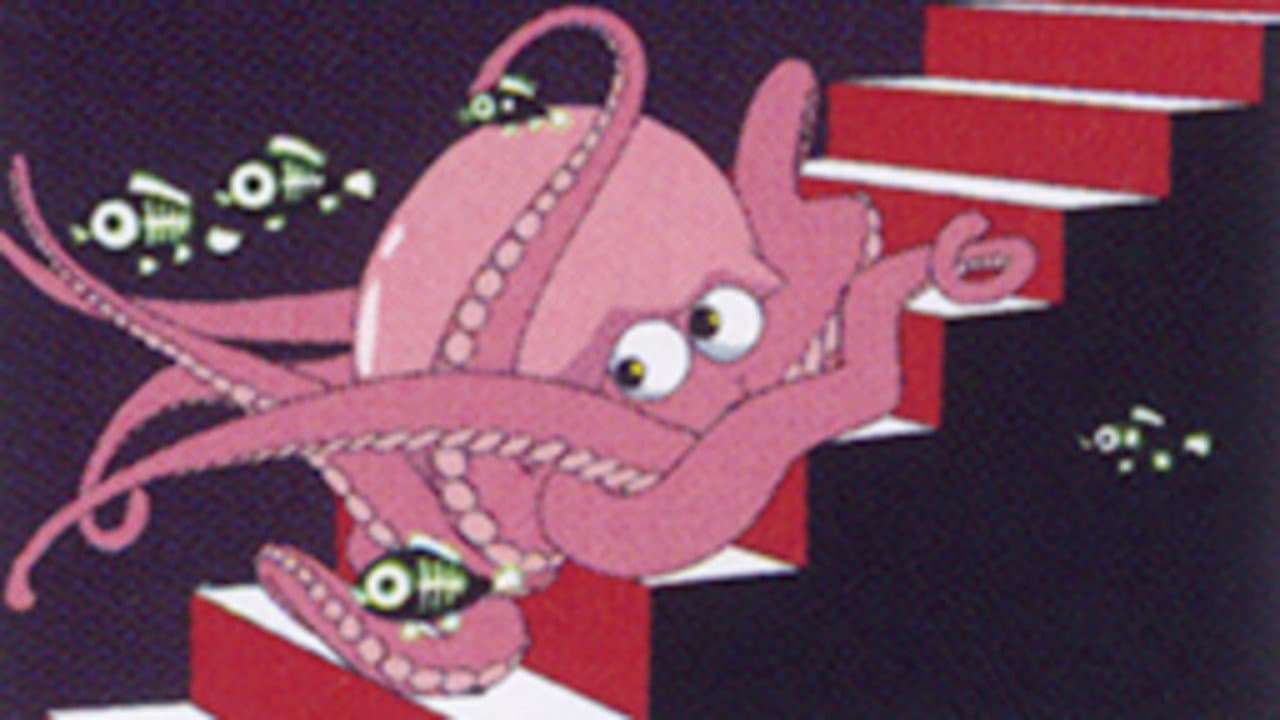
An octopus goes up an escalator placed in the water.
About this title
- Format
- Short film
- Year
- 2002
- Runtime
- 1m
- Countries
- Japan
- Original language
- JA
- Directed by
- Hayao Miyazaki
- Studios
- Studio Ghibli
Content barometer
- Violence0/5None
- Fear0/5None
- Sexuality0/5None
- Language0/5None
- Narrative complexity0/5Simple
- Adult themes0/5None
Values conveyed
- Acceptance of difference
- Autonomy
- curiosity
- nature
- wonder