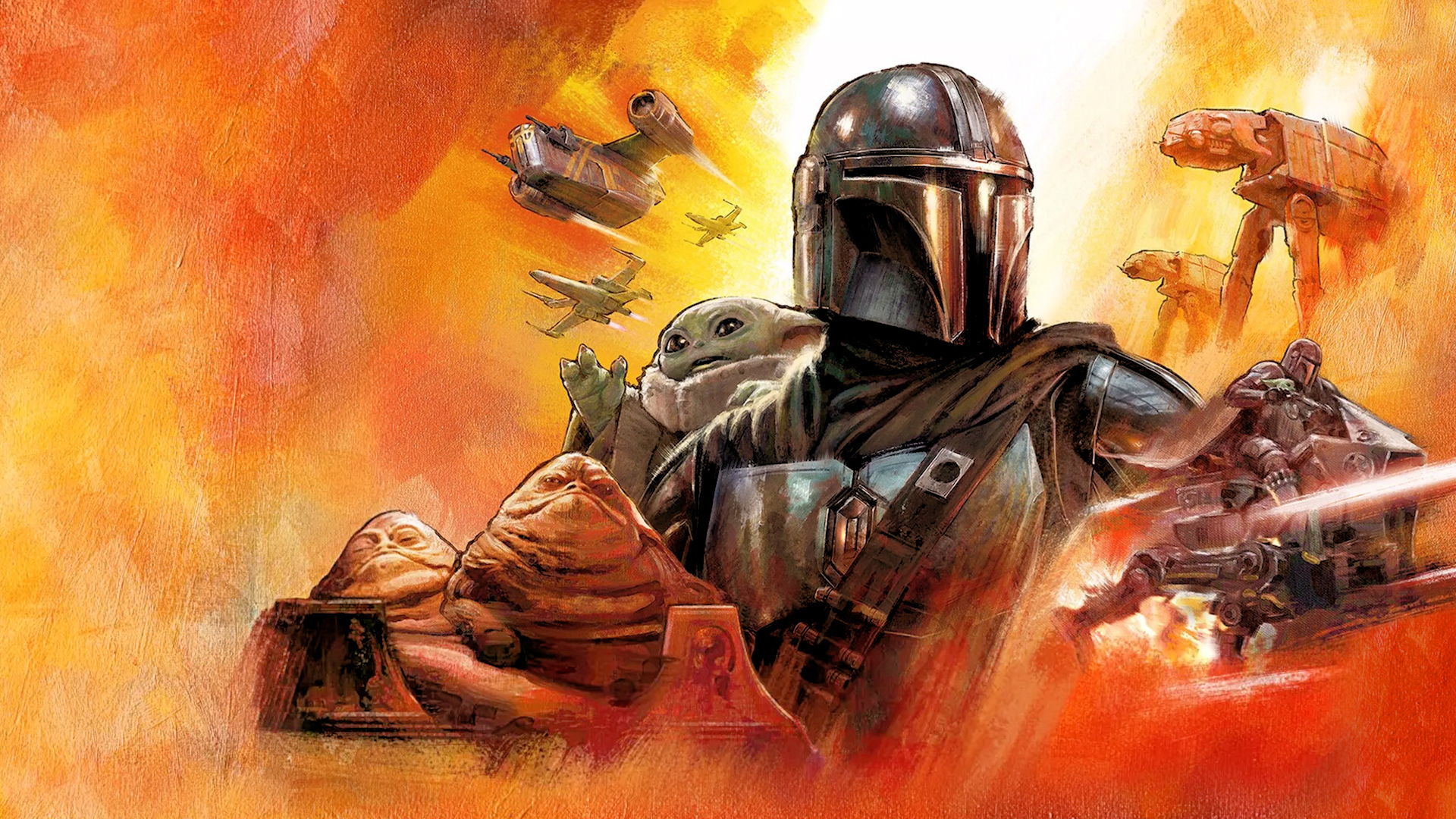
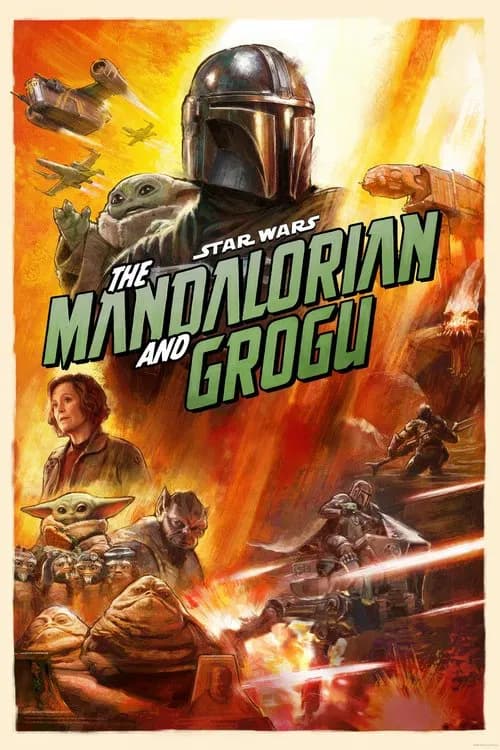
Star Wars: The Mandalorian and Grogu
Does this age rating seem accurate to you?
Detailed parental analysis
The Mandalorian and Grogu is an action and science-fiction adventure film with an epic and warm atmosphere, rooted in the Star Wars universe. The plot follows a Mandalorian warrior and the child he protects through a series of trials that test both their paternal bond and their survival. The film targets a broad family audience, with particular attention to children aged 8 and above and teenagers, without excluding adult fans of the franchise.
Parental and Family Portrayals
The father-child relationship is the absolute heart of the film, and it is treated with genuine depth. The Mandalorian embodies a model of adoptive parenthood founded on unconditional protection, sacrifice, and prioritising the child's wellbeing over personal safety. The narrative also explores the fear of reproducing the parental failures of previous generations, which gives the film an emotional dimension richer than a simple action film. This is a particularly fertile angle of discussion to open with a child or teenager after viewing.
Violence
Violence is frequent and drives many sequences: blaster fire, hand-to-hand combat, attacks by giant creatures in arenas, and at least one scene where a character is set alight and plunged into the void. It remains bloodless, however, directed primarily at droids or armoured soldiers, which diminishes its visceral impact. The violence is narrative and functional rather than gratuitous or aestheticised for its own sake. For children under 8 to 10 years old, the intensity of peril sequences and the presence of threatening creatures may provoke genuine anxiety, even though the overall tone remains that of a heroic adventure.
Underlying Values
The film constructs a coherent and explicit system of values: commitment, integrity, loyalty, faith in one's convictions, and protection of the vulnerable. Collective solidarity and teamwork are valued without overshadowing the hero's individual arc. The narrative takes a clear stance against oppression and shows that resisting injustice carries a real personal cost, which avoids naive manichaeism. These values are carried by the narrative structure itself, not merely by moralising dialogue.
Social Themes
The film sits within a tradition of narratives of resistance against oppressive power, a recurring theme in the Star Wars universe. The struggle against dominant forces and the protection of vulnerable communities give the film a light but readable political resonance, accessible to a teenager capable of discussing its implications.
Strengths
The film succeeds in articulating action spectacle and parental emotion without sacrificing one for the other, which is a difficult balance to strike in the genre. The relationship between the Mandalorian and Grogu functions as a genuine dramatic engine, not as a pretext for action. The exploration of generational trauma and the desire to break cycles of parental failure gives the narrative an unexpected depth for a family film of this scale. For a child or teenager, the film offers a concrete and embodied representation of what it means to care for someone more vulnerable than oneself.
Age recommendation and discussion points
The film is suitable from age 10 onwards, with parental accompaniment recommended for 8 to 10 year-olds due to creature scenes and intense peril. From age 12 onwards, viewing is straightforward without major reservations. Two angles of discussion are worth opening after the film: what it means to be a good parent or protector when one is not perfect, and why certain characters choose to fight for others even when it costs them something.
Synopsis
The evil Empire has fallen, and Imperial warlords remain scattered throughout the galaxy. As the fledgling New Republic works to protect everything the Rebellion fought for, they have enlisted the help of legendary Mandalorian bounty hunter Din Djarin and his young apprentice Grogu.
About this title
- Format
- Feature film
- Year
- 2026
- Runtime
- 2h 12m
- Countries
- United States of America
- Original language
- EN
- Directed by
- Jon Favreau
- Main cast
- Pedro Pascal, Jeremy Allen White, Sigourney Weaver, Jonny Coyne, Dave Filoni, Steve Blum, Martin Scorsese, Hemky Madera, Paul Sun-Hyung Lee, Matthew Willig
- Studios
- Lucasfilm Ltd., Fairview Entertainment
Content barometer
- Violence3/5Notable
- Fear3/5Notable tension
- Sexuality0/5None
- Language0/5None
- Narrative complexity4/5Very complex
- Adult themes0/5None
Watch-outs
Values conveyed
- Courage
- Perseverance
- Loyalty
- protecting the innocent
- father-son bond
- resistance to oppression
- teamwork