Spirited Away
千と千尋の神隠し
Does this age rating seem accurate to you?
Detailed parental analysis
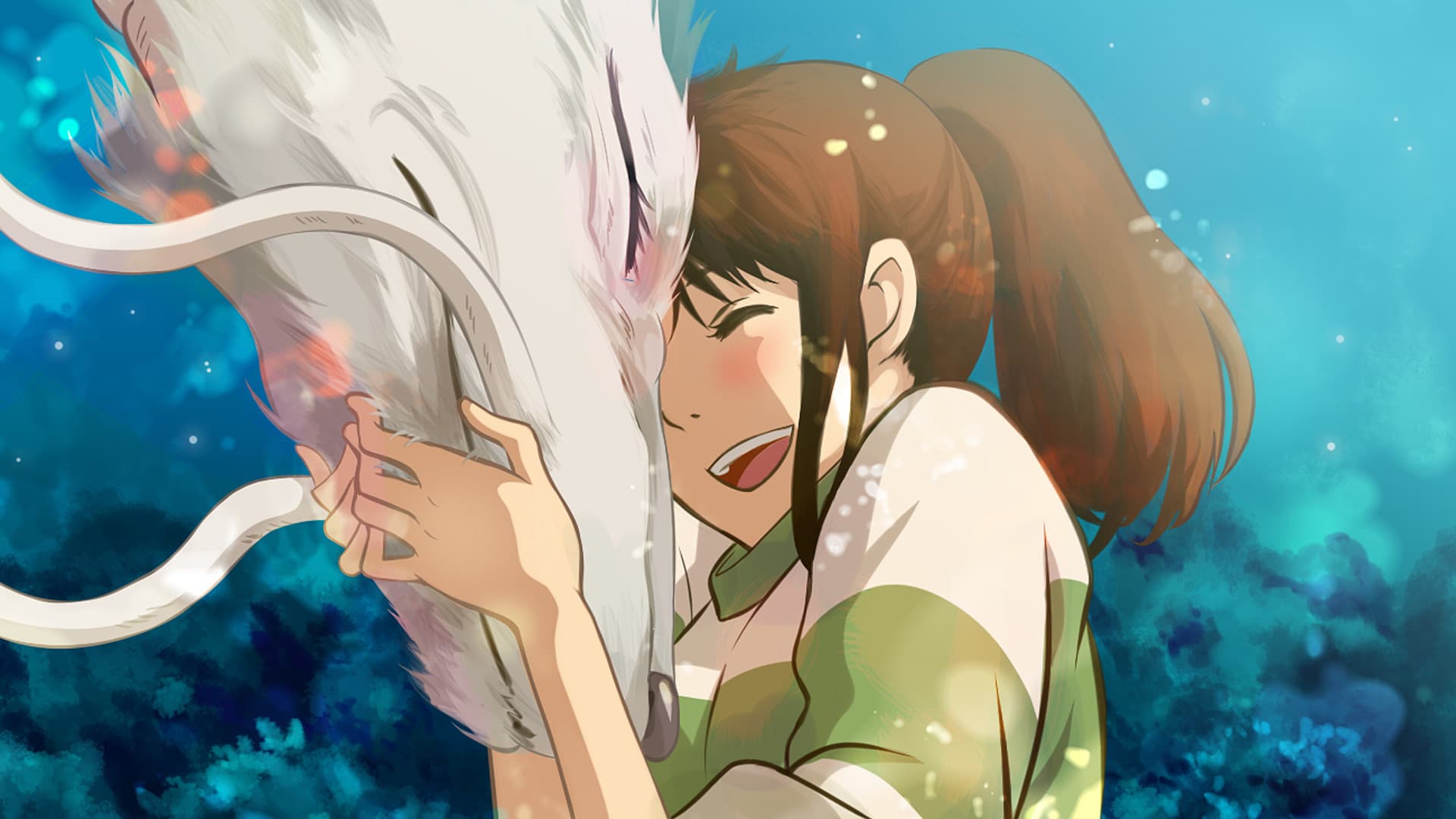
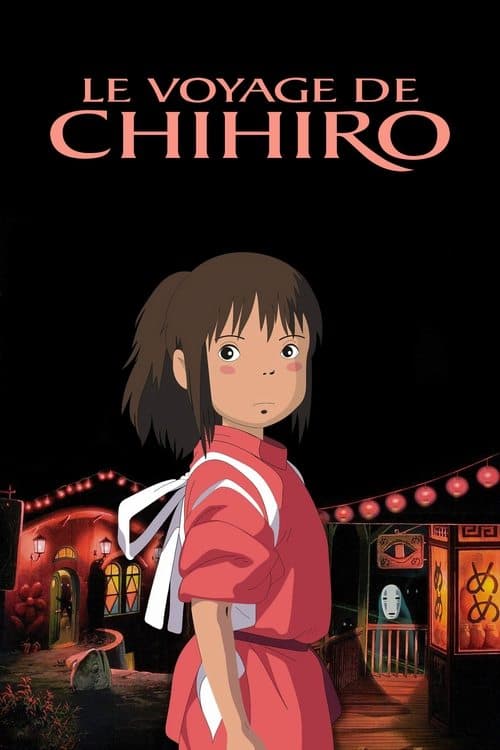
Spirited Away is a fantastical animated film with a dense and often unsettling atmosphere, driven by exceptional visual aesthetics rooted in Japanese folklore. A ten-year-old girl finds herself trapped in a world of deities and spirits after her parents are transformed into pigs, and must work to free them. Bearing the Studio Ghibli stamp, the film targets children from ten years old and teenagers, but its atmosphere and imagery can easily overwhelm younger viewers.
Violence
Violence is not physical in the traditional sense, but the visual intensity of several sequences is real and sustained. The dragon Haku bleeds profusely during a lengthy attack sequence by paper demons. The No-Face creature devours characters in a scene of chaotic derailment, before violently vomiting a black substance. A foul-smelling spirit releases blood and mucus when Chihiro removes an object from its body. These moments are not gratuitous: each plays a role in narrative progression and in the protagonist's inner transformation. Yet their visual intensity remains significant and can durably mark children sensitive to images of bodily anguish.
Underlying Values
The film constructs a narrative of emancipation founded on work, responsibility and self-transcendence. Chihiro begins as a passive and wilful child, and grows by learning to act for others rather than for herself. Wealth and greed are explicitly associated with moral degradation: Chihiro's parents transform into pigs for eating without permission, and the No-Face creature embodies corruption through the desire to possess and consume. This critical subtext regarding the relationship to wealth and cupidity is strong and constant. It offers an excellent entry point to a conversation about the value of things, the relationship to money, and what it means to work to deserve something.
Parental and Family Portrayals
Chihiro's parents are depicted as irresponsible from the opening minutes: reckless, arrogant, incapable of heeding their daughter's warnings. Their transformation into pigs is the direct consequence of their behaviour. This staging of failing parenthood is sufficiently direct to merit discussion: the film does not say the parents are wicked, but it shows clearly that their attitude has serious consequences. It is a powerful narrative pattern for a child watching their own parents as figures of absolute authority.
Social Themes
The film is deeply rooted in Japanese Shinto cosmology and the culture of traditional public baths. These references are not cosmetic: they structure the entire world depicted. For a child or parent unfamiliar with this culture, certain elements may seem hermetic or strange without context. This is also what makes the film precious: it constitutes a concrete gateway to a non-Western culture, with its own rules, hierarchies and representations of the sacred. A discussion after viewing about what nature spirits represent in Japanese tradition considerably enriches the experience.
Substances
Adult characters smoke cigarettes, and the bathhouse culture in which Chihiro evolves is associated with references to rice wine. These elements are present but are not valorised or staged in a central way.
Strengths
Spirited Away is one of the most accomplished animated films ever produced, with an artistic direction of visual richness that few works in the genre attain. Each setting, each creature, each detail of the spirit world is constructed with remarkable internal coherence. Narratively, the film avoids all the easy routes of the classical tale: there is no absolute villain, threatening figures are often tragic or ambivalent, and the resolution does not rest on the victory of an all-powerful heroine but on her capacity to show empathy and respect rules beyond her. This perspective on growth, responsibility and relationship with others is of rare sincerity in cinema intended for youth. The film also offers a high-quality introduction to Japanese culture and spirituality, without condescension or didacticism.
Age recommendation and discussion points
The film is not recommended before age 8 due to several visually intense and potentially distressing sequences. From age 10, it can be watched calmly by children who are not easily frightened by images of bodily transformation or fantastical violence. Two angles of discussion are worth opening after viewing: why do the parents transform into pigs, and what does that say about the behaviour they displayed? And what does it mean for Chihiro to learn to work and respect the rules of a world that is not her own?
Synopsis
A young girl, Chihiro, becomes trapped in a strange new world of spirits. When her parents undergo a mysterious transformation, she must call upon the courage she never knew she had to free her family.
About this title
- Format
- Feature film
- Year
- 2001
- Runtime
- 2h 6m
- Countries
- Japan
- Original language
- JA
- Studios
- Studio Ghibli, Tokuma Shoten, Nippon Television Network Corporation, Mitsubishi, dentsu, TFC
Content barometer
- Violence3/5Notable
- Fear4/5Intense
- Sexuality1/5Allusions
- Language1/5Mild
- Narrative complexity2/5Moderate
- Adult themes1/5Mild
Values conveyed
- Courage
- Perseverance
- Compassion
- Autonomy
- friendship
- empathy