Spirit: Stallion of the Cimarron
Does this age rating seem accurate to you?
Detailed parental analysis
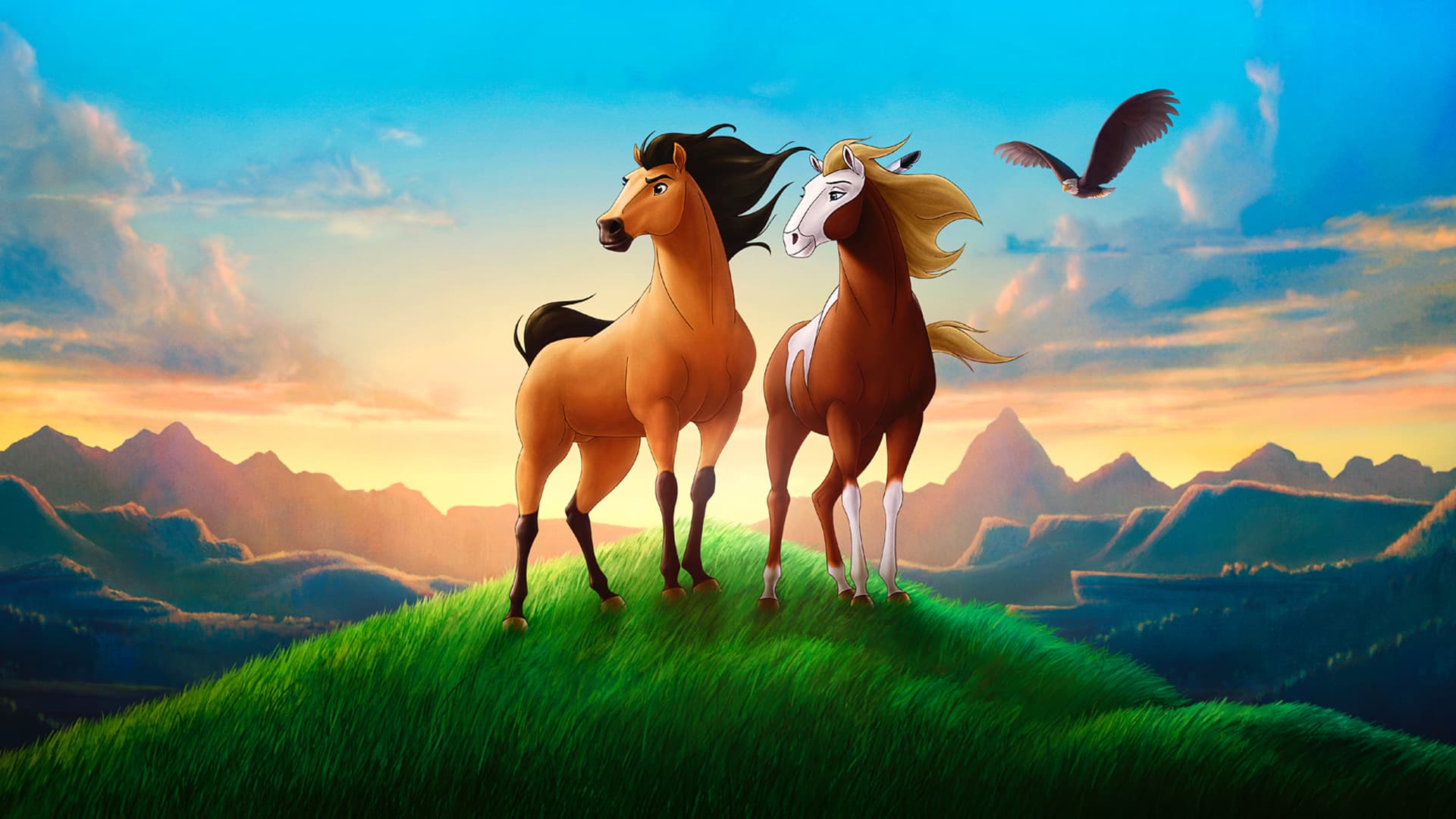
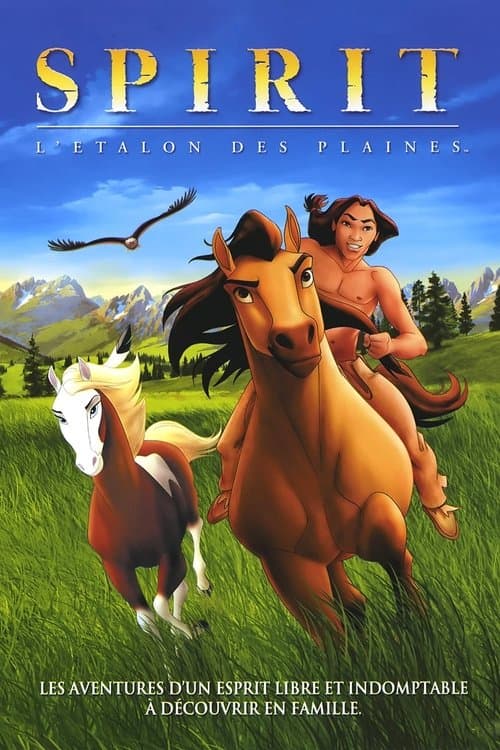
Spirit is an epic adventure animation film with a contemplative breath, carried by an ever-present score and a near-silent narration in which the horses do not speak. The story follows Spirit, a wild stallion from the great American plains, captured by the American cavalry and determined to reclaim his freedom. The film primarily targets children from age 6 onwards, but its emotional intensity and length make it particularly suited from age 7 or 8 onwards for peaceful viewing.
Violence
Violence is the principal element parents should anticipate. Spirit is captured, tied to a post for three days without food or water, subjected to forced breaking by soldiers who whip him, spur him and attempt to brand him with a hot iron. A mare is shot and wounded during an attack on an American Indian camp and appears in a serious state. Other sequences of peril follow in succession: puma attack, rapids, falling over a waterfall, forest fire, train explosion. These scenes are neither gratuitous nor gory; they serve a narrative about freedom and resistance to oppression. They remain, however, sufficiently intense to disturb sensitive children or those under 6 years old.
Underlying Values
The narrative rests on a clear opposition between two approaches to animals: domination by force, embodied by the cavalry colonel, and a relationship founded on respect and gentleness, embodied by Little Creek, the young Lakota. The film clearly takes the side of the latter and offers accessible reflection on autonomy and the right not to be reduced to servitude. Freedom is presented as a natural value to defend, not as a privilege. This message is coherent and honest, but it is worth noting that it somewhat idealises the human-animal relationship by giving it an almost political dimension, which can open a good discussion with the child about what it truly means to respect a living being.
Social Themes
The film takes place in the nineteenth-century American West and stages the conflict between the American cavalry and indigenous peoples, here represented by a Lakota tribe. The conquest of the West is treated as an enterprise of domination and destruction of natural balance, which was not the traditional position of children's films of that era. Spirit passes through a Lakota encampment, witnesses its attack by cavalry and sees wild nature ravaged by the passage of the railroad. These elements are sufficiently clear to introduce to children the question of colonisation and humanity's relationship with nature, without entering into a historical exposition.
Discrimination
The representation of American Indians deserves to be noted, not as a problem, but as a useful point for discussion. Little Creek is depicted with dignity, bravery and sensitivity, which contrasts with the usual stereotypes of the western. Nevertheless, he remains a functional character in service of Spirit's trajectory rather than a fully developed subject, and his tribe is essentially seen through the lens of the horse. The film gives an overall respectful image of the Lakotas, but it is worth explaining to the child that the indigenous cultures of this period are far richer and more diverse than what the film can show.
Substances
A soldier is shown asleep next to a bottle of liquor, and Spirit accidentally tastes alcohol before manifesting a visible reaction of disgust. The presence is brief and carries no valorisation: the film treats alcohol as a negative character note in the soldier in question.
Language
Language is almost absent from the film, as Spirit does not speak. There is a "Son of a..." interrupted and a discrete "What the hell" in the original English version. In the French version, these elements are generally softened or absent. Nothing noteworthy for a parent.
Strengths
Spirit is a rare formal success in family animation cinema: by choosing not to make the horses speak, the film obliges the viewer, including the child, to read emotions in the movement, gaze and gesture of the animal. This exercise in decentring language is in itself a pedagogical quality. The animation of equestrian movement is of remarkable precision and fluidity, and the staging of the great plains conveys a genuine sense of space and freedom. The score supports the narrative with effectiveness without overwhelming it. The film manages to address serious subjects, captivity, resistance, loss, with a sobriety that respects the emotional intelligence of young viewers without drowning them in explanation.
Age recommendation and discussion points
The film is suitable from age 6 or 7 onwards, with caution for children very sensitive to scenes of animal mistreatment or intense peril. From age 8 onwards, it can be watched without major reservations. Two angles of discussion are worth exploring after viewing: why does Spirit refuse to be broken even by someone as kind as Little Creek, and what does this say about the difference between loving an animal and owning it? And for somewhat older children, who were really the peoples who lived in these plains before the arrival of the American cavalry?
Synopsis
A captured mustang remains determined to return to his herd no matter what.
About this title
- Format
- Feature film
- Year
- 2002
- Runtime
- 1h 17m
- Countries
- United States of America
- Original language
- EN
- Studios
- DreamWorks Animation, DreamWorks Pictures
Content barometer
- Violence3/5Notable
- Fear3/5Notable tension
- Sexuality0/5None
- Language1/5Mild
- Narrative complexity2/5Moderate
- Adult themes1/5Mild
Watch-outs
- Alcohol
- Abuse
Values conveyed
- Courage
- Perseverance
- Loyalty
- Autonomy
- friendship
- freedom
- resilience