
Only Yesterday
おもひでぽろぽろ
Only Yesterday
おもひでぽろぽろ
Your feedback improves this guide
Your feedback highlights guides that need a second look and keeps the rating trustworthy.
Does this age rating seem accurate to you?
Sign in to vote
Watch-outs
What this film brings
Content barometer
Violence
1/5
Mild
Fear
0/5
None
Sexuality
1/5
Allusions
Language
0/5
None
Narrative complexity
3/5
Complex
Adult themes
0/5
None
Expert review
This Japanese animated film follows an adult woman reflecting on her childhood, with a quiet, thoughtful, and often melancholic tone rather than an adventurous or suspenseful one. The sensitive material comes mostly from realistic everyday themes, including a first period, one memorable moment of physical discipline from her father, childhood disappointments, and a few scenes of embarrassment or mild social humiliation at school. The intensity stays low to moderate, with no graphic violence and almost no frightening content, yet these moments carry genuine emotional weight and may require some maturity to process comfortably. The slow pace and back and forth structure between childhood and adulthood may also leave younger viewers disengaged, even though the overall content is restrained. For children around age 8, watching with a parent can help provide context for puberty, strict family dynamics, and the film's reflective emotions, which are more subtle than dramatic.
Synopsis
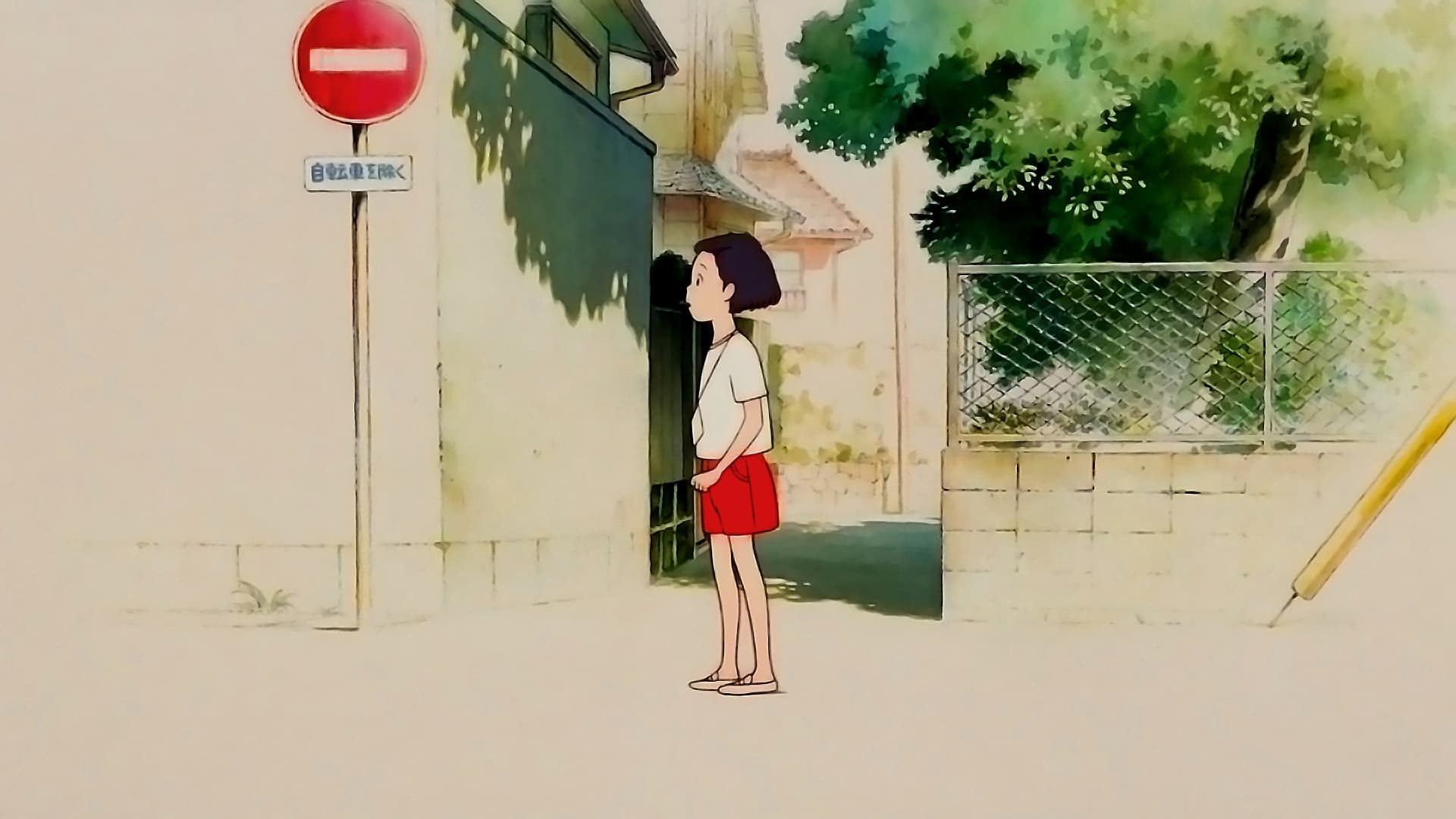
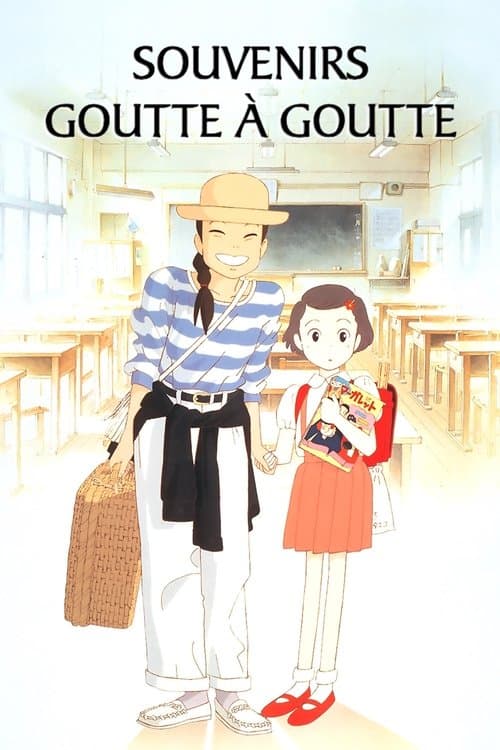
In lyrical switches between the present and the past, Taeko contemplates the arc of her life, and wonders if she has been true to the dreams of her childhood self.
Difficult scenes
One important memory shows Taeko as a child experiencing her first period. The scene is not sexualized, but it may prompt questions from younger viewers because it focuses on embarrassment, secrecy among classmates, and the discomfort of a child who does not fully understand what is happening to her. In another memory, Taeko's father hits her once during a family conflict. The moment is brief and not graphic, but it may affect sensitive children because it presents harsh parental authority and leaves a strong emotional impression. Several school related episodes revolve around humiliation or social discomfort, including a classmate acting hurtfully toward Taeko and moments when she feels misunderstood in front of others. These scenes are not violent, yet they may resonate strongly with children who are sensitive to rejection, shame, or awkward experiences at school.
Where to watch
No verified platform for the US market yet. We keep this section updated as availability changes.
Availability checked on Apr 01, 2026
About this title
- Format
- Feature film
- Year
- 1991
- Runtime
- 1h 58m
- Countries
- Japan
- Original language
- JA
- Directed by
- Isao Takahata
- Main cast
- Miki Imai, Toshiro Yanagiba, Yoko Honna, Mayumi Izuka, Masahiro Itou, Chie Kitagawa, Yuuki Masuda, Yuki Minowa, Michie Terada, Yorie Yamashita
- Studios
- Studio Ghibli, Tokuma Shoten, Nippon Television Network Corporation, Hakuhodo
Content barometer
Violence
1/5
Mild
Fear
0/5
None
Sexuality
1/5
Allusions
Language
0/5
None
Narrative complexity
3/5
Complex
Adult themes
0/5
None
Expert review
This Japanese animated film follows an adult woman reflecting on her childhood, with a quiet, thoughtful, and often melancholic tone rather than an adventurous or suspenseful one. The sensitive material comes mostly from realistic everyday themes, including a first period, one memorable moment of physical discipline from her father, childhood disappointments, and a few scenes of embarrassment or mild social humiliation at school. The intensity stays low to moderate, with no graphic violence and almost no frightening content, yet these moments carry genuine emotional weight and may require some maturity to process comfortably. The slow pace and back and forth structure between childhood and adulthood may also leave younger viewers disengaged, even though the overall content is restrained. For children around age 8, watching with a parent can help provide context for puberty, strict family dynamics, and the film's reflective emotions, which are more subtle than dramatic.
Synopsis
In lyrical switches between the present and the past, Taeko contemplates the arc of her life, and wonders if she has been true to the dreams of her childhood self.
Difficult scenes
One important memory shows Taeko as a child experiencing her first period. The scene is not sexualized, but it may prompt questions from younger viewers because it focuses on embarrassment, secrecy among classmates, and the discomfort of a child who does not fully understand what is happening to her. In another memory, Taeko's father hits her once during a family conflict. The moment is brief and not graphic, but it may affect sensitive children because it presents harsh parental authority and leaves a strong emotional impression. Several school related episodes revolve around humiliation or social discomfort, including a classmate acting hurtfully toward Taeko and moments when she feels misunderstood in front of others. These scenes are not violent, yet they may resonate strongly with children who are sensitive to rejection, shame, or awkward experiences at school.