Watch Your Left
Watch Your Left
Your feedback improves this guide
Your feedback highlights guides that need a second look and keeps the rating trustworthy.
Does this age rating seem accurate to you?
Sign in to vote
What this film brings
Content barometer
Violence
1/5
Mild
Fear
0/5
None
Sexuality
0/5
None
Language
0/5
None
Narrative complexity
0/5
Simple
Adult themes
0/5
None
Expert review
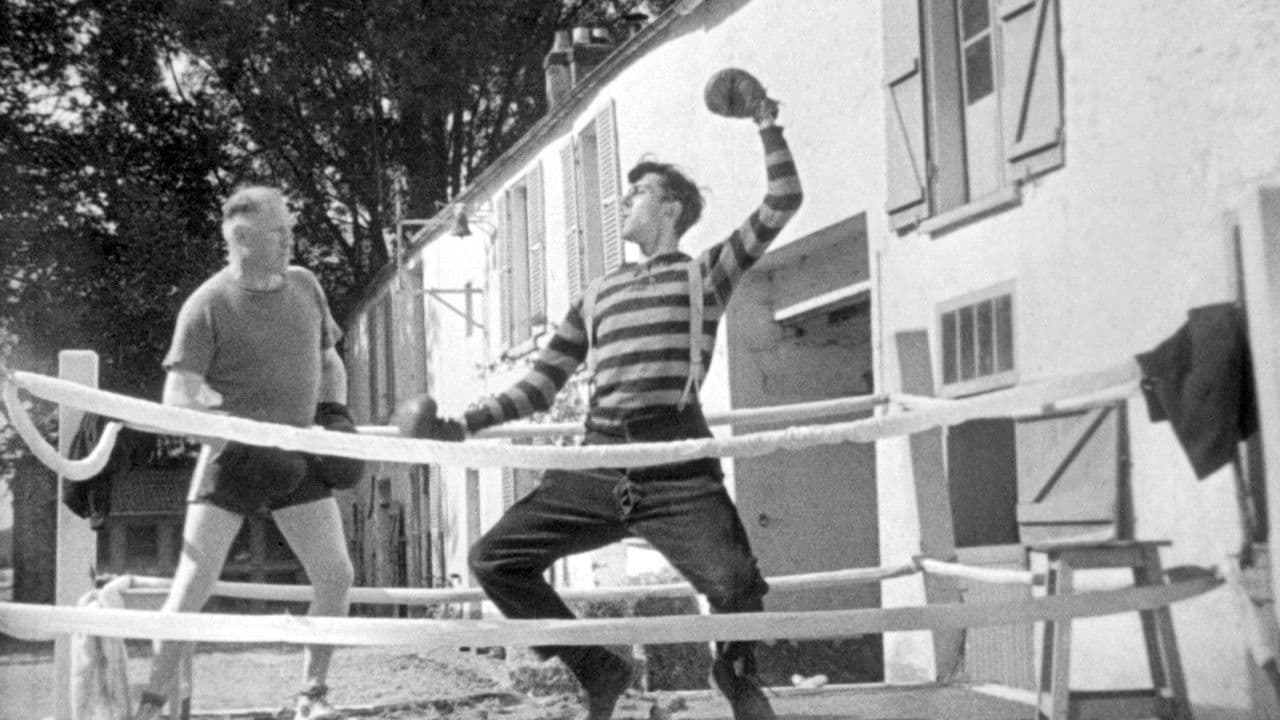
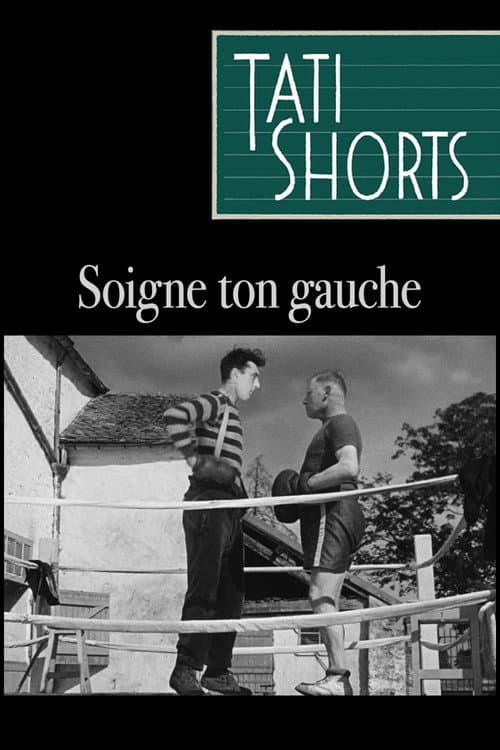
This short comic film by Jacques Tati follows a farm boy who becomes fascinated by the world of boxing, in a light, playful atmosphere built around visual comedy. Sensitive content is limited to ring action, including punches, dodging, tumbles, and rough physical contact, all presented in a clearly humorous and exaggerated way rather than as realistic harm. The intensity stays low because there are no visible injuries, no frightening atmosphere, and no notable sexual or verbal content, and any tension is quickly released through comedy. For younger viewers, parents may simply want to explain that boxing is used here as stylized slapstick, so children do not copy the hitting outside its sporting context. Overall, it is suitable for family viewing, especially for children who can already enjoy old fashioned visual humor and clumsy comic situations.
Synopsis
Roger, son of a farmer, wants to be a boxer, and gets his chance by filling in for a boxer's sparring partner. However, Roger does not know how to box and reads a rule book while in the ring.
Difficult scenes
The most notable moment comes when the young protagonist ends up in the ring opposite a boxer. Viewers see punches thrown, bodies bumping into each other, and several sudden movements that could startle a very young child, even though the tone remains clearly comic and without realistic consequences. The training scenes present a sporting world built around physical confrontation. A child who is sensitive to aggressive gestures may focus on the fists and dodging, even if the staging is meant to create laughter much more than fear or pain.
Where to watch
No verified platform for the US market yet. We keep this section updated as availability changes.
About this title
- Format
- Short film
- Year
- 1936
- Runtime
- 13m
- Countries
- France
- Original language
- FR
- Directed by
- René Clément
- Main cast
- Jacques Tati, Max Martel, Louis Robur, Cliville, Jean Aurel, Champel, Van der Haegen
Content barometer
Violence
1/5
Mild
Fear
0/5
None
Sexuality
0/5
None
Language
0/5
None
Narrative complexity
0/5
Simple
Adult themes
0/5
None
Expert review
This short comic film by Jacques Tati follows a farm boy who becomes fascinated by the world of boxing, in a light, playful atmosphere built around visual comedy. Sensitive content is limited to ring action, including punches, dodging, tumbles, and rough physical contact, all presented in a clearly humorous and exaggerated way rather than as realistic harm. The intensity stays low because there are no visible injuries, no frightening atmosphere, and no notable sexual or verbal content, and any tension is quickly released through comedy. For younger viewers, parents may simply want to explain that boxing is used here as stylized slapstick, so children do not copy the hitting outside its sporting context. Overall, it is suitable for family viewing, especially for children who can already enjoy old fashioned visual humor and clumsy comic situations.
Synopsis
Roger, son of a farmer, wants to be a boxer, and gets his chance by filling in for a boxer's sparring partner. However, Roger does not know how to box and reads a rule book while in the ring.
Difficult scenes
The most notable moment comes when the young protagonist ends up in the ring opposite a boxer. Viewers see punches thrown, bodies bumping into each other, and several sudden movements that could startle a very young child, even though the tone remains clearly comic and without realistic consequences. The training scenes present a sporting world built around physical confrontation. A child who is sensitive to aggressive gestures may focus on the fists and dodging, even if the staging is meant to create laughter much more than fear or pain.