
Sing 2
Does this age rating seem accurate to you?
Detailed parental analysis
Sing 2 is an animated musical comedy with a brisk pace and joyful atmosphere, punctuated by sequences of genuine tension. A troupe of amateur animal performers attempts to secure an audition in a mega-production in Las Vegas, under threat from a brutal and unpredictable impresario. The film is aimed primarily at children from age 6 and their families, but its dramatic intensity and certain narrative devices make it better suited to an audience of 6 and above than to very young children.
Underlying Values
The film places the pursuit of dreams at the heart of its narrative, but the path taken to achieve them relies heavily on dishonesty and manipulation: the main character lies to get what he wants, and this choice is ultimately rewarded without genuine moral questioning. This structural message deserves to be flagged, as it sends children the idea that deception can justify deceit if the objective is noble. In counterpoint, the film authentically values perseverance, self-improvement and solidarity in adversity, showing characters who overcome deep fears or work through grief thanks to music and collective action. The tension between these two messages is real and constitutes the main angle for discussion after viewing.
Violence
Violence is present in several forms without ever reaching graphic intensity. The villain is credible in his threat: he commands henchmen, explicitly brandishes the possibility of killing the protagonist, and one scene shows the latter thrown from a height before being rescued at the last moment. A paint gun is used as a weapon in combat sequences, and a choreographed fight scene intensifies during the final performance. A lobster cut in half for comedic effect falls within cartoon register but may surprise. Overall it remains within the bounds of tense family film, but the threat hanging over the main characters is concrete enough to impress sensitive children or those under 5.
Sex and Nudity
A scene of implicit nudity, treated in comedic fashion, shows a character without clothes whose fur-covered body suggests the absence of garments without exposing anything explicit. The other characters react with screams, which signals the event as taboo. A choreographed sequence includes a suggestive hip movement that will likely go unnoticed by young children but will be noticed by adults. The content falls well short of any hypersexualisation, but the comedic nudity scene may warrant a brief comment depending on the child's age.
Language
The film contains a range of mild insults scattered throughout the narrative: idiot, loser, weird, useless, and a phrase approaching a curse word without actually saying it. The register remains that of mainstream family film, without frank vulgarity, but the frequency of these barbs can normalise a mode of disrespectful expression, particularly among younger children who do not yet have the tools to contextualise them.
Social Themes
The film addresses marital grief in an accessible and moving way through a character who has shut himself away following the death of his spouse and who reconnects with life through performance and meeting others. This is one of the film's most successful arcs emotionally, and it naturally opens a conversation about loss and resilience with a child who may have experienced a similar event in their surroundings.
Strengths
The film is musically generous: arrangements of pop standards are carefully constructed and the set pieces deliver genuine emotional build, particularly in the final sequence. The narrative arc devoted to grief is handled with unexpected sincerity for this type of production, and avoids easy sentimentality. The film also succeeds in giving several female characters central and complex roles without making it a statement. For children, the comedy sequences work well and the runtime, whilst it may exceed their attention span, is compensated for by effective alternation between intense sequences and musical breathing space.
Age recommendation and discussion points
The film is suitable from age 6 for children comfortable with a credible villain and situations of real tension, and may suit from age 5 for children not easily frightened when accompanied by an adult. Two angles merit discussion after viewing: first, ask the child whether the hero was right to lie to realise his dream, and what they would have done in his place; second, talk about the sadness of the grieving character and what music or creative expression allowed them to work through.
Synopsis
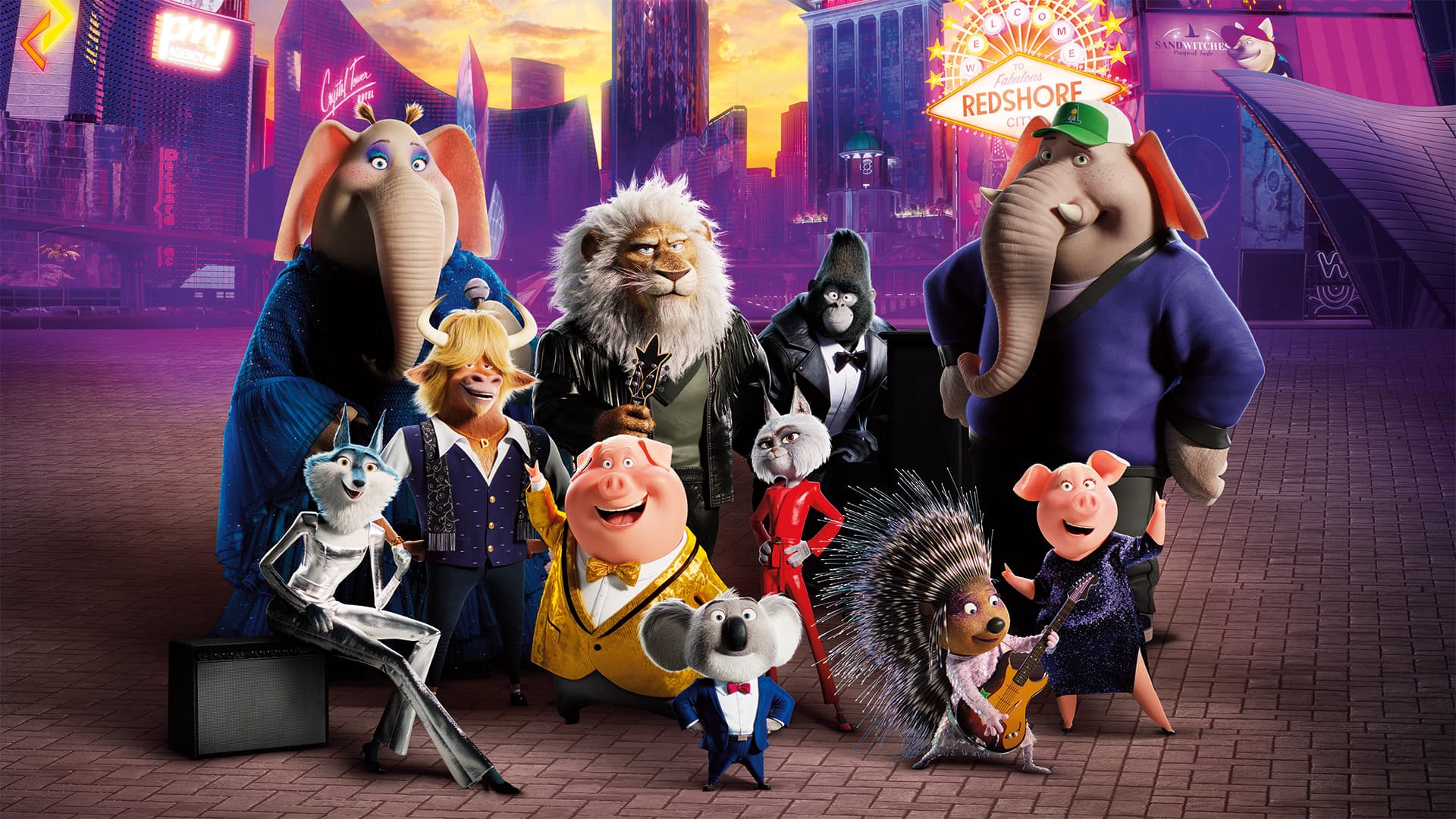
Buster and his new cast now have their sights set on debuting a new show at the Crystal Tower Theater in glamorous Redshore City. But with no connections, he and his singers must sneak into the Crystal Entertainment offices, run by the ruthless wolf mogul Jimmy Crystal, where the gang pitches the ridiculous idea of casting the lion rock legend Clay Calloway in their show. Buster must embark on a quest to find the now-isolated Clay and persuade him to return to the stage.
About this title
- Format
- Feature film
- Year
- 2021
- Runtime
- 1h 50m
- Countries
- United States of America
- Original language
- EN
- Studios
- Illumination
Content barometer
- Violence2/5Moderate
- Fear3/5Notable tension
- Sexuality1/5Allusions
- Language2/5Moderate
- Narrative complexity2/5Moderate
- Adult themes0/5None
Watch-outs
- Grief
- Death / grief