Shrek
Does this age rating seem accurate to you?
Detailed parental analysis
Shrek is a cheerful and irreverent animated comedy, built on parodies of classic fairy tales and their most familiar conventions. The plot follows a solitary ogre forced to rescue a princess in order to reclaim his peace and quiet, who discovers friendship and love along the way. The film targets both young children and adults simultaneously, with two-tiered writing: physical humour and slapstick for the former, satire and innuendo for the latter.
Underlying Values
The film constructs its entire narrative around a message about appearance and self-acceptance: the hero is ugly, antisocial, rejected, and it is precisely him that the story designates as admirable. The princess, for her part, refuses the passive role and negotiates the terms of her situation herself, deliberately subverting the damsel-in-distress schema. The rejection of aesthetic norms is structural, not decorative. In counterpoint, the villain embodies the tyranny of appearances and the violence of social conformism, which gives the film genuine moral backbone. These are highly productive angles for discussion with a child from the age of seven onwards.
Violence
Violence is present in cartoonish form and generally without narrative harm: hand-to-hand fights, exaggerated kicks and wrestling moves, an arrow planted in a character's buttocks. The most striking scene for a young child is the torture of the gingerbread man, whose legs the villain tears off while interrogating him: presented humorously, this sequence can nonetheless surprise younger viewers. Shrek's verbal threats towards the villagers, though played for laughs, include fairly crude phrasings about decapitation or organ removal. The register remains that of schoolyard comedy, without gore or realistic consequences.
Language
Crude language is an assumed component of the film. Scatological humour is recurring: burps, flatulence and bodily references punctuate the comic rhythm. A few ambiguous phrasings play on registers of coarseness without ever explicitly crossing the line, but the subtext is sufficiently readable to adults. This register does not harm the narrative but it is useful to be forewarned if one is sensitive to this type of humour in what one shows a child.
Sex and Nudity
Nudity is limited to two fleeting shots showing Shrek's buttocks, without sexual character. Sexual humour is in contrast more present in the form of innuendo: jokes about Lord Farquaad's small stature refer to a supposed physical inadequacy presented as comic. These references pass over the heads of most young children but are clearly audible to adults and pre-adolescents. Nothing explicit, but the register of innuendo is real.
Discrimination
The film uses mockery of the villain's stature repeatedly and deliberately, which constitutes an axis of physical stigmatisation presented as legitimate because it targets an unsympathetic character. This is an interesting point of tension to raise with a child: the film criticises the rejection of appearance on one hand, but exploits the same logic to ridicule its villain on the other. This contradiction is rarely highlighted in discussions around the film even though it deserves to be named.
Substances
Alcohol consumption appears on a few occasions: characters drink beer from tankards and the hero shares a drink with the villain during a negotiation scene. The consumption is shown without moral commentary, in a register of social normality. The exposure remains brief and not explicitly valorised, but it is present and identifiable.
Strengths
Shrek is a work of genuine narrative intelligence for a mainstream animated film: the parody functions on two distinct and coherent levels, never sacrificing one for the other. The relationship between the ogre and the donkey is written with a true sense of comic timing and emotional sincerity that transcends simple gag-making. The characterisation of the princess is particularly well executed: she acts, thinks, fights and decides, in a counter-move to the genre's archetypes that remains narratively convincing. The film furthermore poses questions about chosen solitude, the gaze of others and the value of difference with a coherence rare at this level of family comedy.
Age recommendation and discussion points
The film is suitable from age seven onwards for serene viewing, younger children potentially being surprised by certain tense scenes or the insistent bodily humour. Two angles of discussion are worth pursuing after viewing: why does the film mock the villain's stature when it purports to defend people judged on their appearance, and what makes us accept laughing at certain differences and not others?
Synopsis
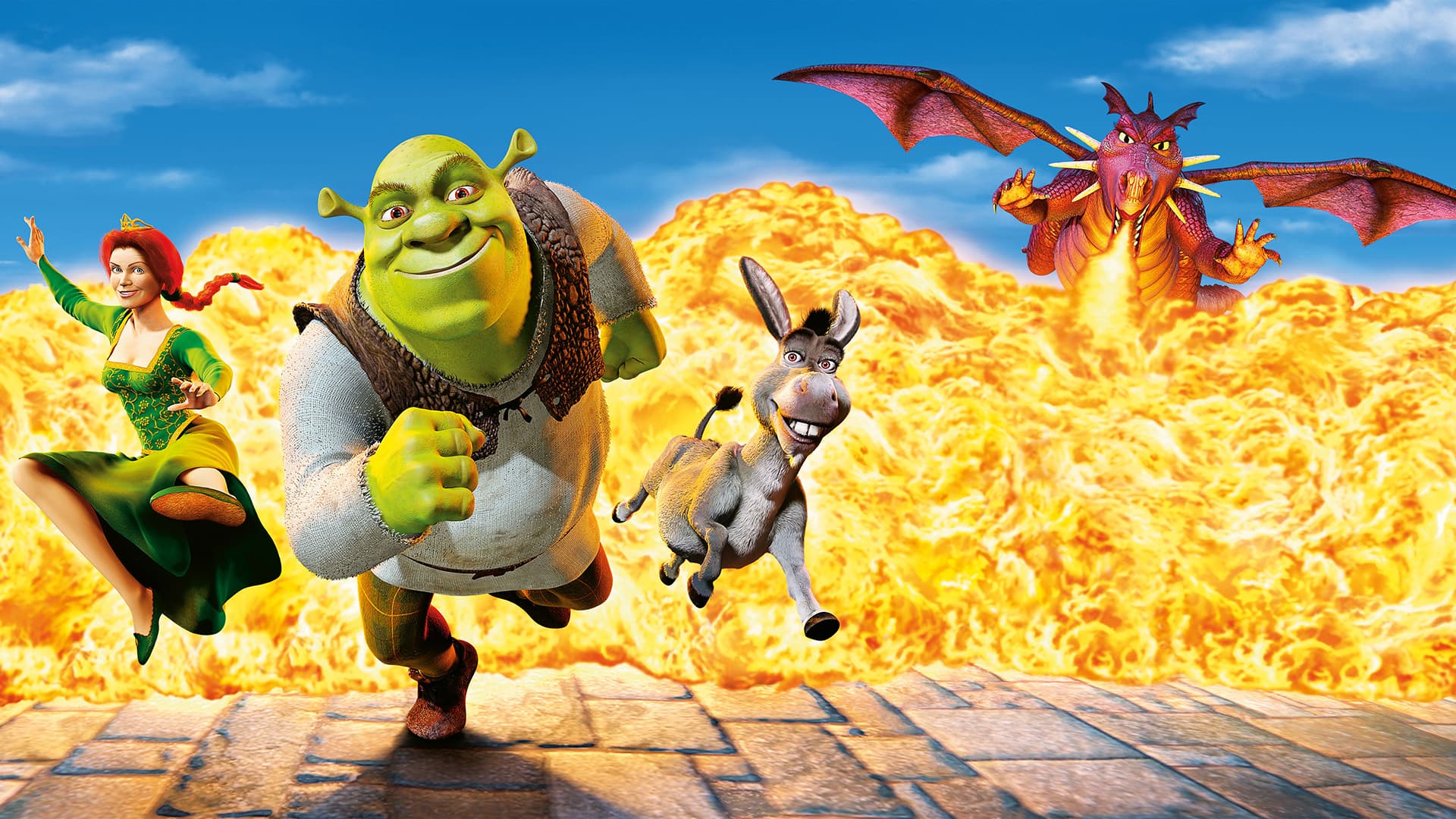
It ain't easy bein' green -- especially if you're a likable (albeit smelly) ogre named Shrek. On a mission to retrieve a gorgeous princess from the clutches of a fire-breathing dragon, Shrek teams up with an unlikely compatriot -- a wisecracking donkey.
About this title
- Format
- Feature film
- Year
- 2001
- Runtime
- 1h 29m
- Countries
- United States of America
- Original language
- EN
- Studios
- Pacific Data Images, DreamWorks Animation, DreamWorks Pictures
Content barometer
- Violence2/5Moderate
- Fear2/5A few scenes
- Sexuality1/5Allusions
- Language2/5Moderate
- Narrative complexity1/5Accessible
- Adult themes1/5Mild
Watch-outs
- Alcohol
- Strong language
- Gender stereotypes
Values conveyed
- Friendship
- Acceptance of difference
- Autonomy
- self acceptance
- courage
- tolerance