She-Ra and the Princesses of Power
Does this age rating seem accurate to you?
Detailed parental analysis
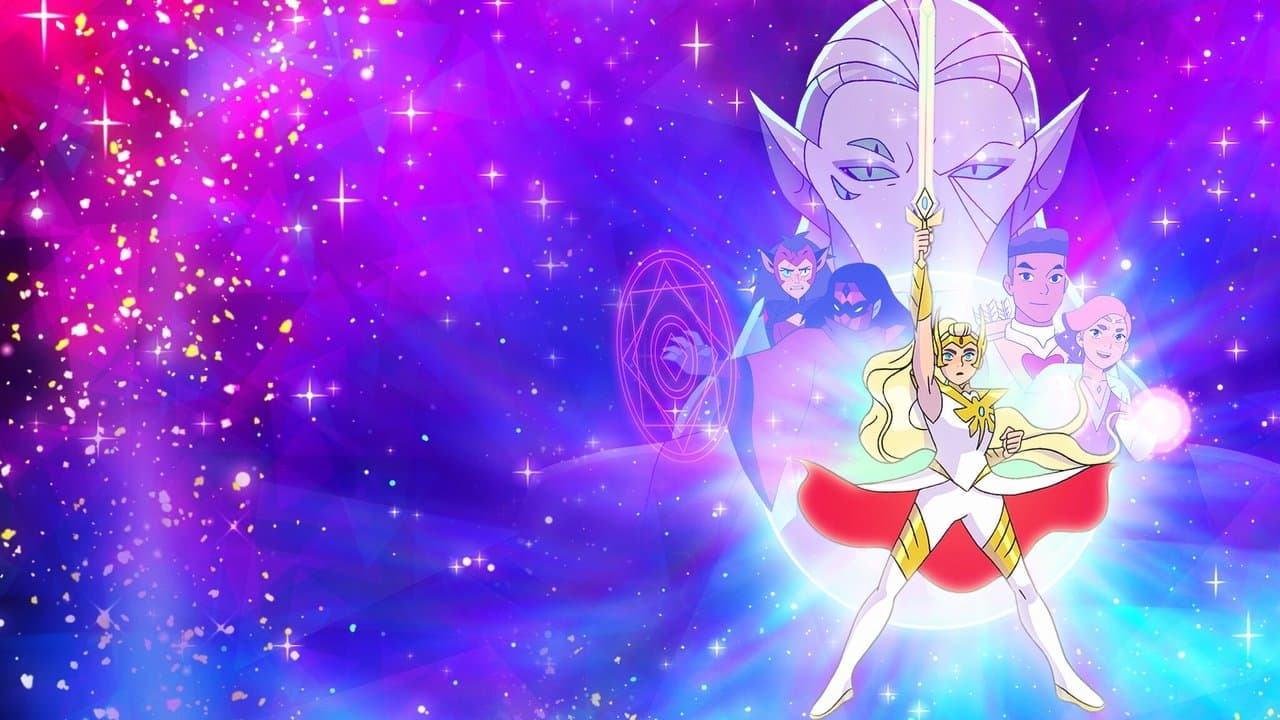
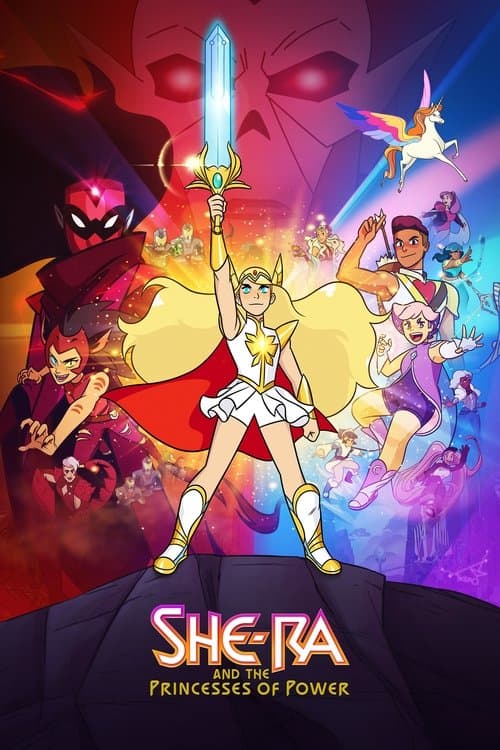
She-Ra and the Princesses of Power is an animated adventure and fantasy series with a colourful and dynamic atmosphere, driven by emotionally dense writing that skilfully alternates between lightness and moments of genuine tension. The plot follows Adora, a young soldier who discovers she is destined to become She-Ra, a legendary hero, and must choose between the faction that raised her and the one she is called to defend. The series is aimed primarily at children from 7-8 years old and pre-teens, but its careful writing also holds the attention of parents watching alongside them.
Parental and Family Portrayals
The most striking parental figure in the series is Shadow Weaver, a mentor who exercises abusive emotional and physical control over the child soldiers under her authority. Scenes of verbal abuse and psychological manipulation are depicted explicitly and repeatedly, without being softened. This is a strong narrative choice: the series does not minimise the reality of maltreatment and shows its lasting effects on the characters who suffer it. By contrast, two loving fathers and a married couple of women appear as stable and warm family models, which broadens the representation of what a family can be. For a child who has themselves experienced difficult family dynamics, certain scenes with Shadow Weaver may resonate strongly and warrant particular attention from the parent.
Underlying Values
The narrative is structured around values of friendship, collective courage and the capacity to make mistakes and then correct them, without ever lapsing into heavy-handed moral lessons. The series poses a central and honest question: can one choose one's own path when one has been conditioned since childhood to obey? This questioning of autonomy and loyalty runs through all the main story arcs. The series also values vulnerability as a strength rather than a weakness, which is rare in the heroic fantasy genre and constitutes a solid structural message. Romantic love between two women is treated with the same gravity and tenderness as any other central relationship in the narrative, without being presented as exceptional or problematic.
Violence
Fights are frequent and involve explosions, laser beam fire and physical confrontations, but remain within the visual codes of fantasy animation without ever descending into gore. Violence is functional and narrative: it serves to illustrate the stakes of the conflict and the progression of the characters, not to produce a spectacle of brutality for its own sake. Likeable characters find themselves in real danger, and certain situations may be disturbing for more sensitive or younger children. The emotional intensity of conflict scenes sometimes exceeds that of the physical violence itself.
Social Themes
The series constructs a readable metaphor about war, the recruitment of child soldiers and state propaganda, without ever naming these realities explicitly. The antagonistic faction functions as an authoritarian organisation that conditions its members from childhood, stripping them of any capacity for questioning. This political subtext is sufficiently present to fuel a conversation with a pre-teen about ideological manipulation and the right to disobey an unjust authority.
Substances
Characters enter a bar where alcoholic beverages are served and glasses of wine are visible on screen. The presence is incidental and not valorised: alcohol is not presented as desirable or as behaviour to imitate. No significant consumption by main characters is depicted.
Language
The register is generally clean. A few mild insults such as 'stupid' or 'heck' appear occasionally, without language constituting a notable concern for the vast majority of families.
Strengths
The series stands out for unusually careful character writing for the youth animation format: antagonists have real psychology, heroes make consequential mistakes, and transformation arcs are built over time rather than rushed through in a single episode. The emotional intelligence of the narrative is its principal quality: it addresses betrayal, conditioning, resilience and attachment with a precision that touches both children and adults watching alongside them. The representation of neurodiversity through the character of Entrapta is integrated into the narrative without being instrumentalised, which is rare enough to warrant mention. The series also offers a diversity of female body types that stands out against the usual standards of the genre, without making a manifesto of it.
Age recommendation and discussion points
The series is suitable from 8 years old for children accompanied by a parent, and can be watched independently from 10 years old. Shadow Weaver's abuse scenes and the emotional density of certain story arcs justify parental presence for younger viewers. Two angles of discussion are particularly worth pursuing after viewing: why does Adora struggle so much to leave a faction that has harmed her, and what makes an authority figure legitimate or otherwise?
Synopsis
Soldier Adora finds a magic sword -- and her identity as legendary hero She-Ra. She joins the Rebellion, but her best friend stays with the evil Horde.
About this title
- Format
- TV series
- Year
- 2018
- Countries
- United States of America
- Original language
- EN
- Directed by
- ND Stevenson
- Main cast
- Aimee Carrero, AJ Michalka, Marcus Scribner, Reshma Shetty, Lorraine Toussaint, Karen Fukuhara, Keston John, Lauren Ash, Christine Woods, Genesis Rodriguez
- Studios
- DreamWorks Animation Television
Content barometer
- Violence2/5Moderate
- Fear3/5Notable tension
- Sexuality1/5Allusions
- Language1/5Mild
- Narrative complexity1/5Accessible
- Adult themes1/5Mild
Watch-outs
- Abuse
Values conveyed
- Courage
- Friendship
- Loyalty
- Autonomy
- redemption