Scrooge: A Christmas Carol
Does this age rating seem accurate to you?
Detailed parental analysis
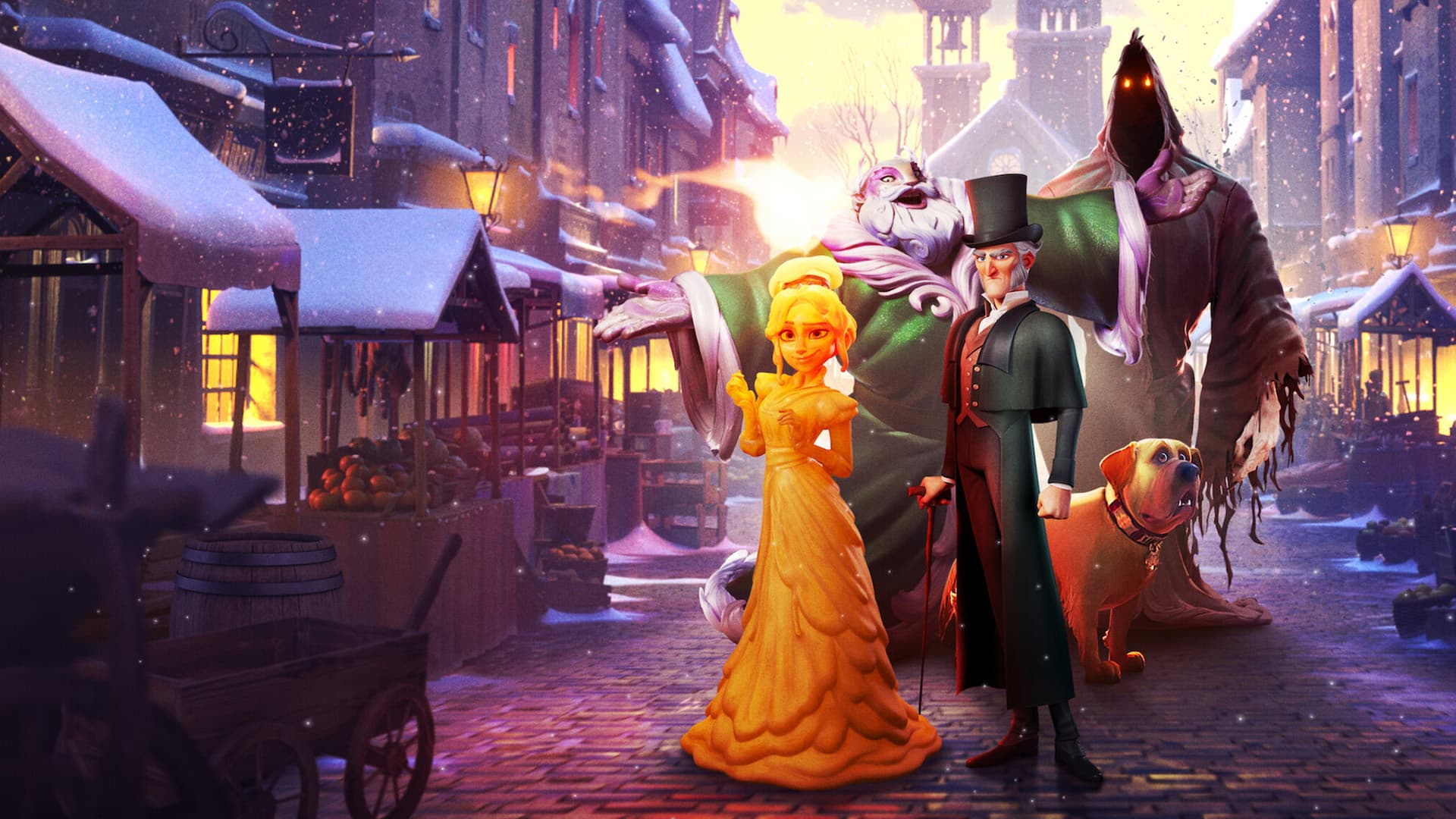
Scrooge: A (Not So) Bad Christmas is an animated musical comedy with an atmosphere oscillating between festive lightness and deliberate darkness, a sung adaptation of Charles Dickens' tale. The story follows the miser Ebenezer Scrooge, visited by three spirits on Christmas Eve who reveal to him the path to redemption. Broadcast on a streaming platform with a classification intended for children from 7 years old, the film primarily targets young children, but several of its sequences are in fact better suited to older school-age children or pre-adolescents.
Violence
The film is not violent in the direct sense of the term, but it deploys sustained anxiety-inducing imagery that can deeply unsettle young children. The ghost of Christmas Yet to Come takes the form of a Reaper with frankly demonic appearance, surrounded by creatures called Fearlings whose aesthetic clearly derives from children's horror visuals. Scenes show Scrooge witnessing his own funeral, the vision of his grave, and the image of people openly rejoicing at his death. These sequences are narratively justified, they constitute the shock necessary for the character's transformation, but their visual intensity is real and deserves to be anticipated for sensitive children.
Underlying Values
The narrative carries a clear and structuring message of redemption: it is never too late to change, and past mistakes imprison only those who refuse to face them. The relationship with wealth is central and explicitly critical: material accumulation is shown as a path towards isolation and social death. Generosity and compassion towards the poor are valued without equivocation. The film does, however, present the Cratchits' poverty as a morally ennobling condition, associated with family happiness and virtue, which softens the critical view of the structural causes of destitution. This is a concrete angle worth exploring with an inquisitive child: can one be poor, unhappy, and not virtuous all the same?
Parental and Family Portrayals
The parental and family figure is at the heart of the emotional apparatus. The Cratchit family embodies a model of warmth, solidarity and love despite hardship. The character of Tiny Tim, a gravely ill child whose potential death is shown explicitly, is the element most likely to affect a young viewer emotionally. The film does not look away: the child's serious illness and the consequences of poverty on access to medical care are represented without sugarcoating, which is a narrative strength but also a point of vigilance for parents of children particularly sensitive to death or illness.
Social Themes
Victorian poverty and unequal access to medical care are narratively active plot elements, not merely background decoration. The film shows that children die because their families cannot afford to care for them, and that those with the economic power to change this choose not to. This social dimension is treated with an honesty that makes it a solid starting point for discussing with a child economic inequality and collective responsibility.
Discrimination
The Cratchit family is represented as poor, virtuous and happy despite their destitution, which perpetuates the cliché of noble poverty without ever questioning the mechanisms that produce it. This stereotype is not malicious but it shapes the moral reading of the narrative: virtue lies with the poor, vice with the rich, without middle ground. For a child, this binary is legible; for a pre-adolescent, it warrants questioning.
Strengths
The adaptation remains faithful to the moral economy of Dickens' text while giving it a musical form accessible to young audiences. The film fully embraces the darkness of the original tale rather than systematically defusing it, which gives it genuine emotional tension and preserves the transformative reach of the story. The structure of three spectral visits is effectively carried by the musical narration. From an educational standpoint, the film transmits an English literature classic in a format that can serve as a first gateway to Dickens, with genuine honesty about the themes of death, repentance and social responsibility.
Age recommendation and discussion points
The film is suitable from 7 years old for children not sensitive to anxiety-inducing imagery, but viewing will be more serene from 8 or 9 years old for most children. After the film, two questions are worth posing: why did Scrooge take so long to change, and what really frightened him, death or solitude? And also: are the Cratchits happy because they are poor, or in spite of their poverty?
Synopsis
On a cold Christmas Eve, selfish miser Ebenezer Scrooge has one night left to face his past — and change the future — before time runs out.
About this title
- Format
- Feature film
- Year
- 2022
- Runtime
- 1h 36m
- Countries
- United Kingdom
- Original language
- EN
- Directed by
- Stephen Donnelly
- Main cast
- Luke Evans, Olivia Colman, Jessie Buckley, Johnny Flynn, Fra Fee, Giles Terera, Trevor Dion Nicholas, James Cosmo, Jonathan Pryce, Oliver Jenkins
- Studios
- Timeless Films, Axis Studios
Content barometer
- Violence2/5Moderate
- Fear4/5Intense
- Sexuality0/5None
- Language0/5None
- Narrative complexity1/5Accessible
- Adult themes0/5None
Values conveyed
- Compassion
- Forgiveness
- generosity
- redemption
- family