
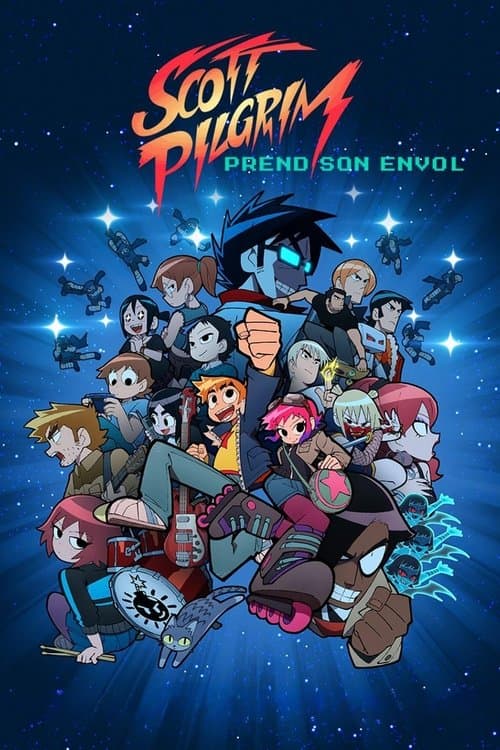
Scott Pilgrim Takes Off
Does this age rating seem accurate to you?
Detailed parental analysis
Scott Pilgrim Takes Off is an animated series with an energetic and offbeat tone, blending romantic comedy, stylised action and retro video game aesthetics. The plot follows Scott Pilgrim, an awkward young musician, who must face the seven exes of the mysterious Ramona Flowers in order to win her heart. It is aimed primarily at teenagers and young adults, particularly those familiar with geek culture and the video game codes of the 1990s and 2000s.
Violence
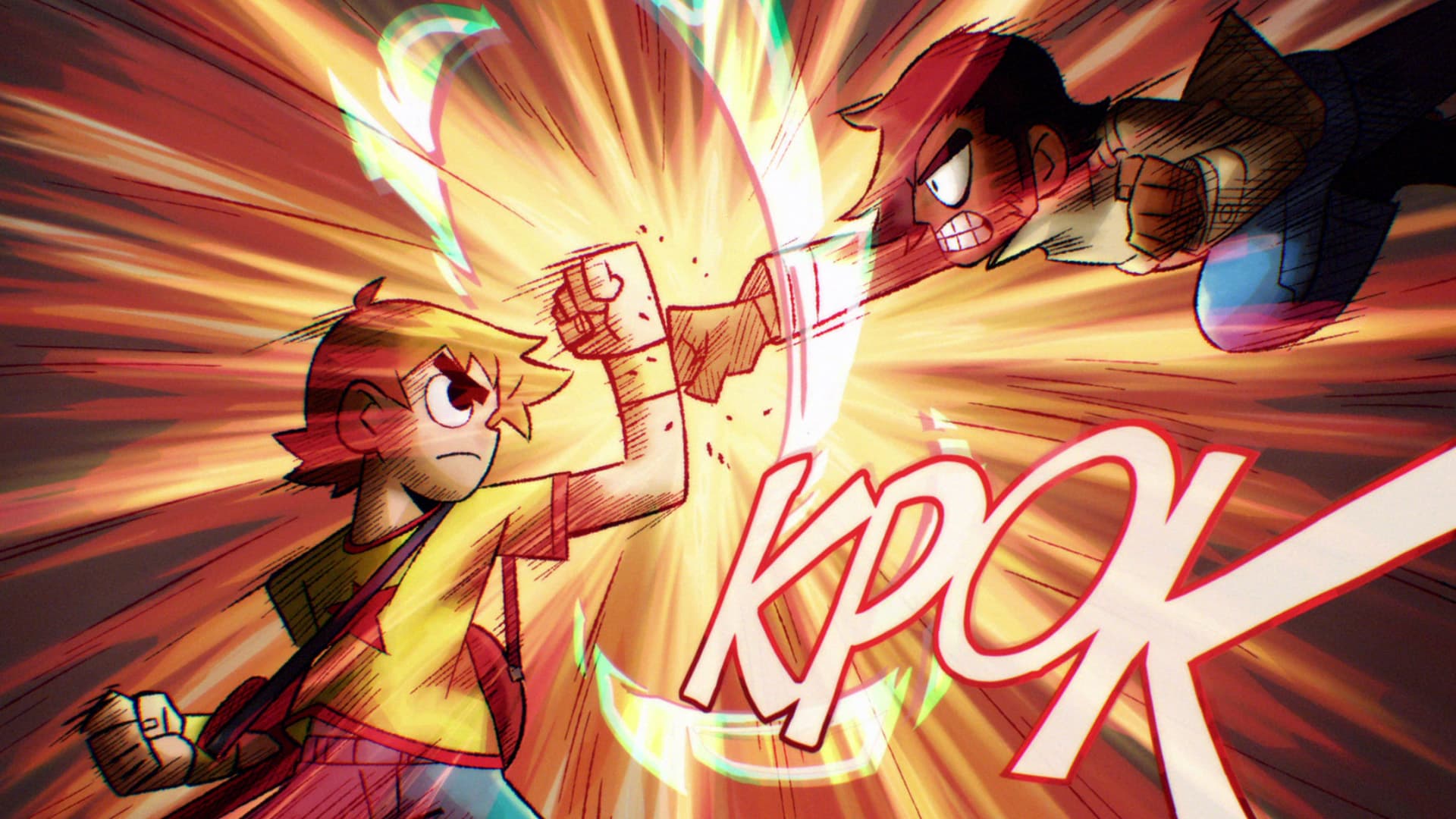
Fights are numerous, repetitive and constitute the series' main spectacular appeal. The violence is entirely stylised within a video game aesthetic: characters explode into coins, impacts are punctuated by visual onomatopoeia and injuries have no realism whatsoever. Scott briefly spits blood in one scene, and weapons such as knives and tridents appear occasionally. This presentation greatly downplays the violence, making it more spectacle than threat, but the frequency of confrontations remains high. For a pre-teenager, the question to ask is not one of fear but rather of their relationship to conflict resolved systematically through physical force.
Underlying Values
The heart of the narrative rests on the idea that love drives one to confront one's past and grow, a structurally positive message. However, the narrative logic places the romantic relationship first under the sign of physical competition: defeat the exes to deserve the other. This romantic-combative framework deserves discussion, as it naturalises a somewhat unbalanced vision of romantic conquest. The series partially corrects this pattern by developing Ramona's agency and the evolution of other characters, but the narrative architecture remains that of a man fighting to win a woman.
Discrimination
The series warrants particular attention on this point: the white protagonist Scott and Ramona, also white, occupy the narrative centre, whilst Matthew Patel, the first ex to be confronted, is the only character of explicitly identifiable Indian descent among the antagonists. This configuration does not amount to constructed racist discourse, but reproduces a common pattern whereby the racialised character is assigned the role of obstacle. It is a concrete point to flag and discuss with a teenager, not as a condemnation of the film but as an exercise in critical examination of representational habits.
Sex and Nudity
Romantic relationships are present and central: kissing, scenes of couples in bed in underwear, and direct allusions to sexual relations. Nothing is shown explicitly, but the tone is sufficiently direct that the series is not suitable for children. The initial relationship between Scott, 23 years old, and Knives Chau, 17 years old, is presented in comedic register, which mitigates its problematic scope without ignoring it: this is precisely the kind of detail that calls for a remark from the accompanying adult.
Substances
Characters drink alcohol at parties and one appears drunk in a scene. Characters smoke cigarettes. These elements are present without being glorified or sanctioned: they are part of the social backdrop of young adults at gatherings. Consumption is not a narrative subject in its own right, but it is visible and unremarked upon.
Language
The language is colloquial, punctuated by insults and censored exclamations, with some uncensored words. The register is that of teenage energy and pop dialogue: raw without being sustained vulgarity. For a secondary school student, this is probably already familiar vocabulary, but it should be noted for younger viewers.
Strengths
The series achieves an inventive rewriting of its source material by displacing audience expectations onto the narrative structure itself, which makes it more interesting for a teenager who has grown up with the codes of the genre. The writing of secondary characters, particularly Wallace Wells, benefits from real depth and presence that goes beyond the simple supporting role. The visual aesthetic, saturated with references to 2000s geek culture, functions as a terrain of shared cultural recognition between teenagers and young adults. The series also poses, in a manner less naive than it might appear, questions about how past relationships continue to influence present ones.
Age recommendation and discussion points
The series is suitable from age 14 for a teenager comfortable with geek culture codes and offbeat humour register, and more comfortably from age 16 given the sexual allusions, questionable romantic schema and repeated violence. Two useful discussion angles after viewing: why is the love story constructed as a fighting tournament, and what does this say about how we represent romantic conquest; and how does the series treat its characters differently according to their background, notably in antagonistic roles.
Synopsis
Scott Pilgrim meets the girl of his dreams, Ramona Flowers, only to find out her seven evil exes stand in the way of their love.
Where to watch
Availability checked on Apr 03, 2026
About this title
- Format
- TV series
- Year
- 2023
- Countries
- Japan, United Kingdom, United States of America
- Original language
- EN
- Directed by
- Bryan Lee O'Malley, BenDavid Grabinski
- Main cast
- Michael Cera, Mary Elizabeth Winstead, Satya Bhabha, Kieran Culkin, Chris Evans, Anna Kendrick, Brie Larson, Alison Pill, Aubrey Plaza, Brandon Routh
- Studios
- Science SARU, UCP, Complete Fiction, Marc Platt Productions, Faust Av, Netflix
Content barometer
- Violence3/5Notable
- Fear1/5Mild
- Sexuality2/5Mild
- Language2/5Moderate
- Narrative complexity1/5Accessible
- Adult themes2/5Present
Watch-outs
- Alcohol
- Strong language
- Violence
- Sexuality
- Ethnic or racial stereotypes
Values conveyed
- Friendship
- Autonomy
- perseverance
- loyalty
- identity