Teacher's Pet
Teacher's Pet
Your feedback improves this guide
Your feedback highlights guides that need a second look and keeps the rating trustworthy.
Does this age rating seem accurate to you?
Sign in to vote
Watch-outs
What this film brings
Content barometer
Violence
1/5
Mild
Fear
2/5
A few scenes
Sexuality
1/5
Allusions
Language
0/5
None
Narrative complexity
2/5
Moderate
Adult themes
0/5
None
Expert review
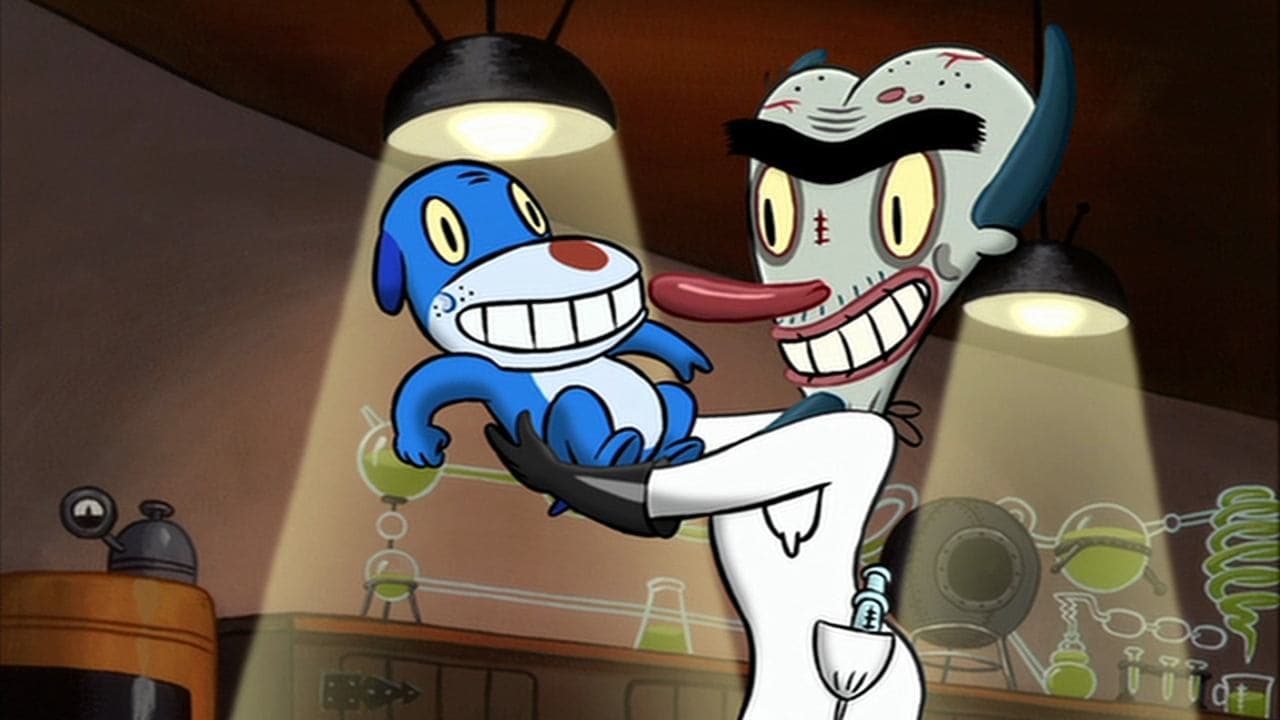
This animated comedy is clearly aimed at children, with a playful and silly tone built around a dog who dreams of becoming human. The main sensitive elements are a few chase sequences, a quirky scientist who is framed as threatening, and some odd body transformation ideas that may unsettle very young viewers, especially when the story mentions awkward hybrid creatures and shows a strange laboratory setting. The intensity stays mild to moderate and very cartoony, with no graphic violence and no lasting darkness, but several scenes use separation, temporary danger, and mad science suspense in ways that can feel intense for preschoolers. For most children, it works better around age 6, and many will enjoy it more a little later when they can follow the identity jokes and plot complications. Parents can help by reminding children that the transformations are make believe and that the scary scientist is exaggerated, which usually keeps the experience reassuring.
Synopsis
Meet Spot, a clever little dog with big dreams of becoming a real boy. When Spot finds out that a crazy scientist can make his wish come true, he takes a cross-country trek with Leonard, his best friend and master, and their mom. However, Dr. Krank's experiments are a little less than perfect, and it will take Leonard and his pet pals to right this genetic wrong.
Difficult scenes
The story begins with an emotional separation between Leonard and his dog when the family trip does not allow pets. It is handled with humor, but a young child who is very attached to animal stories may still feel sad or worried when the dog is left behind and then sets off alone to find his friend. Several scenes involve Dr. Krank, a scientist working in a laboratory who promises dramatic transformations. His behavior is odd and self serving, and he is mainly interested in showing off his experiment, which creates tension when the children realize his plan is not truly safe or kind. The transformation theme may be the strangest part for very young viewers, because the film talks about animals being turned into awkward human hybrids. Even though the visuals remain cartoony and not graphic, the idea of a changed body and the appearance of an adult version of the dog may feel confusing or unsettling. Later in the story, there is more chasing, risk of capture, and a machine going out of control inside the lab. These sequences stay slapstick and unrealistic, with no real injury detail, but the noise, frantic pace, and temporary peril may be intense for children who are sensitive to suspense.
Where to watch
No verified platform for the US market yet. We keep this section updated as availability changes.
Availability checked on Apr 01, 2026
About this title
- Format
- Feature film
- Year
- 2004
- Runtime
- 1h 14m
- Countries
- United States of America
- Original language
- EN
- Directed by
- Timothy Bjorklund
- Main cast
- Nathan Lane, Kelsey Grammer, Shaun Fleming, Debra Jo Rupp, David Ogden Stiers, Jerry Stiller, Paul Reubens, Megan Mullally, Wallace Shawn, Rob Paulsen
- Studios
- Walt Disney Pictures, Disney Television Animation, Toon City Animation
Content barometer
Violence
1/5
Mild
Fear
2/5
A few scenes
Sexuality
1/5
Allusions
Language
0/5
None
Narrative complexity
2/5
Moderate
Adult themes
0/5
None
Expert review
This animated comedy is clearly aimed at children, with a playful and silly tone built around a dog who dreams of becoming human. The main sensitive elements are a few chase sequences, a quirky scientist who is framed as threatening, and some odd body transformation ideas that may unsettle very young viewers, especially when the story mentions awkward hybrid creatures and shows a strange laboratory setting. The intensity stays mild to moderate and very cartoony, with no graphic violence and no lasting darkness, but several scenes use separation, temporary danger, and mad science suspense in ways that can feel intense for preschoolers. For most children, it works better around age 6, and many will enjoy it more a little later when they can follow the identity jokes and plot complications. Parents can help by reminding children that the transformations are make believe and that the scary scientist is exaggerated, which usually keeps the experience reassuring.
Synopsis
Meet Spot, a clever little dog with big dreams of becoming a real boy. When Spot finds out that a crazy scientist can make his wish come true, he takes a cross-country trek with Leonard, his best friend and master, and their mom. However, Dr. Krank's experiments are a little less than perfect, and it will take Leonard and his pet pals to right this genetic wrong.
Difficult scenes
The story begins with an emotional separation between Leonard and his dog when the family trip does not allow pets. It is handled with humor, but a young child who is very attached to animal stories may still feel sad or worried when the dog is left behind and then sets off alone to find his friend. Several scenes involve Dr. Krank, a scientist working in a laboratory who promises dramatic transformations. His behavior is odd and self serving, and he is mainly interested in showing off his experiment, which creates tension when the children realize his plan is not truly safe or kind. The transformation theme may be the strangest part for very young viewers, because the film talks about animals being turned into awkward human hybrids. Even though the visuals remain cartoony and not graphic, the idea of a changed body and the appearance of an adult version of the dog may feel confusing or unsettling. Later in the story, there is more chasing, risk of capture, and a machine going out of control inside the lab. These sequences stay slapstick and unrealistic, with no real injury detail, but the noise, frantic pace, and temporary peril may be intense for children who are sensitive to suspense.