Scarlet
果てしなきスカーレット
Does this age rating seem accurate to you?
Detailed parental analysis
Scarlet and Eternity is an animated film with a dark and epic atmosphere, blending medieval heroic fantasy, Norse mythology and ventures into a visually harrowing supernatural realm. A young girl from medieval Denmark, driven by a desire for revenge following her father's murder, traverses worlds and epochs in pursuit of justice, until her path crosses that of a pacifist character who gradually transforms her quest. The film is aimed at a teenage audience, and certainly not at children below 11 years old, though certain content warrants additional caution depending on the young viewer's sensitivity.
Violence
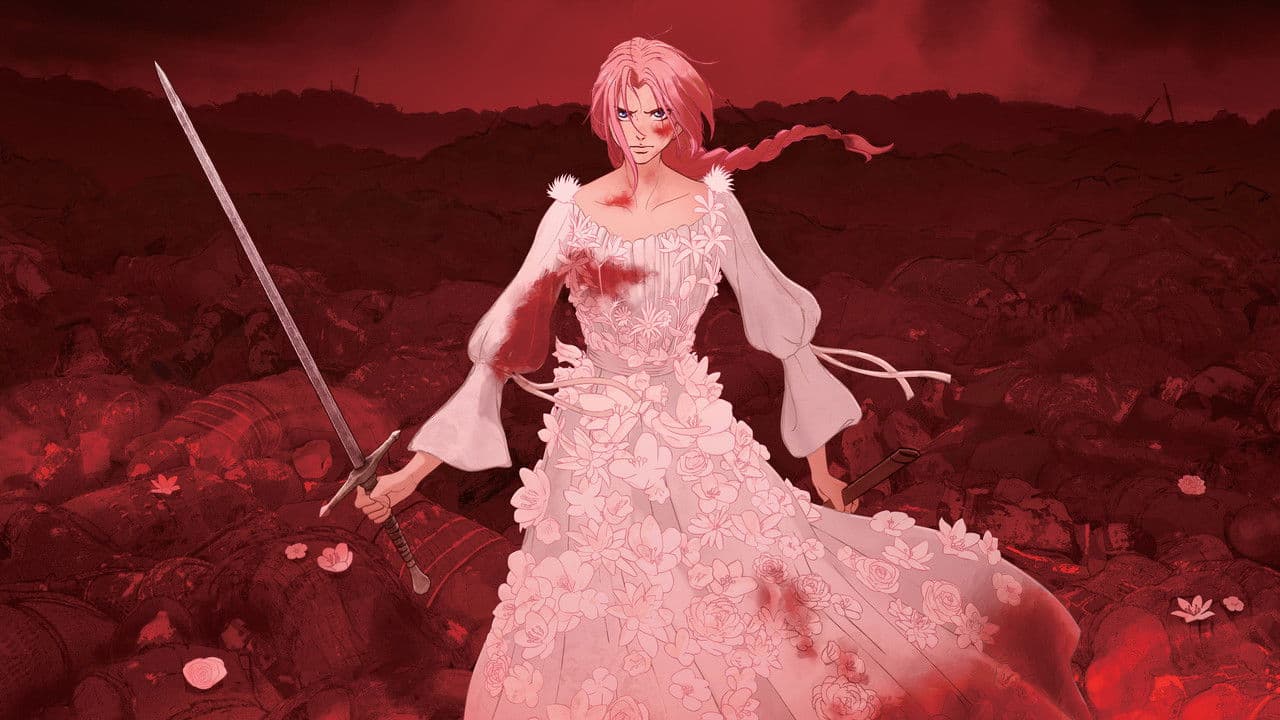
Violence is the film's most prominent and most problematic element for parents. Sword fights are numerous, animated with visible blood and blade wounds shown clearly. A child is held in the air by her hair as a hostage. A scene depicts the protagonist's father executed, found face down in a pool of blood. A blood-soaked attacker approaches a character with clearly established murderous intent. A descent into hell represented by disembodied hands dragging the protagonist into a mass of screaming bodies constitutes one of the film's most anxiety-inducing sequences. To this is added a combat sequence in which eyeballs are compressed, interrupted before tearing. This level of violence is real and repeated throughout the narrative. What partially nuances it is the narrative purpose of this violence: the film does not glorify it, it shows its devastating consequences and progressively constructs an anti-revenge discourse. Yet intention is not enough to mitigate the visual impact, particularly for younger adolescents.
Underlying Values
The film carries a strong and coherent structural message: revenge is a destructive cycle, and breaking this cycle passes through compassion and forgiveness. This message is embodied in the male pacifist character, whose influence on the protagonist constitutes the true arc of the narrative. The father's ultimate wish is explicitly one of forgiveness, redirecting the heroine's trajectory. The film also adopts a clearly anti-war stance, presenting violence as a problem rather than a solution. The tension flagged between this pacifist discourse and the profusion of animated violence is real, but it can also become a lever for discussion with the adolescent: how can a film speak against violence whilst showing so much of it, and is this contradictory or deliberate?
Parental and Family Portrayals
The father-daughter relationship lies at the heart of the film's emotional mechanics. The father is presented as a loving figure whose violent death is the narrative's point of departure, witnessed directly by the child protagonist. His role does not end with his disappearance: his final wish of forgiveness retroactively redefines the meaning of the entire quest. This parental figure is thus simultaneously absent, grieved and morally structuring, making it a potentially rich axis for discussion, but also emotionally dense for a young viewer who has themselves experienced bereavement.
Social Themes
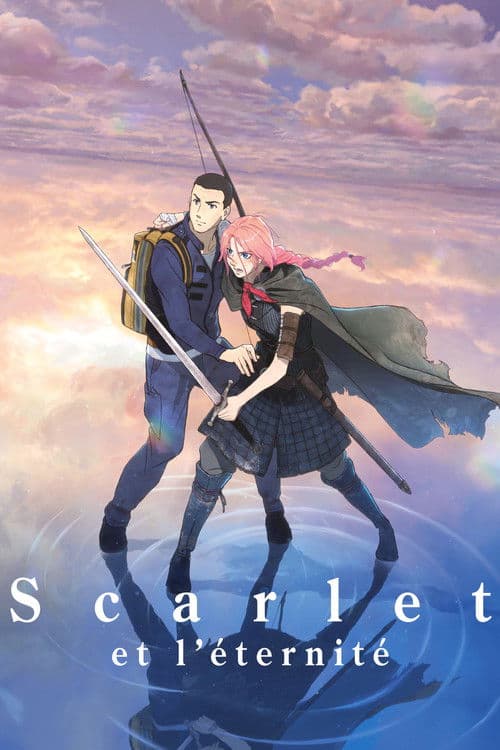
The film constructs a friendship between a medieval Danish warrior and a contemporary Japanese rescuer, an encounter across time that serves as a metaphor for the capacity for mutual understanding across cultures and epochs. The medieval Nordic anchoring and the presence of mythological references (the world of the dead, fantastic cosmology) give the film a dimension of cultural transmission unusual in mainstream animation. War and its ravages are treated as a substantive subject matter, not as mere backdrop.
Sex and Nudity
A fleeting sexual suggestion shows a female character sliding her dress from her shoulders. The scene is brief and goes no further, but it is intentionally suggestive and without direct bearing on the main plot.
Substances
An extended scene depicts a dancer character holding a cigarette between his lips. The length of the scene lends it considerable visual weight, even though tobacco is not explicitly valorised as cool or desirable behaviour. It is sufficient to flag it, particularly for parents of younger adolescents.
Strengths
The film distinguishes itself through the ambition of its narrative architecture, which interweaves distinct temporalities and cosmologies without losing the emotional thread. The protagonist's arc is genuinely constructed: her transformation from a figure of vengeance into a character capable of forgiveness occurs progressively and credibly, carried by her relationship with the pacifist character. The question it poses, namely what the desire for revenge does to those who nurture it, is treated with a depth unusual for an animated film aimed at adolescents. The anchoring in Norse mythology furthermore offers an original entry point towards cultural references that few mainstream animated films seriously explore.
Age recommendation and discussion points
The film is not recommended for children under 11 due to sustained violence and several traumatic scenes, and remains to be evaluated with caution for sensitive adolescents up to 13 years old. For a curious and non-hypersensitive 12 to 13-year-old, it can be watched with an adult present. Two angles of discussion are worth opening after viewing: why does the film choose to show so much violence to defend a message against violence, and what does concretely forgiving someone who has harmed those you love actually mean.
Synopsis
After failing to avenge her father's murder, Princess Scarlet, wakes up in the "Land of the Dead." In this world filled with madness, if she does not achieve her revenge against her nemesis and reach the "No End Place," she will become "Void" and cease to exist. Can Scarlet find a way to live at the end of her endless journey?
About this title
- Format
- Feature film
- Year
- 2025
- Runtime
- 1h 52m
- Countries
- Japan, United States of America
- Original language
- JA
- Directed by
- Mamoru Hosoda
- Main cast
- Mana Ashida, Masaki Okada, Yutaka Matsushige, Kotaro Yoshida, Koji Yakusho, Masachika Ichimura, Yuki Saito, Shota Sometani, Munetaka Aoki, Kazuhiro Yamaji
- Studios
- Studio Chizu, Nippon Television Network Corporation, Sony Pictures, Sony Pictures, KADOKAWA, TOHO
Content barometer
- Violence4/5Strong
- Fear4/5Intense
- Sexuality1/5Allusions
- Language0/5None
- Narrative complexity3/5Complex
- Adult themes1/5Mild
Values conveyed
- Courage
- Compassion
- Forgiveness
- resilience
- empathy