Santa's Workshop
Does this age rating seem accurate to you?
Detailed parental analysis
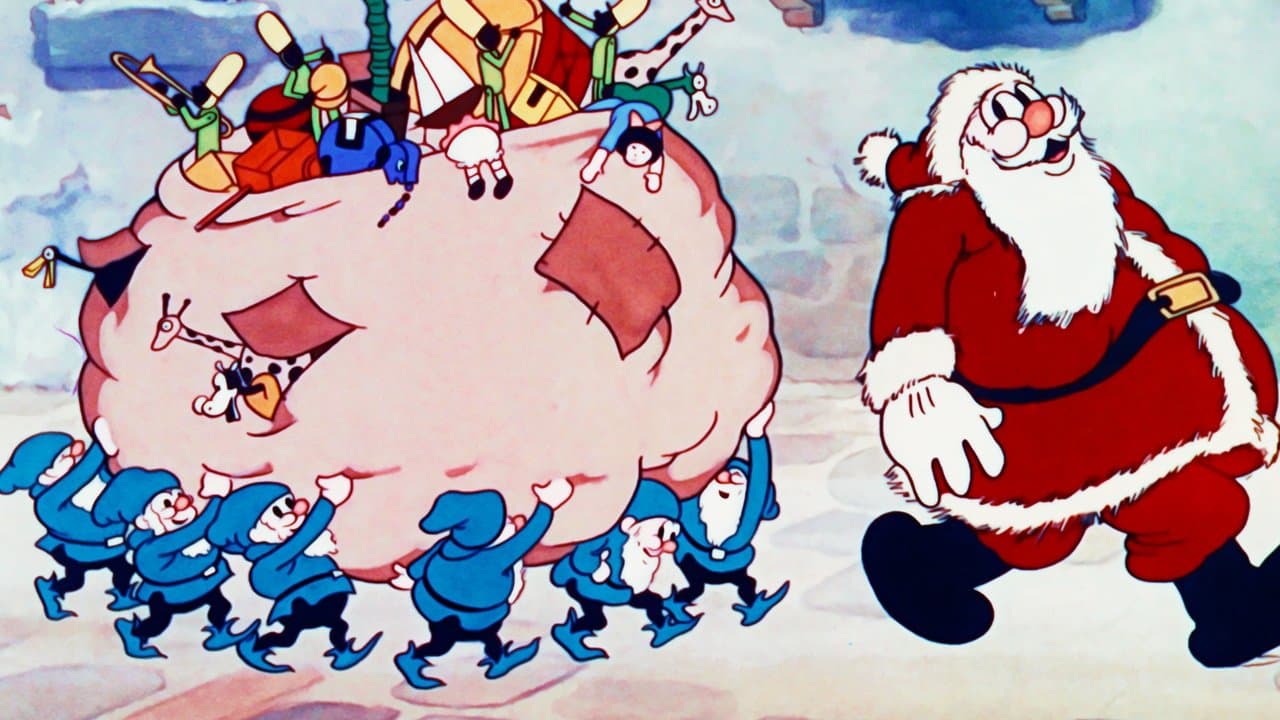
A cheerful and festive animated short film produced by Disney, 'Santa's Workshop' immerses the viewer in the frantic preparation of Christmas through toy manufacturing and the checking of well-behaved children. The plot follows Father Christmas and his elves a few hours before the big departure, between toy production lines and the list of deserving children. The film targets young children, but contains elements that make its viewing today non-negotiable without parental preparation.
Discrimination
The film explicitly constructs a hygienic merit-based morality: children receive gifts if they eat their spinach, brush their teeth and obey. This logic of conditional reward, presented without distance, can fuel a useful discussion about what 'deserving' something means, and about the difference between genuine values and behavioural conformism. Furthermore, the film celebrates collective work and effort as conditions for success: the elves produce, organise and deliver in a logic of productive solidarity that constitutes the true positive narrative thread of the story.
Underlying Values
The film explicitly constructs a hygienic merit-based morality: children receive gifts if they eat their spinach, brush their teeth and obey. This logic of conditional reward, presented without distance, can fuel a useful discussion about what 'deserving' something means, and about the difference between genuine values and behavioural conformism. Furthermore, the film celebrates collective work and effort as conditions for success: the elves produce, organise and deliver in a logic of productive solidarity that constitutes the true positive narrative thread of the story.
Violence
A brief sequence shows a spider deliberately used to frighten dolls in order to make their hair stand on end before a permanent wave treatment. The procedure is comic in intent but may startle very young children. A toy aeroplane crash with chaos of figurines adds a moment of visual agitation without real narrative consequence. The violence remains entirely in the burlesque register and does not constitute a cause for concern in itself.
Strengths
The film possesses real visual liveliness and a sense of rhythm that gives it an authentic charm despite its age. The toy manufacturing sequence, with its gears, animated assembly lines and busy elves, remains inventive and visually generous. For an accompanying adult, the film chiefly offers a valuable historical testimony to how cultural and racial representations were integrated without distance in American popular entertainment of the 1930s, making it a concrete and rare support for addressing the history of stereotypes with a sufficiently mature child.
Age recommendation and discussion points
The film can be shown from age 6 onwards for its festive atmosphere, provided explicit parental preparation before viewing regarding the racial caricatures present. For a child aged 8 to 10 and above, the film becomes a support for direct discussion: why did these representations exist, what do they tell us about the era, and how do we feel seeing them today? It is a difficult but worthwhile conversation, provided the parent is ready to lead it without avoiding it.
Synopsis
Santa's little helpers must hurry to finish the toys before Christmas Day.
About this title
- Format
- Short film
- Year
- 1932
- Runtime
- 7m
- Countries
- United States of America
- Original language
- EN
- Studios
- Walt Disney Productions
Content barometer
- Violence1/5Mild
- Fear1/5Mild
- Sexuality0/5None
- Language0/5None
- Narrative complexity0/5Simple
- Adult themes0/5None
Watch-outs
- Ethnic or racial stereotypes
Values conveyed
- Perseverance
- Autonomy
- Christmas
- cooperation
- generosity