
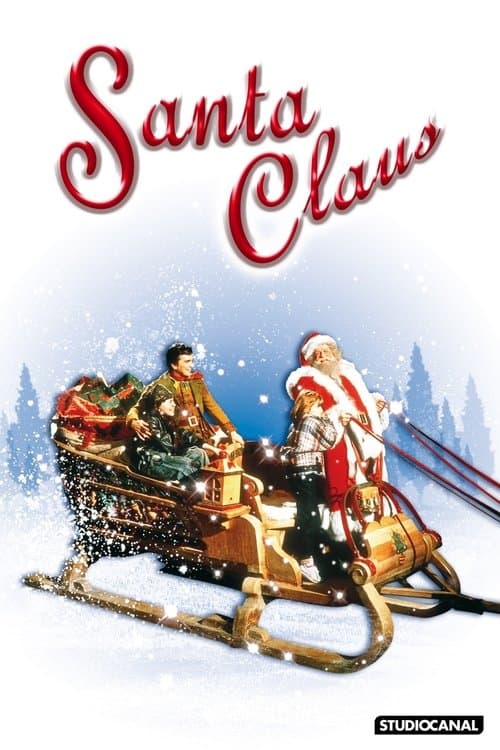
Santa Claus: The Movie
Does this age rating seem accurate to you?
Detailed parental analysis
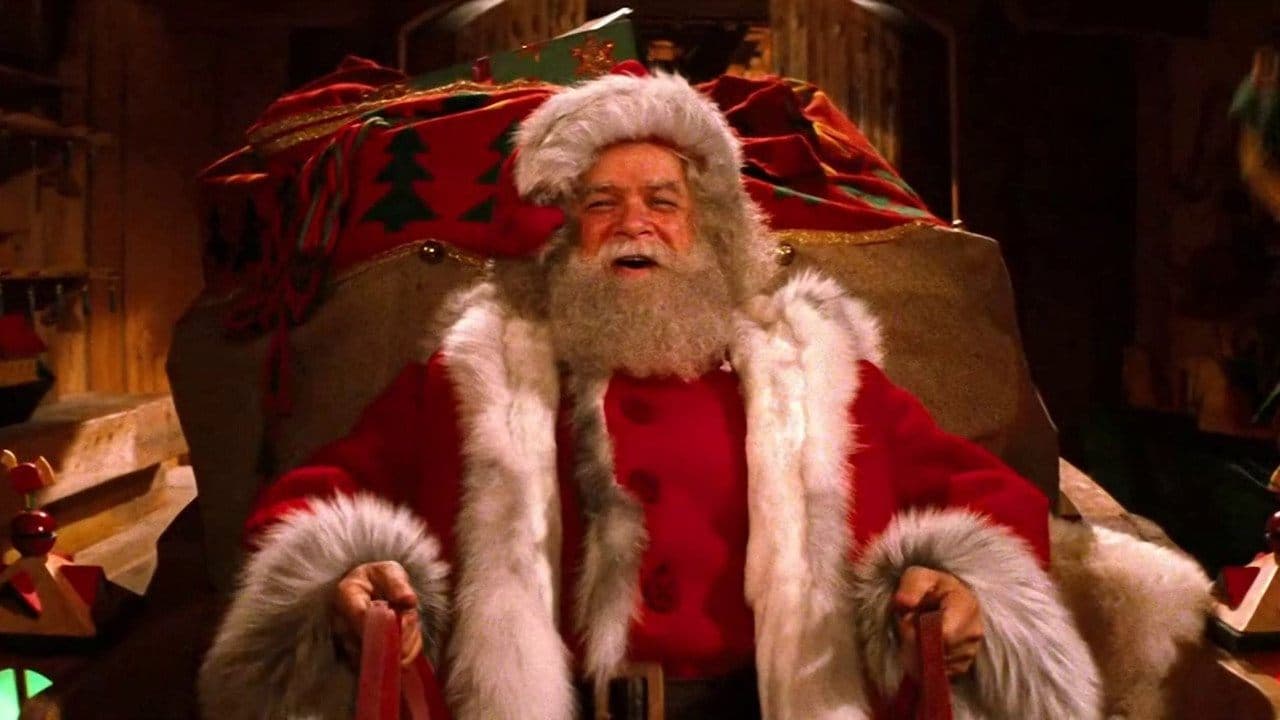
Santa Claus: The Movie is a family fantasy film with an uneven tone, oscillating between a warm Christmas tale and 1980s consumerist satire. The plot follows the legendary origin of Father Christmas, then his confrontation with an unscrupulous businessman who seeks to exploit the magic of the holidays for commercial gain. The film is primarily aimed at young children, but its second half, darker and more cynical, clearly exceeds this target audience.
Underlying Values
The film is structured around an explicit tension between selfless generosity and capitalist greed. The first half celebrates giving without return, the magic of the free gesture and collective joy. The second half shifts into a frontal critique of consumerism: an industrialist seeks to patent magical toys, saturate the market and supplant Father Christmas through profit logic. This contrast is pedagogically interesting but narratively brutal, the shift in register being so abrupt that it can disorient young children for whom the film initially seemed intended. The final message remains clear: authentic generosity resists commodification, but the path to get there exposes children to a rather raw vision of the adult world.
Substances
The antagonist smokes cigars and drinks beer in almost every scene in which he appears, without these behaviours ever being commented on or morally sanctioned as such. A secondary character dressed as Father Christmas is shown drinking alcohol from a bottle in a bag, in a register that blends comedy and degradation. These elements are recurring and associated with the film's negative character, which creates a form of implicit coding, but their repeated and unquestioned presence merits being flagged to parents.
Violence
Violence remains within acceptable limits for a family film, but a few scenes may affect the youngest viewers. A child is tied up and abandoned in a dark basement before being rescued, a sequence that plays on the anxiety of confinement and abandonment. A demonstration of dangerous toys includes a stuffed bear's head torn off with stuffing spilling out, an image deliberately disturbing in its context. The opening scene shows an elderly couple apparently dying of cold in a blizzard. None of these scenes is gory, but their emotional charge can be strong for a child under six or seven years old.
Parental and Family Portrayals
Benevolent adult figures, notably Father Christmas and his wife, embody a model of a stable, warm and supportive couple. Conversely, the children in the contemporary narrative evolve in family environments that are little present or failing, which makes them vulnerable to manipulation by the antagonist. This fragility of secondary parental figures serves the narrative but establishes an atmosphere of emotional insecurity that contrasts with the ideal of Christmas that the film claims to celebrate.
Language
Language remains broadly mild, with a few slight departures from the American family register of the 1980s: terms such as 'crap', 'sucks' or 'hell' appear occasionally. Nothing shocking for a teenage audience, but worth noting for parents who wish to watch without any language departures with very young children.
Strengths
The first half of the film possesses a genuine quality of a tale: it takes time to build the Father Christmas universe with visual generosity and emotional sincerity that work well for young children. The staging of the workshops and the magic of Christmas is carefully crafted and creates a warm atmosphere difficult to find in contemporary productions. The film also has the merit of posing, albeit clumsily, a question that few children's films dare to formulate: what becomes of magic when it is put to the service of profit? This is a concrete entry point for a conversation about the difference between giving and selling.
Age recommendation and discussion points
The film is accessible from seven or eight years old for a serene viewing experience, the scenes of anxiety and the tone of the second half being too destabilising for younger children. Two angles of discussion are worth pursuing after viewing: why does the villain want to transform Christmas gifts into products to buy, and what makes a gift truly precious? You can also ask the child what they felt when the film changed tone, to help them put words to the narrative rupture.
Synopsis
In ancient times, a man named Claus, who delivers toys in his small village, fulfils his destiny to become Santa Claus after meeting an expert toy-making elf, Patch, in the North Pole. In the present day, Santa Claus has become overwhelmed by his workload, and the disgruntled Patch flees the workshop to New York City. There, Patch unknowingly threatens the fate of Christmas by taking a job at a failing toy company run by a scheming businessman.
Where to watch
Availability checked on Apr 28, 2026
About this title
- Format
- Feature film
- Year
- 1985
- Runtime
- 1h 47m
- Countries
- United States of America, United Kingdom, Netherlands
- Original language
- EN
- Directed by
- Jeannot Szwarc
- Main cast
- Dudley Moore, John Lithgow, David Huddleston, Burgess Meredith, Judy Cornwell, Jeffrey Kramer, Christian Fitzpatrick, Carrie Kei Heim, John Barrard, Anthony O'Donnell
- Studios
- Calash Corporation, Santa Claus Ltd.
Content barometer
- Violence2/5Moderate
- Fear2/5A few scenes
- Sexuality0/5None
- Language1/5Mild
- Narrative complexity2/5Moderate
- Adult themes2/5Present
Watch-outs
- Alcohol
- Abuse
Values conveyed
- Compassion
- generosity
- friendship
- helpfulness
- redemption