
Saint Seiya
聖闘士星矢
Does this age rating seem accurate to you?
Detailed parental analysis
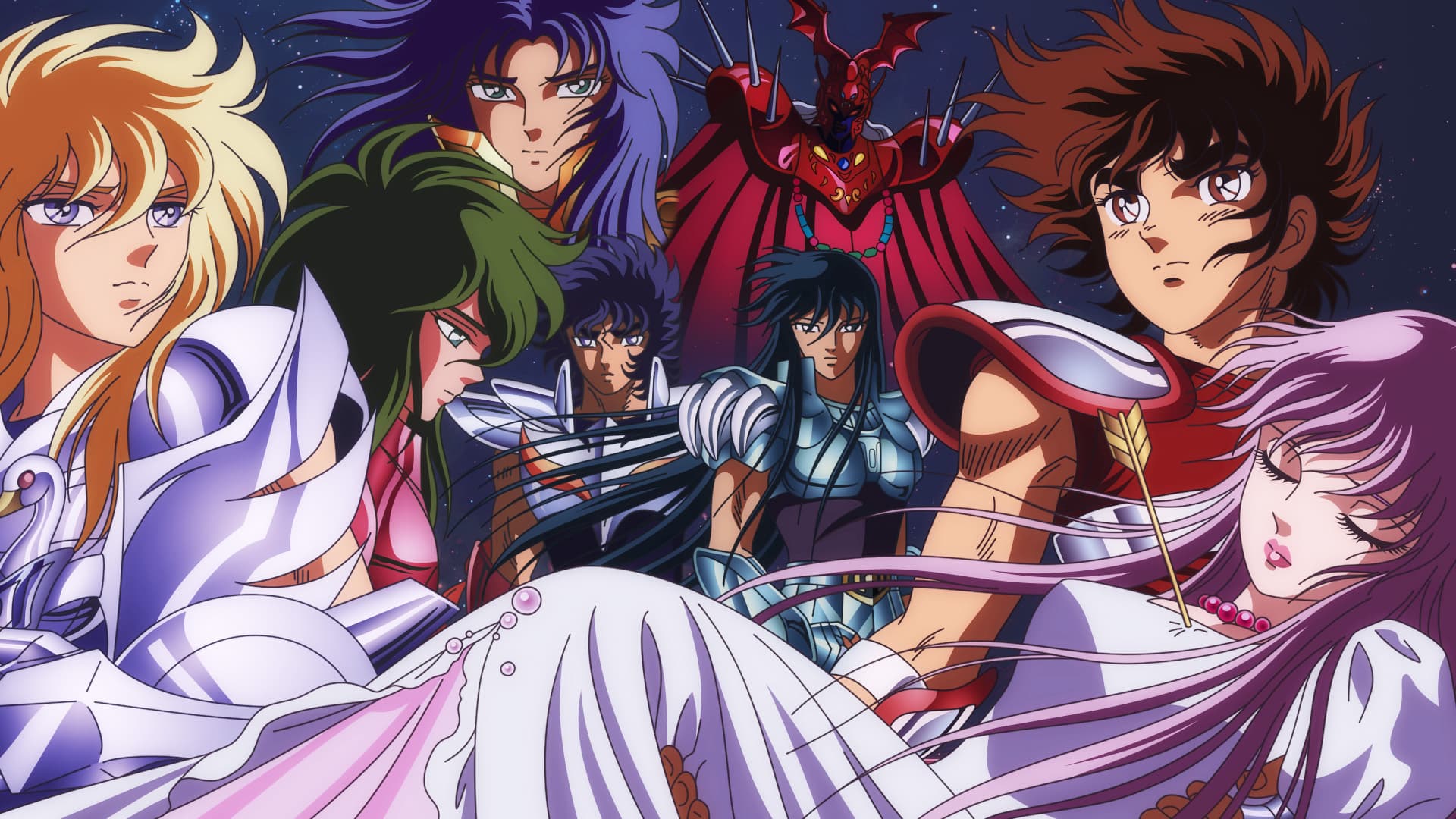
Saint Seiya, a Japanese animated series from 1986, is an epic adventure with an intense and often dark atmosphere, driven by a reinterpreted Greco-Roman mythology. The plot follows a group of young warriors, the Knights of the Zodiac, who fight at the risk of their lives to protect the goddess Athena against dark forces. The series is aimed at children from a certain age onwards and at teenagers, although the censored Western versions attempted, with mixed results, to make it more accessible to younger viewers.
Violence
Violence is the most striking element of the series and its constant narrative engine. Fights are intense, frequent and accompanied by visible blood in uncensored episodes. It is not gratuitous in the strict sense: each confrontation serves dramatic progression, and the physical sacrifice of the heroes is presented as proof of their moral commitment. That said, certain knights show no mercy towards defeated enemies and seem to find satisfaction in destruction, which gives a morally ambiguous colouring to characters supposed to be role models. The versions broadcast on Western children's channels have largely cut these sequences, but in their complete version, the episodes are not suitable for young children or those sensitive to violence.
Underlying Values
The narrative rests on a solid foundation of positive values: courage in the face of adversity, surpassing one's own limits, loyalty to one's companions and sacrifice in service of a cause greater than oneself. These themes are embodied with genuine emotional intensity and not in a superficial manner. However, physical performance and the suffering endured are constantly valorised as proof of worth, which warrants discussion with the child about the boundary between healthy perseverance and the glorification of pain. Unconditional loyalty to the group can also lead characters to questionable acts without the narrative truly questioning them.
Social Themes
The series draws extensively from Greek mythology and ancient cosmogonies, making it fertile ground for discovering or deepening these cultural references. The themes of war between divine forces and the fate of mortals caught between powers that surpass them run through the entire narrative, without explicit political treatment but with real symbolic weight on the question of collective sacrifice and the meaning of combat.
Parental and Family Portrayals
Parental figures are virtually absent from the narrative. The heroes are orphans or children separated from their families, left to their own devices from childhood and educated in conditions of extreme training that border on institutionalised mistreatment. This context is not questioned by the series, which presents it as the normal condition for training warriors. This is a useful angle of discussion with a child or teenager: what the series considers heroism in training would, in reality, resemble educational violence.
Language
In the original Japanese version and uncensored English versions, the language contains moderate profanity. Versions intended for children's channels have removed these elements. This is not a critical point for most families, but it is useful to know which version one is watching.
Strengths
Saint Seiya is a foundational work that has left a lasting mark on Japanese popular culture and a generation of European viewers. Its main strength lies in the emotional construction of characters and in the way the series conveys the weight of sacrifice with a sincerity rare for the genre. Greek mythology is used with a narrative inventiveness that can awaken genuine cultural curiosity in a young viewer. The group dynamics between the five main knights offer a nuanced representation of male friendship, with its rivalries, doubts and bursts of generosity. For a teenager, the series poses questions about the meaning of courage and the value of collective commitment with more depth than its reputation as an action series would suggest.
Age recommendation and discussion points
The series is not recommended before age 10 in its complete uncensored version, and can be watched with confidence from age 12 for a child accustomed to intense adventure narratives. Two angles of discussion deserve to be opened after viewing: why must the heroes suffer to prove their worth, and is suffering really proof of courage? And also: can unconditional loyalty to a group lead one to do things one would not dare to justify otherwise?
Synopsis
Ages ago, the goddess Athena was served by fighters called Saints who channeled the power of the Cosmos within them. Now a youth named Seiya has trained to become a Saint himself by earning the mystical Cloth of Pegasus. He is joined by other Saints with Cloths of their own to fight for Athena.
Where to watch
Availability checked on Apr 09, 2026
About this title
- Format
- TV series
- Year
- 1986
- Runtime
- 24m
- Countries
- Japan
- Original language
- JA
- Main cast
- Toru Furuya, Hirotaka Suzuoki, Ryo Horikawa, Koichi Hashimoto, Hideyuki Hori, Keiko Han, Hideyuki Tanaka, Mami Koyama, Yuriko Yamamoto, Kazuyuki Sogabe
- Studios
- Toei Animation
Content barometer
- Violence4/5Strong
- Fear3/5Notable tension
- Sexuality0/5None
- Language2/5Moderate
- Narrative complexity2/5Moderate
- Adult themes0/5None
Watch-outs
- Death
- Violence
- Abuse
Values conveyed
- Courage
- Friendship
- Perseverance
- Loyalty
- sacrifice
- self-surpassing
- brotherhood