
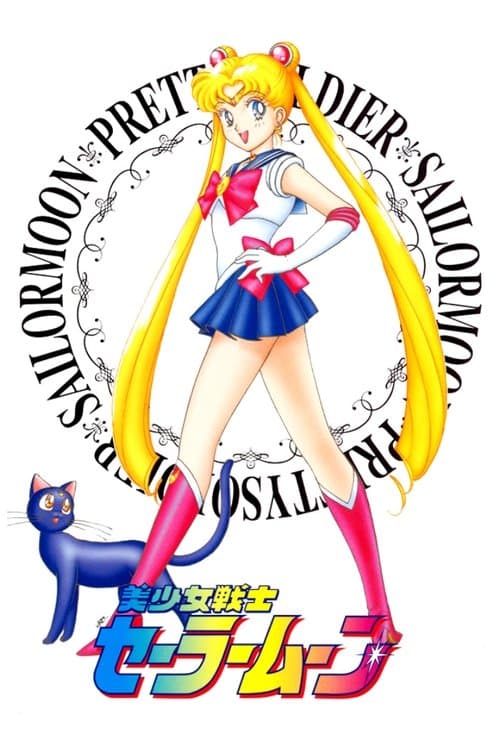
Sailor Moon
美少女戦士セーラームーン
Does this age rating seem accurate to you?
Detailed parental analysis
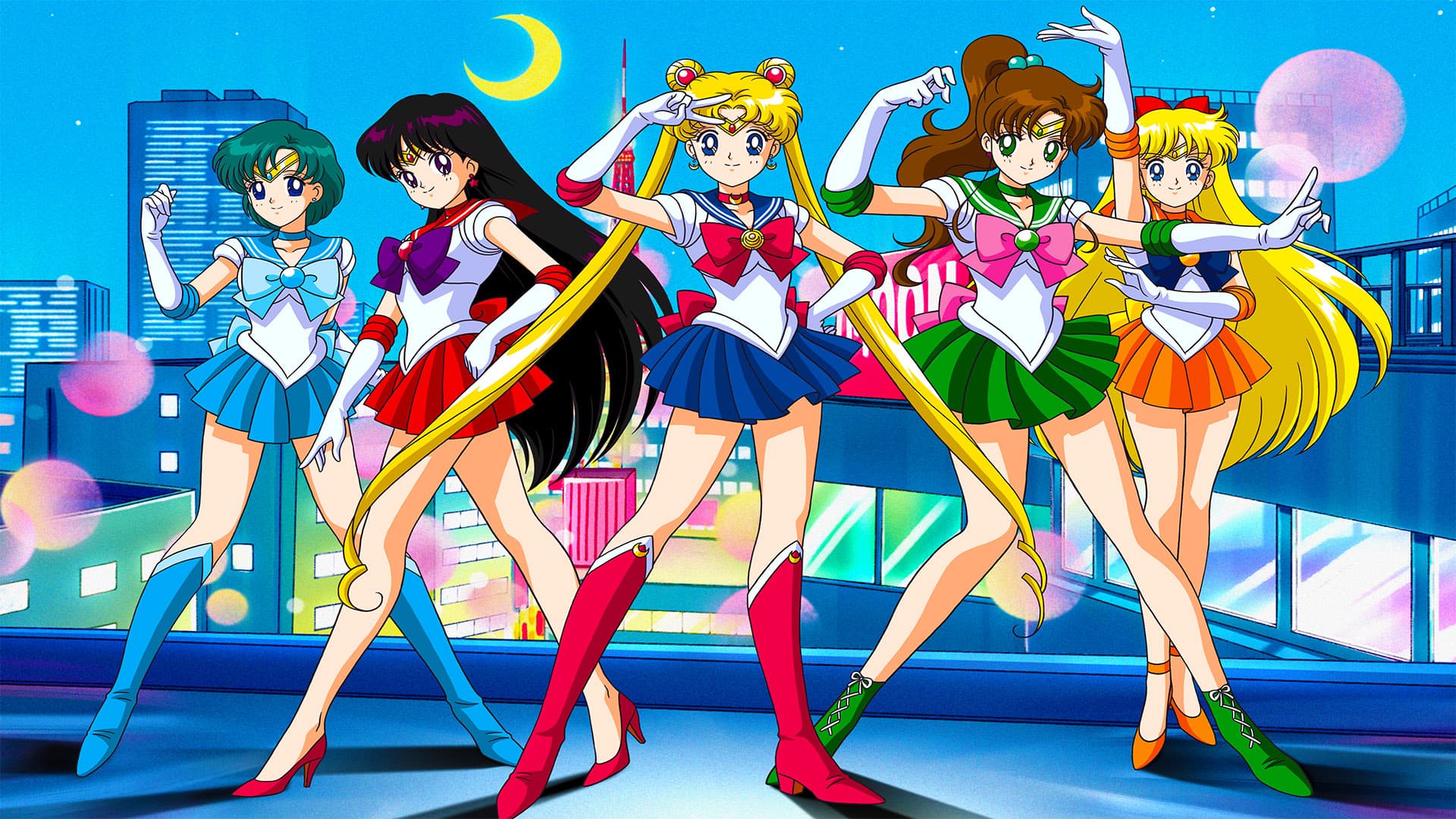
Sailor Moon is a Japanese animated series with a resolutely vibrant and cheerful tone, driven by a romantic-heroic mythology centred on teenage girls endowed with magical powers. The plot follows Usagi Tsukino, an awkward high schooler, who discovers that she is the reincarnation of a warrior princess destined to protect the Earth against dark forces. The series is primarily aimed at pre-teens, although its cross-generational popularity has made it a cultural object known to a much broader audience. The version watched matters considerably: the original Japanese version and the VIZ English version are notably more mature than the historical English-dubbed American version, and this choice determines much of parents' reservations.
Sex and Nudity
The series raises several concrete questions about nudity and sexualised content depending on the version watched. The characters' transformation sequences depict them as luminous silhouettes without visible anatomical detail, in the manner of a featureless doll, which remains very far from explicit. By contrast, the VIZ version contains dialogue with sexual undertones clearly unsuitable for children, notably allusions to undressing and nudity, and presents a baby changing scene where the child's lower body is entirely exposed on screen. The female characters also display bodies with exaggerated proportions, very thin waists and disproportionately long legs, in short outfits that showcase these silhouettes repeatedly throughout the series. This last point gradually establishes itself as a normalised visual backdrop, which warrants being discussed in advance with a child or pre-teen.
Discrimination
The historical English dubbed version systematically erased the homosexual relationships present in the original material: the female couple formed by Michiru and Haruka was rewritten as a relationship between cousins, and the male character Zoisite was changed to a woman to remove his relationship with Kunzite. This censorship is a heavy editorial choice that transforms existing representations by replacing them with fictional family ties. Gender stereotypes are moreover very present in the construction of the female characters, often defined by their sensitivity, their appearance or their relationship to romance, even if the series grants them genuine space for action and power. These elements offer good points of discussion with a child about what media choose to show or hide.
Violence
Violence is present regularly but remains largely stylised and codified in the register of fantasy combat. Monsters are defeated in confrontations that blend blows, electric shocks and fantastical weapons. One scene shows a monster impaled on lances and leaking a green substance, a blood substitute in the American version. The original Japanese version includes character deaths, whereas the historical American version replaces them with phrasings such as 'captured in the Negazone'. The intensity remains moderate overall, without gore or indulgence, but the repetition of torture or abuse scenes inflicted by antagonists on main characters can impress younger or more sensitive children.
Underlying Values
The series constructs a clear and generous moral code around courage, friendship, solidarity and compassion. Each Sailor Guardian embodies a particular virtue, and episodes often conclude with an explicit message on themes such as perseverance or the value of schoolwork. The central romantic relationship between Usagi and Tuxedo Mask, founded on the notion of reincarnated destinies and predetermined love, conveys a highly idealised conception of coupledom, where romantic love occupies a very large place in a pre-teen's life. This is a useful angle of discussion with a child who identifies strongly with the heroine.
Parental and Family Portrayals
Parental figures are virtually absent from the daily narrative. The teenagers evolve with considerable de facto autonomy, without their parents being truly involved in their adventures or choices. This invisibility of adults is typical of the shōjo genre but creates a framework where parental authority is neither questioned nor present, simply circumvented by the plot.
Strengths
Sailor Moon played a foundational role in popularising the action heroine within Japanese animation aimed at young girls, and its influence on visual culture in the 1990s and 2000s remains considerable. The series offers a gallery of female characters with well-defined temperaments, who do not reduce to a single model of heroic femininity, which gives it a certain richness of portraiture. The narrative architecture, with its seasonal arcs progressively darker and emotionally more complex, offers children a gradual initiation into the notion of dramatic consequences in a long narrative. The emotional attachment the series generates in its viewers is genuine and lasting, and constitutes an interesting point of conversation between parents and children about what one seeks in a heroine.
Age recommendation and discussion points
The series is not recommended before the age of 10, and viewing it comfortably is better suited from age 12 onwards, particularly the original Japanese version or VIZ version. Two concrete discussion points after viewing: why did the American version choose to transform certain characters and remove relationships, and what does this tell us about what we do or do not allow to be shown to children? And also: the heroines of the series are powerful, but their bodies are drawn in a very precise way, always in short outfits, does this change anything about the way we perceive them?
Synopsis
One day, Usagi Tsukino, clumsy 2nd-year middle school student, stumbles upon a talking cat named Luna. Luna tells her that she is destined to be Sailor Moon, "champion of love and justice", and she must search for the fabled Moon Princess. Usagi finds friends that turn out to be destined senshi as well, and together they fight to save the world from the certain doom brought upon by the Dark Kingdom.
Where to watch
Availability checked on Apr 27, 2026
About this title
- Format
- TV series
- Year
- 1992
- Runtime
- 24m
- Countries
- Japan
- Original language
- JA
- Main cast
- Kotono Mitsuishi, Aya Hisakawa, Michie Tomizawa, Emi Shinohara, Rica Fukami, Toru Furuya, Keiko Han, Kae Araki, Yasuhiro Takato
- Studios
- Toei Animation, TV Asahi, Kodansha
Content barometer
- Violence2/5Moderate
- Fear2/5A few scenes
- Sexuality3/5Moderate
- Language1/5Mild
- Narrative complexity1/5Accessible
- Adult themes0/5None
Watch-outs
- Death
- Gender stereotypes
- Sexuality
Values conveyed
- Courage
- Friendship
- Perseverance
- teamwork
- justice