Ronja, the Robber's Daughter
山賊の娘ローニャ
Does this age rating seem accurate to you?
Detailed parental analysis
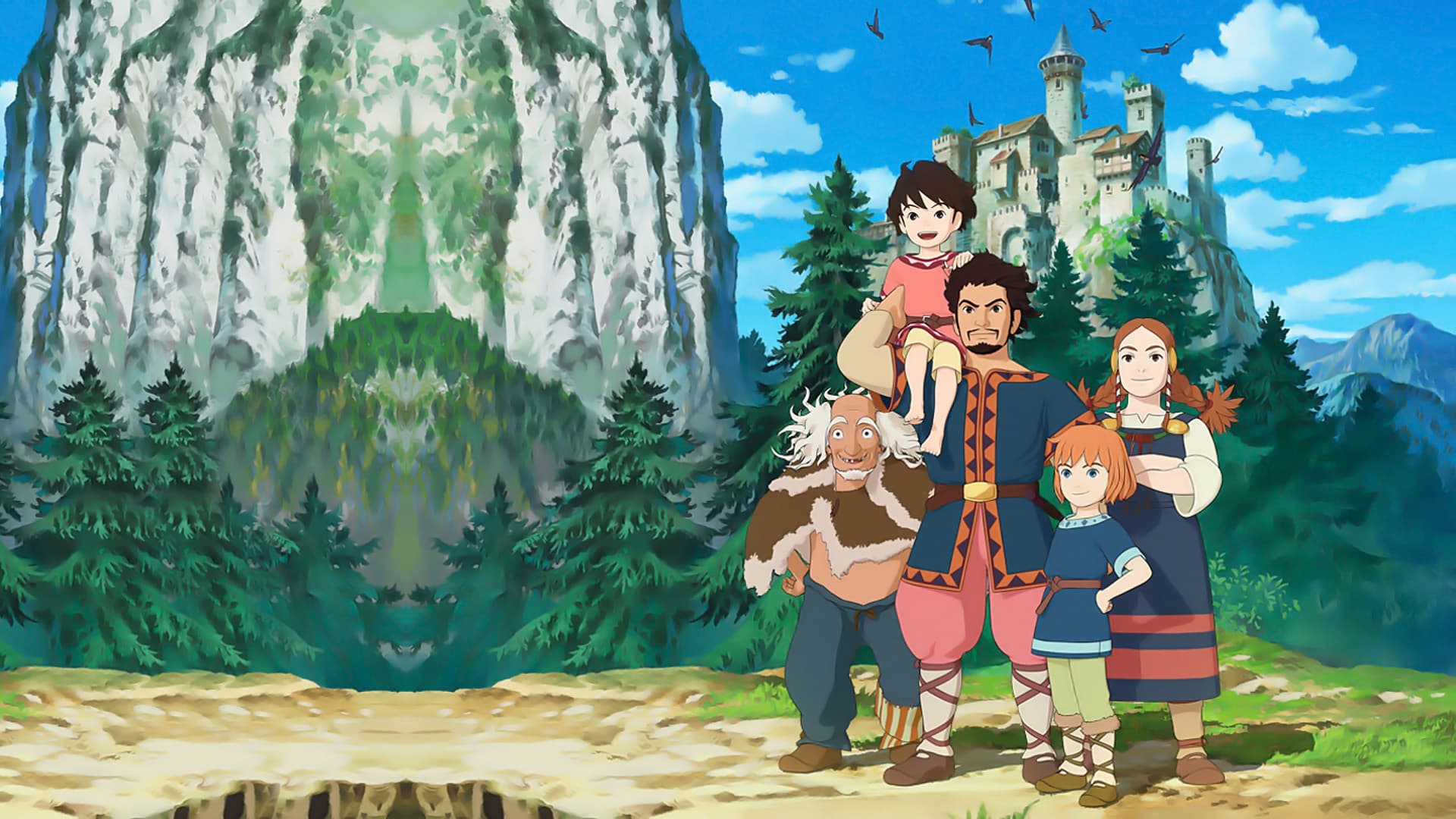
Ronja, Robber's Daughter is an adventure and coming-of-age film with a Nordic atmosphere that is both luminous and unsettling, carried by an ever-present wild nature. The story follows Ronja, daughter of a robber chief, who grows up in a forest populated by fantastical creatures and forms a forbidden friendship with the son of a rival gang. The film is primarily aimed at children of school age, with an emotional depth that also speaks to adults.
Parental and Family Portrayals
The relationship between Ronja and her father Mattis is the emotional heart of the film. Mattis is a complex character: an authoritarian and impulsive leader, he is also deeply loving, and his attachment to his daughter borders on possessiveness. When Ronja asserts her independence, the father-daughter conflict becomes the main dramatic engine. The mother, Lovis, embodies a more stable balance and a quiet wisdom. The film shows without indulgence the limits of a parental love that struggles to let the child grow, which makes it a particularly rich subject for conversation.
Underlying Values
The narrative strongly values autonomy, curiosity and the courage to explore the world on one's own, even against the wishes of adults. The friendship between Ronja and Birk transcends clan loyalties and challenges family heritage as an imposed destiny. The film also questions the legitimacy of the robbers' way of life without condemning it outright, leaving an interesting moral ambiguity about the transmission of parental values and the right to break free from them.
Violence
Violence remains contained and never graphic. The robbers quarrel, confront each other verbally and physically in a stylised manner, without realistic injuries. The fantastical creatures, notably the harpies and grey dwarves, represent a concrete danger to Ronja and may frighten the youngest viewers: the harpies are described as predators capable of tearing their prey apart, and the grey dwarves bite and strike if the opportunity arises. These sequences are tense but remain within the register of a fairy tale, with a clear narrative purpose: they serve Ronja's learning about danger and courage.
Social Themes
The film depicts a society organised around rival clans living on the margins of the law, which implicitly raises questions about justice, property and the legitimacy of authority. The forest itself is treated as a living and sovereign space, with a diffuse ecological sensitivity: Ronja learns to respect nature rather than to dominate it. These dimensions remain in the background but offer points of entry for discussion with an inquisitive child.
Substances
Alcohol is present during the robbers' feast scenes, which are shown as joyfully intoxicated. Consumption is normalised within the context of the robbers' way of life, without being explicitly valued or condemned. It is a minor but visible detail, worth mentioning for parents sensitive to this type of representation.
Sex and Nudity
A childbirth scene shows Ronja's mother in labour, with pain and cries. The birth is treated as a powerful and natural event, not as a taboo subject. Furthermore, a scene shows robbers bathing naked in the snow, with male nudity in which the genitals are concealed. These two moments are treated without voyeurism and fit within the naturalistic tone of the narrative.
Strengths
The film draws its strength from sincere emotional writing, faithful to the spirit of Astrid Lindgren's novel from which it is adapted. The Nordic nature is filmed with a contemplative beauty that gives the narrative a rare quality of breathing space in cinema made for young audiences. The complexity of the paternal character, neither hero nor villain, is treated with a subtlety that avoids all manichaeism. The film addresses death, birth, separation and growth without softening them, which makes it a valuable tool for accompanying a child in the discovery of these realities. The friendship between Ronja and Birk, built slowly and carefully, illustrates how deep bonds can be woven beyond family inheritances.
Age recommendation and discussion points
The film is suitable from age 7 onwards, with parental accompaniment recommended for ages 7-9 due to frightening creatures and the childbirth scene. From age 10 onwards, viewing is straightforward and fully rewarding. Two angles of discussion are particularly worthwhile after the film: ask the child what they think of Ronja's father's behaviour, between love and control, and ask them whether one can be loyal to one's parents whilst choosing one's own path.
Synopsis
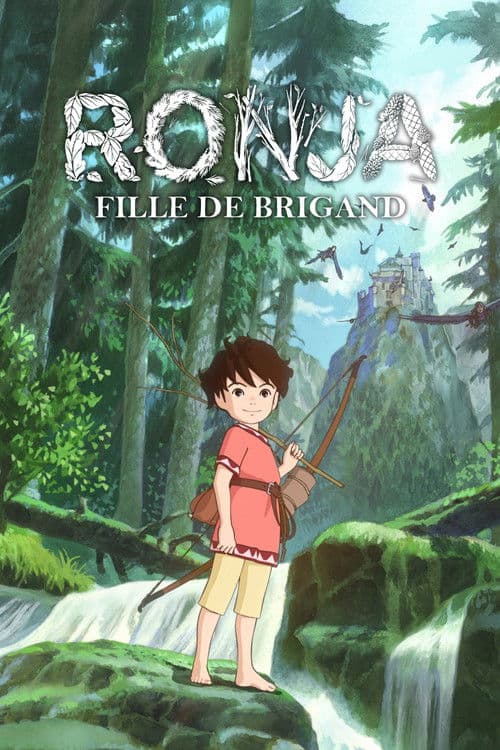
Ronja is the only daughter of Mattis, a bandit leader who lives in a castle in the middle of a large forest. When Ronja grows old enough, she ventures into the forest to interact the strange and magical creatures that live there. She learns to live in the forest through her own strength, with the occasional rescue from her parents. Ronja's life begins to change, however, when she happens upon a boy her own age named Birk.
About this title
- Format
- TV series
- Year
- 2014
- Runtime
- 25m
- Countries
- Japan
- Original language
- JA
- Directed by
- Goro Miyazaki
- Main cast
- Haruka Shiraishi, Reika Uyama, Yukari Nozawa, Mika Doi, Takaaki Seki, Atsuki Tani, Gillian Anderson, Teresa Gallagher, Rasmus Hardiker, Bob Golding
- Studios
- NHK, NHK Enterprises, Dwango, Polygon Pictures