Rick and Morty
Does this age rating seem accurate to you?
Detailed parental analysis
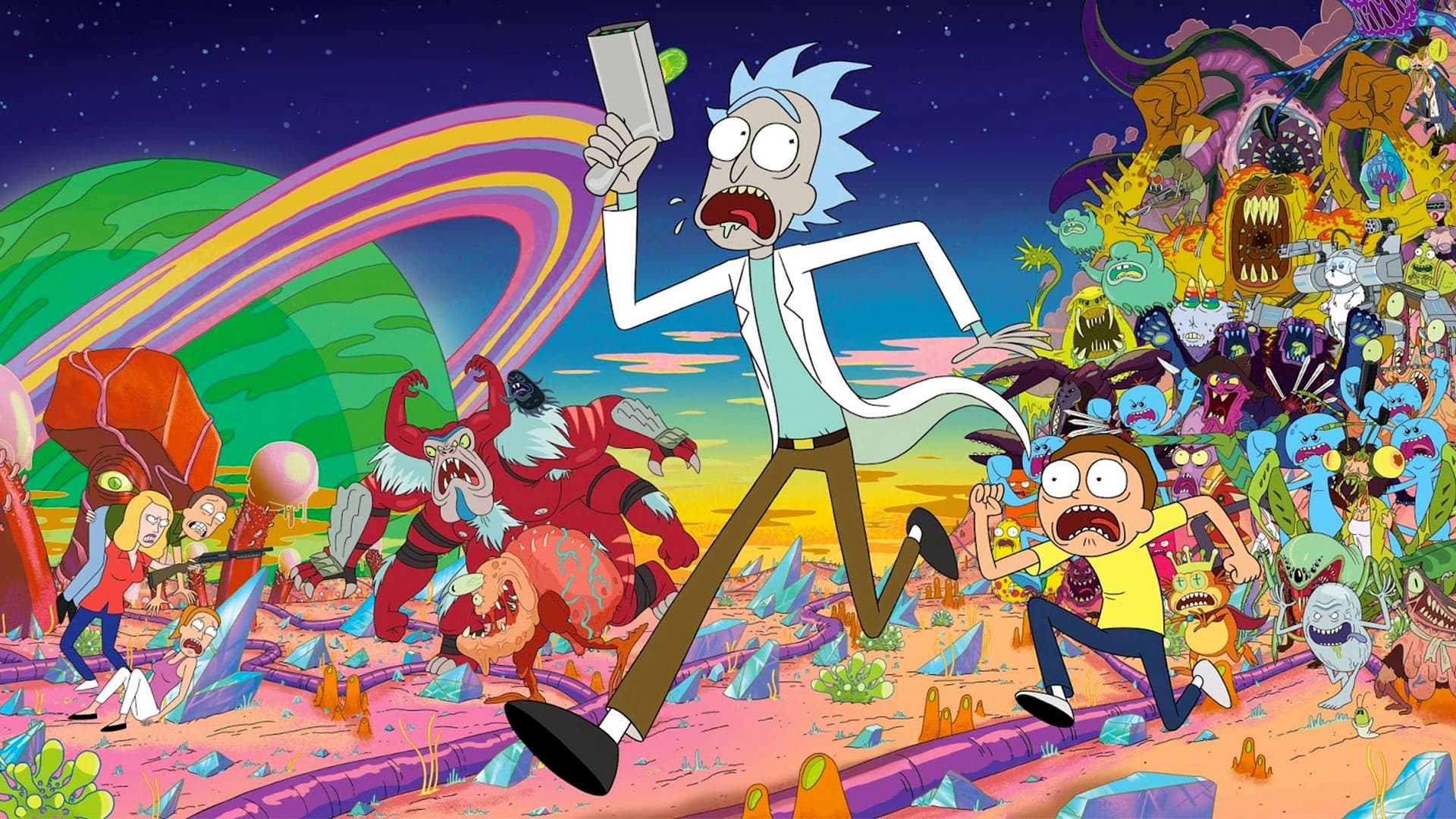
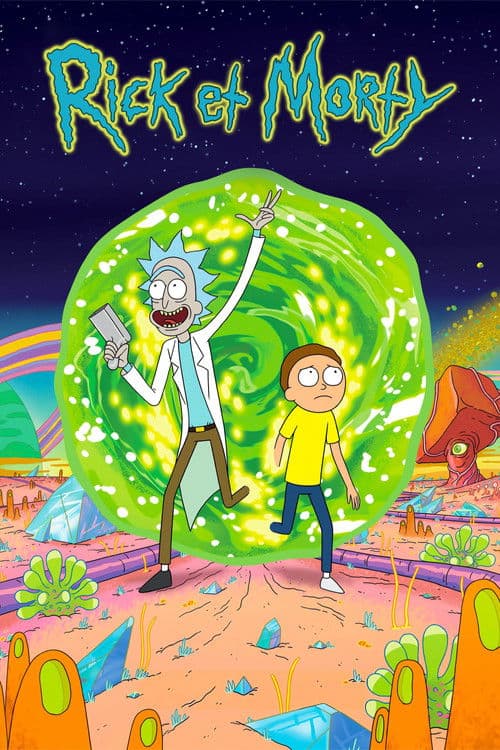
Rick and Morty is an adult animated series with a deliberately provocative tone, blending unbridled science fiction, dark humour and avowed nihilism. Each episode follows Rick, a cynical alcoholic scientific genius, who drags his grandson Morty into adventures across the multiverse, often disregarding any moral consideration. The series explicitly targets an adult audience and has no ambition to be family-friendly or youth-oriented, despite its appearance as a cartoon.
Underlying Values
This is the most structuring point of the series and the most delicate to manage with a teenager. Nihilism is presented as an intellectually superior stance: nothing has meaning, morality is an illusion, and those who believe in something are implicitly naive. This philosophy is never truly questioned or refuted by the narrative; it is embodied by the most intelligent and fascinating character in the series, which lends it a form of dangerous attractiveness for a developing mind. Contempt for school, institutions and authority is treated as self-evident liberation rather than as a stance to interrogate. The series contains episodes that occasionally play with these codes, and humour sometimes allows for distancing, but the dominant framework of values remains that of radical individualism without real consequences.
Parental and Family Portrayals
The relationship between Rick and Morty is the emotional engine of the series, and it is profoundly toxic. Rick exploits Morty as a human shield, manipulates him psychologically, subjects him to traumatic experiences and keeps him in a state of emotional dependency. This dynamic is presented with an ambiguous blend of cruelty and tenderness, which makes it all the more difficult for a young viewer to decode: harassment resembles love, and submission is rewarded by moments of complicity. Morty's parents are depicted as incompetent, absent or dysfunctional. No parental or adult figure in the series provides a balanced role model.
Substances
Rick's alcoholism is a central, permanent character trait and is rarely treated as a pathology. He drinks in almost every scene, and this dependency is integrated into his image as a misunderstood genius, which implicitly associates drunkenness with depth or rebellion. Beyond alcohol, the series presents consumption of various substances, both real and fictional, in a register that oscillates between neutrality and comedic valorisation. The medical, social or relational consequences of these behaviours are systematically evacuated in favour of the gag.
Violence
Violence is omnipresent and frequently gory: explosions of bodies, decapitations, impalements, mass murders treated in a comedic manner. It is never dramatised or carried lasting emotional consequences, which is precisely the humorous device being sought. This neutralisation of death and suffering through laughter is an assumed stylistic characteristic of the series, but it deserves to be made explicit with a teenager: comedy does not erase the fact that a massacre has just occurred on screen.
Sex and Nudity
Sexual content is explicit at times: nudity, orgy scenes, pornographic references and masturbation appear in several episodes. An attempted rape is mentioned in a context that does not accord it the serious treatment such a subject demands. The general register is one of deliberate provocation rather than narrative exploration, which makes it all the more difficult to manage with a teenager.
Language
The language is extremely crude and sustained throughout the series, with abundant use of major profanities and insults of all kinds, including terms with racial and homophobic connotations. This register is constitutive of the series' style and is not confined to a few isolated scenes.
Discrimination
The series occasionally uses racial and sexual stereotypes, integrated into writing that oscillates between mockery and convenience. Some episodes seem conscious of their own provocation, others do not. The result is uneven and may normalise caricatural shortcuts for a viewer who does not yet have the tools to identify irony when it is present, nor to recognise when it is simply absent.
Strengths
The series possesses genuine narrative inventiveness: its multiverse constructions, temporal paradoxes and references to scientific and philosophical culture testify to ambitious and dense writing. Some episodes achieve real emotional depth in addressing loneliness, the meaning of existence or affective relationships despite adversity. The mechanics of absurdist comedy are often brilliantly executed, and the series has a capacity to dismantle the narrative conventions of blockbusters and heroic tales with humour that can stimulate critical thinking in an adult viewer. This intellectual potential exists, but it is conditioned on sufficient maturity to avoid absorbing the surrounding nihilism as truth rather than as a stance to question.
Age recommendation and discussion points
The series is not recommended before age 16 without active adult accompaniment, and is rather intended for viewers of 17 and above for fully autonomous viewing. If a 15 or 16 year old watches it, two conversations are necessary: why the series presents manipulation and emotional abuse as a form of love, and in what way Rick's avowed nihilism is a seductive but philosophically fragile stance that the narrative never truly takes the trouble to contest.
Synopsis
Follows a sociopathic genius scientist who drags his inherently timid grandson on adventures across the universe.
Where to watch
Availability checked on Apr 09, 2026
About this title
- Format
- TV series
- Year
- 2013
- Countries
- United States of America
- Original language
- EN
- Directed by
- Dan Harmon, Justin Roiland
- Main cast
- Chris Parnell, Spencer Grammer, Sarah Chalke, Ian Cardoni, Harry Belden
- Studios
- Williams Street, Harmonious Claptrap, Justin Roiland's Solo Vanity Card Productions, Starburns Industries, Green Portal Productions
Content barometer
- Violence4/5Strong
- Fear2/5A few scenes
- Sexuality4/5Explicit
- Language5/5Very strong
- Narrative complexity1/5Accessible
- Adult themes5/5Very strong
Watch-outs
- Bullying
- Drugs
- Alcohol
- Strong language
- Mockery
- Abuse
- Violence
- Sexuality
- Adult themes
Values conveyed
- family loyalty
- scientific curiosity
- friendship
- resilience