Regular Show
Does this age rating seem accurate to you?
Detailed parental analysis
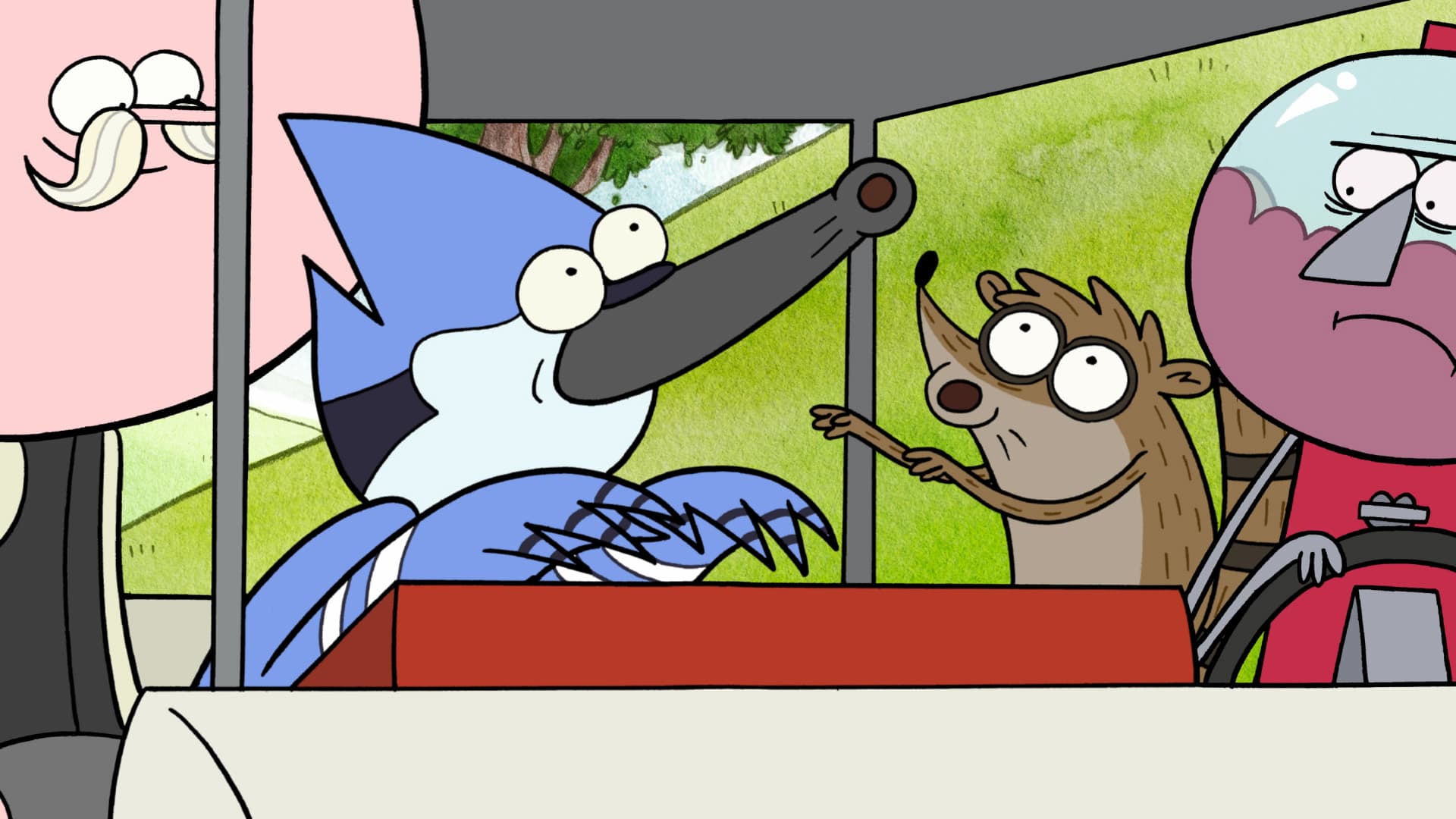
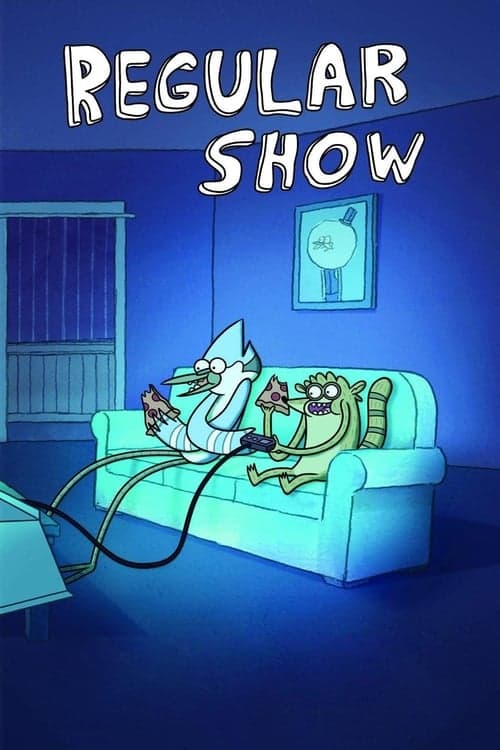
Regular Show is an American animated series with an offbeat and surreal tone, blending absurd humour, nostalgic references to the 1980s and 1990s, and supernatural adventures in a municipal park. Two lazy and immature friends, Mordecai and Rigby, find themselves in situations that escalate in extravagant and often spectacular fashion. Despite its appearance as a light cartoon, the series is aimed primarily at older teenagers and young adults, not children.
Violence
Violence is omnipresent throughout the series and serves as a recurring narrative device. Hand-to-hand combat, punches and takedowns follow one another in a cartoon register that makes them less realistic, but their frequency is high. Some episodes go further with scenes of mildly stylised gore including blood and viscera, which significantly exceeds the usual children's register. Firearms also appear on several occasions and cause injury to characters. Everything is presented in a spectacular and often comedic manner, without any genuine treatment of consequences, which normalises violence more than it questions it.
Substances
Alcohol is replaced on screen by soda, but intoxication behaviours are represented in explicit and recognisable fashion: characters shown as disinhibited, staggering, irresponsible. This cosmetic workaround does not really diminish the message conveyed, and a child or teenager identifies without difficulty what these scenes represent. Scenes of drunkenness are treated lightly and often for comedic effect, without serious consequences on screen, which implicitly presents them as harmless.
Underlying Values
The heart of the series rests on the friendship between Mordecai and Rigby, valued as an unbreakable bond. However, their habitual behaviours include chronic laziness, irresponsibility, lying to their employer and evasion of all consequences. These traits are treated in a comedic manner and rarely sanctioned credibly, which normalises them without criticising them. The narrative indirectly conveys a valorisation of immaturity and minimal effort as an appealing and amusing way of life rather than a problematic one.
Language
The early seasons contained swear words that were censored for television broadcast, replaced by transparent euphemisms. The register remains informal and sometimes coarse in spirit, even if explicit terms are softened. This language contributes to the overall atmosphere aimed at an older audience.
Discrimination
The series contains racial and cultural stereotypes that certain episodes deploy for comedic effect without questioning them. This aspect remains secondary in the overall narrative economy, but it is sufficiently documented to warrant anticipation by parents, notably to be able to contextualise certain representations with a teenager.
Sex and Nudity
Sexual innuendo remains at a low level, in the form of innuendos and allusions to flirting or romantic relationships. Nothing explicit or graphic, but the overall tone contributes to anchoring the series in a teenage rather than a children's register.
Strengths
Regular Show possesses genuine inventiveness in its writing: situations start from a banal premise and veer towards surrealism in often unexpected and well-constructed fashion. The humour is dense with cultural references from the 1980s and 1990s, making it a genuine object of complicity between parents who grew up in that era and today's teenagers. The series also maintains sustained rhythmic energy and consistency of tone which give it a strong identity. The friendship between the two main characters, despite their numerous flaws, is treated with a sincerity that lends depth to the series.
Age recommendation and discussion points
Regular Show is suitable from 12-13 years of age for supervised viewing, and preferably from 14 years for independent viewing without major reservations. Two angles of discussion are worth opening after viewing: why Mordecai and Rigby remain likeable despite their constant irresponsibility, and what this says about our tendency to excuse certain behaviours when they are presented with humour; and how the series represents drunkenness as something amusing and without real consequences.
Synopsis
The surreal misadventures of two best friends - a blue jay and a raccoon - as they seek to liven up their mundane jobs as groundskeepers at the local park.
About this title
- Format
- TV series
- Year
- 2010
- Runtime
- 11m
- Countries
- United States of America
- Original language
- EN
- Directed by
- J.G. Quintel
- Main cast
- J.G. Quintel, William Salyers, Mark Hamill, Sam Marin, Minty Lewis, Matthew Mercer, Vanessa Marshall
- Studios
- Cartoon Network Studios
Content barometer
- Violence3/5Notable
- Fear3/5Notable tension
- Sexuality1/5Allusions
- Language2/5Moderate
- Narrative complexity1/5Accessible
- Adult themes3/5Marked
Watch-outs
- Alcohol
- Strong language
- Violence
- Ethnic or racial stereotypes
Values conveyed
- Friendship
- loyalty
- teamwork