
Rascal Does Not Dream of a Sister Venturing Out
青春ブタ野郎はおでかけシスターの夢を見ない
Does this age rating seem accurate to you?
Detailed parental analysis
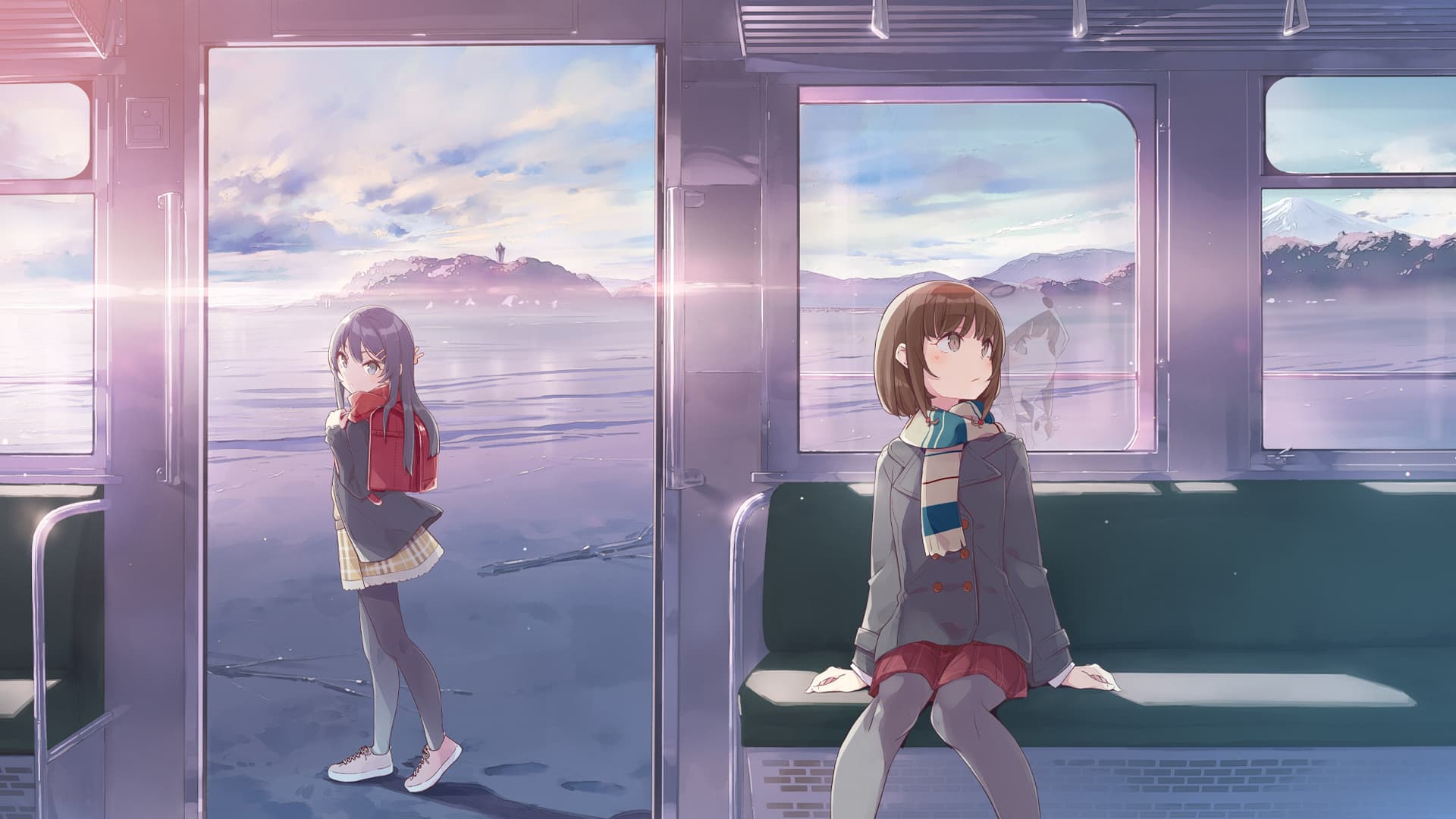
Rascal Does Not Dream of a Sister Venturing Out is a Japanese animated film with a bittersweet atmosphere, blending high school chronicle, subtle fantasy and emotional exploration. The plot follows an adolescent confronted with a mysterious phenomenon affecting his younger sister, continuing a series centred on the psychosomatic disorders of adolescence. The film is primarily aimed at adolescents and young adults familiar with the franchise's universe.
Underlying Values
The narrative places at its centre the notion of 'puberty syndrome', a narrative metaphor for the psychological suffering linked to adolescence. This construction values listening, presence and empathy as responses to identity crises, which constitutes a solid message. However, certain exchanges between characters reproduce dynamics in which the male gaze upon the female body is normalised, notably through remarks about the age or appearance of women presented in a light tone. These passages are not questioned by the narrative and merit being highlighted with an adolescent.
Sex and Nudity
The film contains several references to sexuality and puberty, integrated into the franchise's usual register. Comments about women's bodies, notably remarks about 'older women', are formulated in a casual manner and without critical distance. There is no explicit nudity or sexual scene, but the tone of certain exchanges normalises a form of light objectification that can go unnoticed if it is not pointed out. This is not an obstacle to viewing for an informed adolescent, but it is a useful point of discussion.
Violence
Physical violence is absent or marginal. However, the film addresses directly the physical aftermath of school bullying: the younger sister displays unexplained bruises linked to profound psychological distress. This representation is treated seriously and without complacency, and constitutes one of the film's strongest emotional threads. For a young viewer who has experienced or witnessed bullying, these scenes may resonate strongly.
Parental and Family Portrayals
Parental figures are little present, in keeping with the franchise's overall tone. Adolescents manage their crises amongst themselves, with almost no adult support. This narrative configuration is common in Japanese animation for adolescents, but it merits being noted: it implicitly reinforces the idea that adults are not reliable resources when facing the difficulties of adolescence.
Social Themes
School bullying is at the heart of the narrative and treated with genuine depth. The film shows its lasting effects on self-esteem and the body, without making a spectacle of it. This is one of the most concrete and most useful subjects to address with an adolescent after viewing, notably to open a conversation about how psychological suffering can manifest physically.
Strengths
The film possesses genuine emotional intelligence in the way it treats adolescent fragilities without caricaturing them. The use of fantasy as an externalisation of psychological disorders is a narrative convention well mastered in this franchise, and it functions here with coherence. The writing of relationships between characters, notably between the protagonist and his sister, achieves at times a touching accuracy. The film offers a rare space to speak of bullying, bodies and identity without the heavy didacticism of message-driven works.
Age recommendation and discussion points
The film is suitable from age 13 onwards, with parental accompaniment recommended for ages 13-15. Two angles of discussion naturally emerge after viewing: firstly, how bullying can leave invisible or visible traces on the body and behaviour, and how to speak about it; secondly, why certain remarks about women's bodies in the film seem innocuous when they are not, and what this says about the representations we absorb without questioning them.
Synopsis
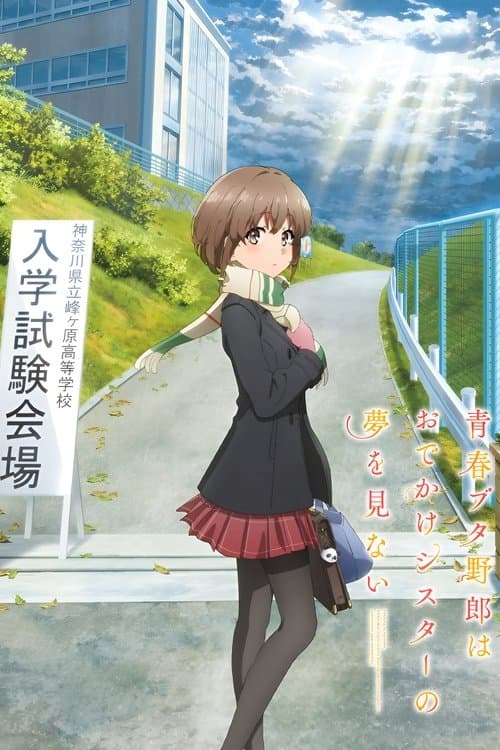
After a draining December, Sakuta is quickly nearing the end of his second year of high school. Since Mai is a third-year student, they don't have much time left together before graduation rolls around. Meanwhile, his sister, Kaede, is slowly but steadily venturing outdoors again. Just as she begins to find her footing, she announces her most ambitious goal yet—attending her brother's high school! Sakuta knows better than anyone how difficult this will be for Kaede, and he's ready to support her however he can. He's just not sure if that's what's best for her...or what she really wants...
Where to watch
Availability checked on Apr 03, 2026
About this title
- Format
- Feature film
- Year
- 2023
- Runtime
- 1h 14m
- Countries
- Japan
- Original language
- JA
- Directed by
- Soichi Masui
- Main cast
- Kaito Ishikawa, Asami Seto, Yurika Kubo, Nao Toyama, Atsumi Tanezaki, Maaya Uchida, Sora Amamiya, Yuma Uchida, Natsuki Aikawa, Himika Akaneya
- Studios
- KADOKAWA, CloverWorks, Aniplex, ABC Animation, Tokyo MX, Nagoya Broadcasting Network, BS11
Content barometer
- Violence1/5Mild
- Fear2/5A few scenes
- Sexuality2/5Mild
- Language1/5Mild
- Narrative complexity2/5Moderate
- Adult themes0/5None
Watch-outs
- Bullying
- Mockery
- Gender stereotypes
Values conveyed
- Acceptance of difference
- Compassion
- Autonomy
- resilience
- sibling bond
- empathy
- healing