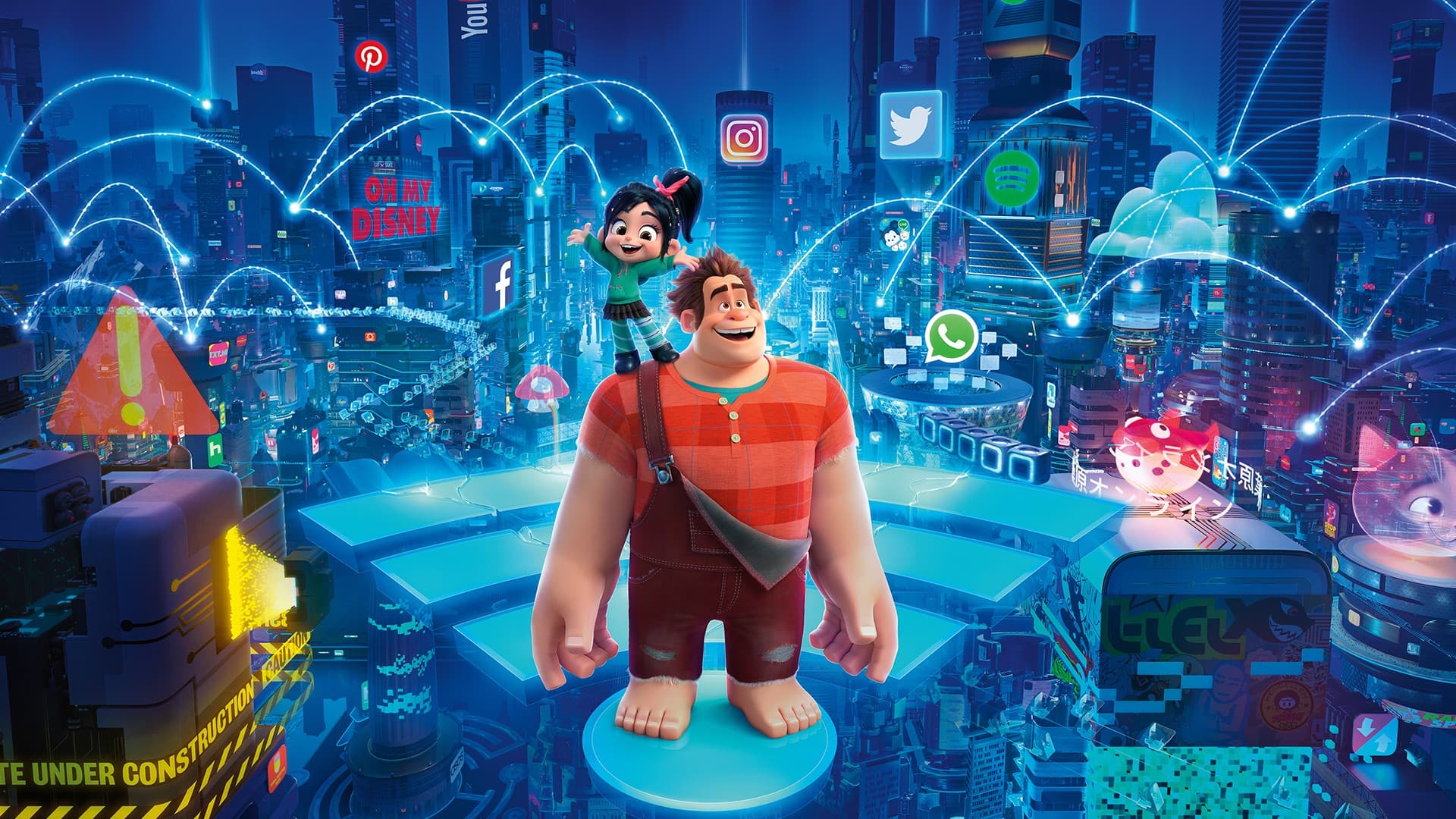


Ralph Breaks the Internet
Does this age rating seem accurate to you?
Detailed parental analysis
Ralph Breaks the Internet is a lively and colourful Disney animated comedy, driven by accessible humour but surprisingly adult themes about emotional dependency and online identity. The plot follows Ralph and Vanellope, two inseparable arcade game friends, who dive into the world of the internet to save their favourite game, and discover there that their life paths may diverge. The film primarily targets children aged 8 to 12, but its deeper themes speak more directly to pre-teens and adults.
Underlying Values
This is the heart of the film, and its richest stake. The narrative explores head-on the mechanisms of emotional dependency: Ralph, unable to let go of his friend, literally creates a monster from his own insecurity, a monster that takes the form of a giant and threatening virus. The film does not spare its main character: he is labelled as 'needy', 'clingy', 'selfish', and these labels are justified by his actions. The structural message is clear and courageous: loving someone does not give you the right to limit their freedom, and a healthy friendship tolerates distance and different dreams. As a counterpoint, the internet is depicted as an amoral space, neither fundamentally good nor bad, where logics of consumption, virality and toxic comments shape behaviour. Click culture and fleeting fame are presented as a cold mechanism that characters move through without emerging unscathed.
Violence
Violence remains within the register of family animation, but it is present at several levels. The game Slaughter Race rests on an atmosphere of urban chaos with explosions, spectacular car crashes, threatening clowns and various weapons: the atmosphere there is deliberately dark and aggressive, designed as a parody of violent open-world games, but which may surprise younger viewers. The film's climax features a monstrous virus taking on the proportions of an urban kaiju, with genuine visual tension. These scenes have a clear narrative purpose: to show the realisation of Ralph's fears and control impulses, which gives them meaning beyond spectacle.
Language
The film includes several layers of unflattering language. Affectionate insults between characters ('stinky breath', 'rotten head') sit alongside sharper epithets aimed at Ralph, including 'ugly', 'loser' and 'worthless homeless'. Ralph reads aloud cruel comments from internet users directed at him, which constitutes an emotionally intense scene. The film treats this language as a phenomenon to be unpicked rather than imitated, but the accumulation of insults may require parental framing for younger or more sensitive children.
Social Themes
The film is an avowed satire of how the internet functions, visible even in the proliferation of logos from major platforms and digital services that line the backdrop. The mechanics of algorithms, virality, anonymous hate comments, influencer culture and the commodification of attention are all represented in a readable way, sometimes exaggerated but rarely false. The mention of the dark web, even fleeting, signals that the film does not claim to offer a sugar-coated image of the real internet. These elements make Ralph Breaks the Internet a concrete resource for discussion about digital usage.
Discrimination
The film devotes a notable scene to Disney princesses gathered together, joking about their own archetypes: dead parents, magical powers, dependence on the 'strong man'. This sequence functions as a conscious self-parody, the princesses subsequently shown in casual clothes, asserting their agency. It is a light but real subversion of fairy tale clichés, designed to be accessible to children while being intelligible to adults.
Substances
Two characters hold cans and consume root beer in a bar setting. The staging deliberately reproduces the visual codes of an alcoholic bar scene, even though the drink is alcohol-free. The anecdote is brief and carries no narrative weight, but it is sufficiently explicit in its reference to merit mention to parents of younger children.
Strengths
Ralph Breaks the Internet is a Disney animated film more ambitious in substance than it first appears. Its treatment of jealousy and emotional dependency is honest and uncompromising, to the point of being uncomfortable for adult viewers who recognise themselves in Ralph's behaviour. The sequence of the virus as a metaphor for inner insecurity is narratively effective and visually striking. The satire of the internet is precise enough not to date badly, and accessible enough to serve as an entry point for concrete conversations about social media with children. The Disney princesses scene is one of the rare occasions when a film of this kind mocks its own conventions intelligently without losing its lightness.
Age recommendation and discussion points
The film is accessible from age 8 for children who are not particularly sensitive, but its strongest themes—emotional dependency, toxicity of online comments, freedom within friendship—are truly understood and discussed from age 10 onwards. Two angles of conversation are clear after viewing: ask the child whether Ralph was right to want to keep his friend close to him, and what the cruel comments read aloud made them feel and what they resemble in their own online experience.
Synopsis
Video game bad guy Ralph and fellow misfit Vanellope von Schweetz must risk it all by traveling to the World Wide Web in search of a replacement part to save Vanellope's video game, Sugar Rush. In way over their heads, Ralph and Vanellope rely on the citizens of the internet — the netizens — to help navigate their way, including an entrepreneur named Yesss, who is the head algorithm and the heart and soul of trend-making site BuzzzTube.
About this title
- Format
- Feature film
- Year
- 2018
- Runtime
- 1h 52m
- Countries
- United States of America
- Original language
- EN
- Studios
- Walt Disney Animation Studios
Content barometer
- Violence2/5Moderate
- Fear3/5Notable tension
- Sexuality0/5None
- Language2/5Moderate
- Narrative complexity2/5Moderate
- Adult themes1/5Mild
Watch-outs
- Bullying
- Strong language
- Mockery
- Gender stereotypes
Values conveyed
- Friendship
- Loyalty
- Autonomy
- teamwork
- adaptation
- independence