
Project Hail Mary
Project Hail Mary
Your feedback improves this guide
Your feedback highlights guides that need a second look and keeps the rating trustworthy.
Does this age rating seem accurate to you?
Sign in to vote
Watch-outs
What this film brings
Content barometer
Violence
2/5
Moderate
Fear
3/5
Notable tension
Sexuality
0/5
None
Language
1/5
Mild
Narrative complexity
4/5
Very complex
Adult themes
0/5
None
Expert review
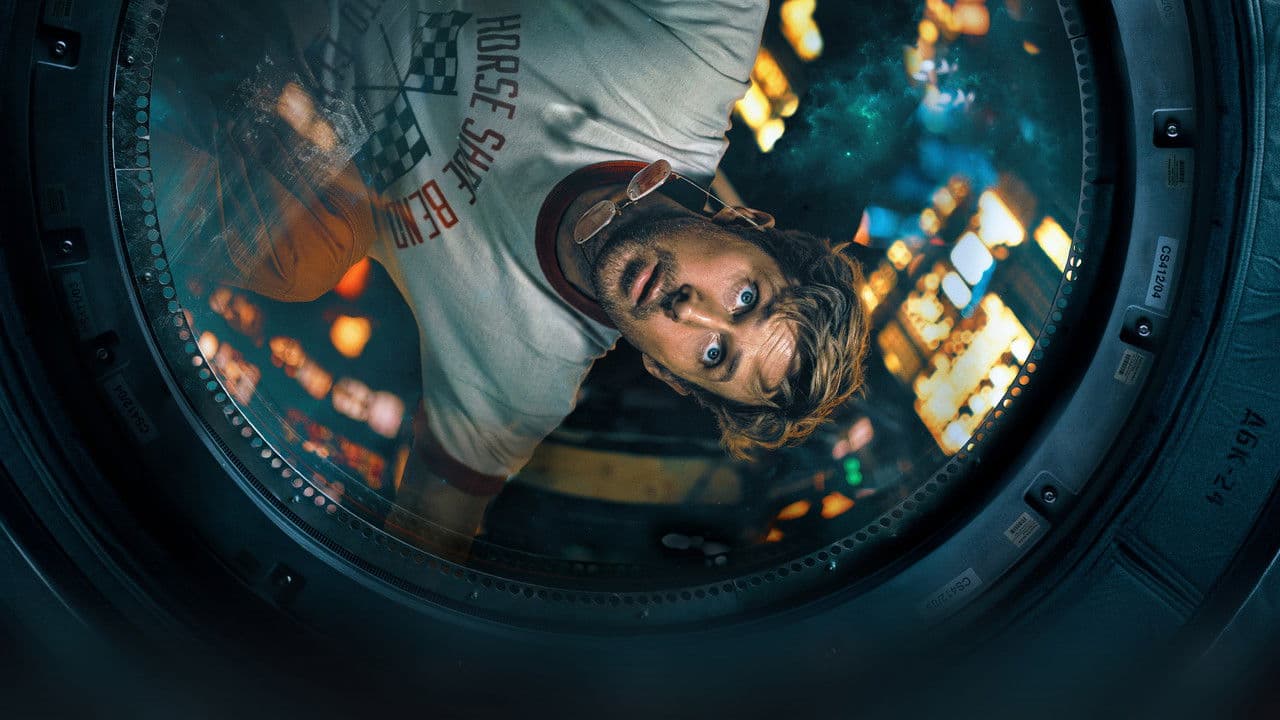
Project Hail Mary is an ambitious and emotionally rich science-fiction film centered on an amnesiac astronaut who finds himself alone in space with the mission to save humanity from a slow extinction caused by a microorganism consuming the Sun. The film tackles serious themes including death, ultimate sacrifice, extreme isolation, and the announced end of the world, without graphic violence but with sustained psychological tension and emotional weight throughout the narrative. These elements appear regularly, most notably through Grace's discovery that he is the sole survivor of his crew, the awareness that the mission is one-way only, and the burden of solitude in infinite space, which may feel heavy for sensitive children or young preteens. Parents are encouraged to watch with children aged 10 to 12 and use the film as an opportunity to discuss themes of sacrifice, grief, and collective responsibility, while the heartwarming friendship between Grace and the alien Rocky offers a natural entry point for positive conversations about trust and cooperation.
Synopsis
Science teacher Ryland Grace wakes up on a spaceship light years from home with no recollection of who he is or how he got there. As his memory returns, he begins to uncover his mission: solve the riddle of the mysterious substance causing the sun to die out. He must call on his scientific knowledge and unorthodox ideas to save everything on Earth from extinction… but an unexpected friendship means he may not have to do it alone.
Difficult scenes
Ryland Grace wakes up to discover he is the sole survivor of the crew: the other two astronauts died during the journey, their bodies still present on the spacecraft. Depicted with restraint, this scene immediately establishes a profound sense of radical solitude and silent grief that may be unsettling for younger viewers, especially since Grace himself does not yet understand what happened. The film gradually reveals that the mission is a one-way trip: Grace and his crewmates were sent into space knowing they would never return to Earth. This notion of consented, definitive sacrifice, framed as a necessity to save humanity, is a morally dense idea that may raise deep existential questions for children under 12. The slow extinction of the Sun and the threat of catastrophic global cooling on Earth are described in realistic and documented terms, including images of societies in crisis and humanity facing imminent disappearance. These sequences, while free of direct violence, may generate lasting anxiety in children who are sensitive to environmental or apocalyptic themes. The relationship between Grace and Rocky, the Eridian alien, is central to the film but begins with total incomprehension and an initial real danger stemming from the incompatibility of their atmospheres. The tension of these early encounters, where the two characters literally cannot survive in direct contact, may be a source of worry before their friendship ultimately develops.
Where to watch
No verified platform for the US market yet. We keep this section updated as availability changes.
About this title
- Format
- Feature film
- Year
- 2026
- Runtime
- 2h 35m
- Countries
- United States of America
- Original language
- EN
- Directed by
- Phil Lord, Christopher Miller
- Main cast
- Ryan Gosling, James Ortiz, Sandra Hüller, Lionel Boyce, Milana Vayntrub, Ken Leung, Priya Kansara, Mia Soteriou, Annelle Olaleye, Maya Eva Hosein
- Studios
- Lord Miller, Amazon MGM Studios, Pascal Pictures, Open Invite Entertainment, Waypoint Entertainment
Content barometer
Violence
2/5
Moderate
Fear
3/5
Notable tension
Sexuality
0/5
None
Language
1/5
Mild
Narrative complexity
4/5
Very complex
Adult themes
0/5
None
Expert review
Project Hail Mary is an ambitious and emotionally rich science-fiction film centered on an amnesiac astronaut who finds himself alone in space with the mission to save humanity from a slow extinction caused by a microorganism consuming the Sun. The film tackles serious themes including death, ultimate sacrifice, extreme isolation, and the announced end of the world, without graphic violence but with sustained psychological tension and emotional weight throughout the narrative. These elements appear regularly, most notably through Grace's discovery that he is the sole survivor of his crew, the awareness that the mission is one-way only, and the burden of solitude in infinite space, which may feel heavy for sensitive children or young preteens. Parents are encouraged to watch with children aged 10 to 12 and use the film as an opportunity to discuss themes of sacrifice, grief, and collective responsibility, while the heartwarming friendship between Grace and the alien Rocky offers a natural entry point for positive conversations about trust and cooperation.
Synopsis
Science teacher Ryland Grace wakes up on a spaceship light years from home with no recollection of who he is or how he got there. As his memory returns, he begins to uncover his mission: solve the riddle of the mysterious substance causing the sun to die out. He must call on his scientific knowledge and unorthodox ideas to save everything on Earth from extinction… but an unexpected friendship means he may not have to do it alone.
Difficult scenes
Ryland Grace wakes up to discover he is the sole survivor of the crew: the other two astronauts died during the journey, their bodies still present on the spacecraft. Depicted with restraint, this scene immediately establishes a profound sense of radical solitude and silent grief that may be unsettling for younger viewers, especially since Grace himself does not yet understand what happened. The film gradually reveals that the mission is a one-way trip: Grace and his crewmates were sent into space knowing they would never return to Earth. This notion of consented, definitive sacrifice, framed as a necessity to save humanity, is a morally dense idea that may raise deep existential questions for children under 12. The slow extinction of the Sun and the threat of catastrophic global cooling on Earth are described in realistic and documented terms, including images of societies in crisis and humanity facing imminent disappearance. These sequences, while free of direct violence, may generate lasting anxiety in children who are sensitive to environmental or apocalyptic themes. The relationship between Grace and Rocky, the Eridian alien, is central to the film but begins with total incomprehension and an initial real danger stemming from the incompatibility of their atmospheres. The tension of these early encounters, where the two characters literally cannot survive in direct contact, may be a source of worry before their friendship ultimately develops.