

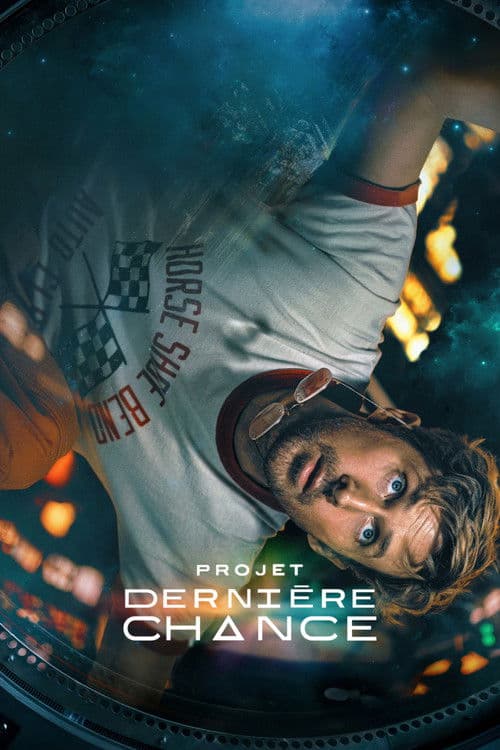
Project Hail Mary
Does this age rating seem accurate to you?
Detailed parental analysis
Last Chance Project is a science-fiction space film that is both contemplative and tense, oscillating between the wonder of discovery and the anguish of absolute isolation. A single man wakes alone aboard a distant spacecraft with no memory of his mission, and must piece together why he is there and what humanity expects of him. The film targets a broad audience from pre-adolescence onwards, with a tone that will appeal equally to children curious about science and to adults, in the spirit of a great family adventure.
Underlying Values
The film builds its central argument around sacrifice undertaken for the common good, not as a spectacular heroic act but as the accumulation of small courageous decisions in the face of the impossible. What is particularly interesting to explore with a child or teenager is that the protagonist is not a superhero: he is a scientist who solves problems methodically, and this analytical intelligence is presented as an admirable strength, never as a weakness or an oddity. The relationship between the two main characters rests entirely on cooperation, trust built gradually and acceptance of the other despite radical difference. The interspecies friendship that structures the film is treated with rare sincerity, without naiveté.
Violence
Violence is neither gratuitous nor aestheticised, but it is clearly present in several forms. The film shows deceased astronauts, funerals in space, significant physical injuries including a nosebleed with visible bleeding and emergency medical intervention on a character in severe condition. Life-or-death situations in the vacuum of space, including risks of explosion and decompression, create sustained tension but never sadism. The violence remains functional to the narrative and carries meaning: it constantly reminds us that space is hostile and that the stakes are real. For a sensitive child, certain medical scenes and the discovery of bodies may require parental support.
Substances
A character consumes vodka packaged in intravenous pouches to cope with isolation and anxiety. The consumption is not glorified; it is presented as a problematic coping mechanism in a context of extreme psychological distress. This is a point worth discussing as a family, particularly with a young person who might retain the image without its context.
Social Themes
The film addresses in subtext humanity's survival in the face of ecological and cosmic threat, with weighty collective decisions made at a global level. The question of what a society is willing to sacrifice to save itself runs through the narrative without being didactic. It is natural ground for a conversation about collective responsibility and impossible choices in situations of crisis.
Language
The language is generally clean. There are a few mild expressions and a single strong swear word, consistent with what a PG-13 rating permits. Nothing that falls outside the norm for a family film at this level.
Discrimination
The protagonist is a white man who dominates the screen in almost the entire film, whilst female characters and those from varied backgrounds appear only in secondary flashbacks. This configuration is not questioned by the narrative. Without making it a dealbreaker, it is a possible angle for discussion with a teenager: who tells the story, and why this choice to centre the narration on this type of character.
Strengths
Last Chance Project accomplishes something quite rare: making the scientific process compelling without dumbing it down. Problem-solving through observation, hypothesis and experimentation structures the plot and serves as the emotional engine. The film succeeds in forging a deep bond between two beings opposed in every way, and in making credible and touching a friendship built without a shared language. The overall tone evokes grand space adventure cinema of the 1980s, with controlled pacing that alternates effectively between wonder and tension. For families whose children have an interest in science or space, it is a rare narrative entry point to questions of physics, biology and communication that feel nothing but organic within the film.
Age recommendation and discussion points
The film is accessible from age 10 for a child comfortable with tension and stakes involving death, and can be watched from age 9 with a parent attentive to medical scenes and the vodka episode. To discuss after viewing: what does courage really mean when you are afraid, and can you be friends with someone utterly different from you without ever having the same words to understand each other?
Synopsis
Science teacher Ryland Grace wakes up on a spaceship light years from home with no recollection of who he is or how he got there. As his memory returns, he begins to uncover his mission: solve the riddle of the mysterious substance causing the sun to die out. He must call on his scientific knowledge and unorthodox ideas to save everything on Earth from extinction… but an unexpected friendship means he may not have to do it alone.
About this title
- Format
- Feature film
- Year
- 2026
- Runtime
- 2h 35m
- Countries
- United States of America
- Original language
- EN
- Directed by
- Phil Lord, Christopher Miller
- Main cast
- Ryan Gosling, James Ortiz, Sandra Hüller, Lionel Boyce, Milana Vayntrub, Ken Leung, Priya Kansara, Mia Soteriou, Annelle Olaleye, Maya Eva Hosein
- Studios
- Lord Miller, Amazon MGM Studios, Pascal Pictures, Open Invite Entertainment, Waypoint Entertainment
Content barometer
- Violence2/5Moderate
- Fear3/5Notable tension
- Sexuality1/5Allusions
- Language1/5Mild
- Narrative complexity4/5Very complex
- Adult themes2/5Present
Values conveyed
- Courage
- Friendship
- Acceptance of difference
- interspecies friendship
- sacrifice
- scientific courage
- solidarity
- intellectual curiosity
- resilience
- trust