Princess Power
Does this age rating seem accurate to you?
Detailed parental analysis
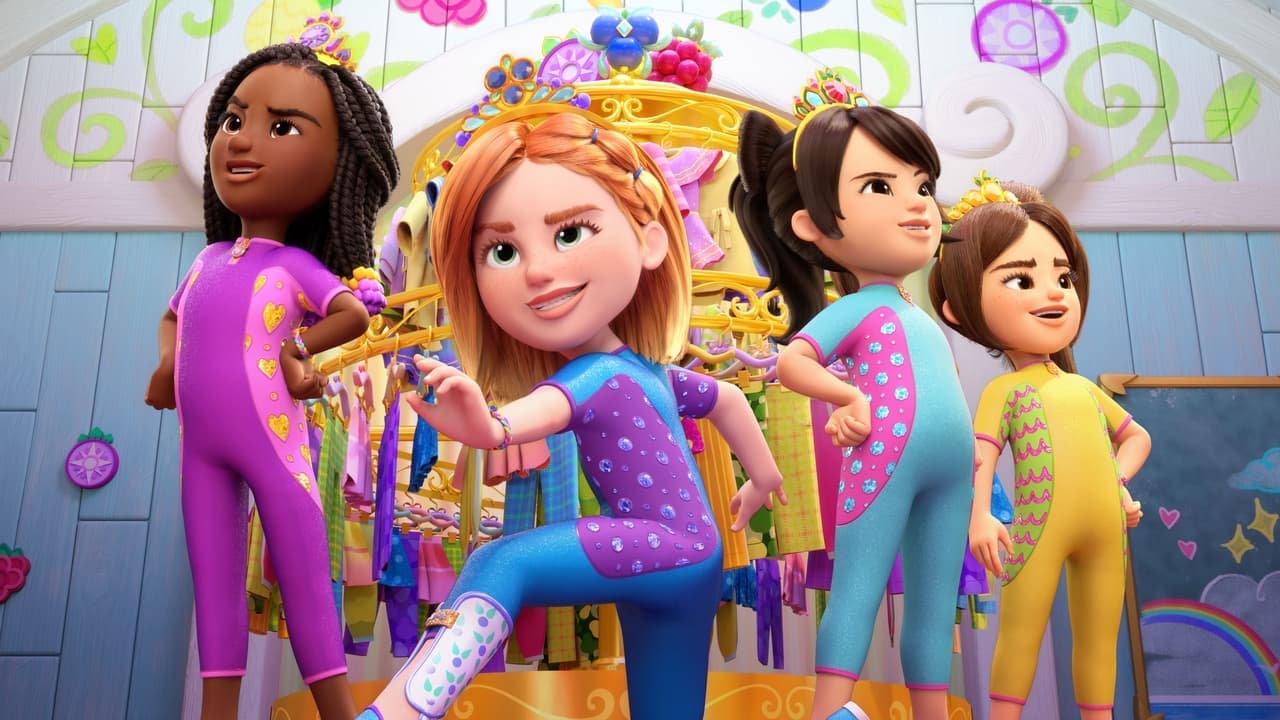
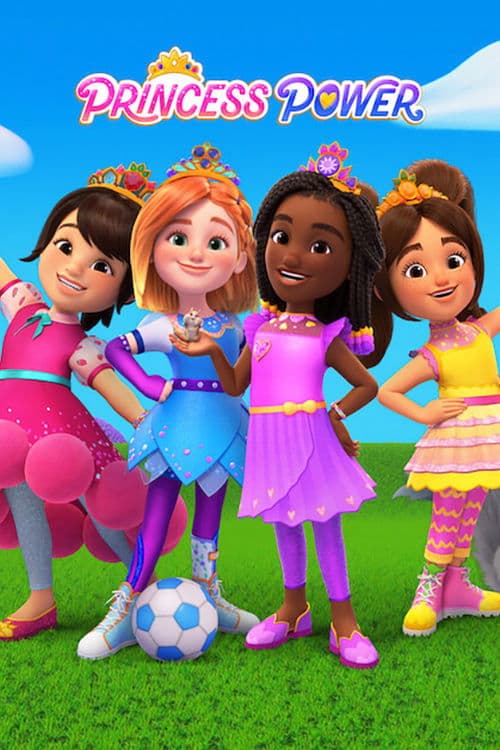
Princess Power is an animated series designed for very young children, colourful, fast-paced and resolutely joyful in atmosphere. Four princesses with contrasting personalities and talents unite their strengths to solve the problems of their community. The target audience is preschool-age children and those in the early years of primary school.
Underlying Values
The series builds its narrative around complementarity rather than competition: no princess is superior to the others, and problems are resolved only by combining the contributions of each. Community solidarity is the central driver of every episode, and the talents celebrated, whether in science, art, sport or responsibility, paint a broad picture of what a girl can become. The rejection of dresses in favour of trousers is a visual choice consistent with this logic: action takes precedence over appearance. For a child of this age, this is a healthy narrative framework that deserves to be named explicitly after watching.
Parental and Family Portrayals
The series deliberately presents non-conventional family configurations: one of the princesses has two fathers, and season 3 features the wedding of two women. These elements are treated with naturalness, without dramatic staging or explicit discourse. For families who share these values, the integration is seamless. For families who do not share them, these scenes will constitute a real point of friction to anticipate, especially since the target audience is very young and particularly receptive to what it observes without yet having the tools to contextualise it. This is the main documented point of debate surrounding the series, and every parent should be aware of it before the first viewing.
Strengths
The series succeeds in making concrete skills, such as scientific thinking or artistic creation, desirable and accessible to very young children, which is rare in this format. The music is carefully crafted and memorable, a valuable quality for an audience that learns through repetition. The characterisation avoids the usual black-and-white morality of the genre: each princess has a weakness that the others compensate for, which gives mutual support a genuine narrative dimension rather than a purely decorative one.
Age recommendation and discussion points
The series is appropriate from age 4 in terms of violent content, language and emotions. The only point requiring caution is that of non-traditional family representations, present from season 3 onwards, which some parents may wish to comment on or prepare for in advance. A useful discussion angle after watching: ask the child which princess's talent is most like theirs and why, in order to reinforce the message about the value of every form of intelligence. A second angle, depending on age and maturity: speak simply about what the child has observed regarding the families depicted in the series.
Synopsis
Princess friends from four different Fruitdoms — Blueberry, Kiwi, Pineapple and Raspberry — spring into action to make their worlds a better place.
About this title
- Format
- TV series
- Year
- 2023
- Runtime
- 15m
- Countries
- Canada, United States of America
- Original language
- EN
- Directed by
- Elise Allen
- Main cast
- Trinity Jo-Li Bliss, Dana Heath, Madison Calderon, Alanna Ubach
- Studios
- Atomic Cartoons, Flower Films
Content barometer
- Violence0/5None
- Fear0/5None
- Sexuality1/5Allusions
- Language0/5None
- Narrative complexity1/5Accessible
- Adult themes0/5None
Watch-outs
- Gender stereotypes
Values conveyed
- Friendship
- Acceptance of difference
- Autonomy
- cooperation
- teamwork
- kindness
- problem-solving
- diversity