
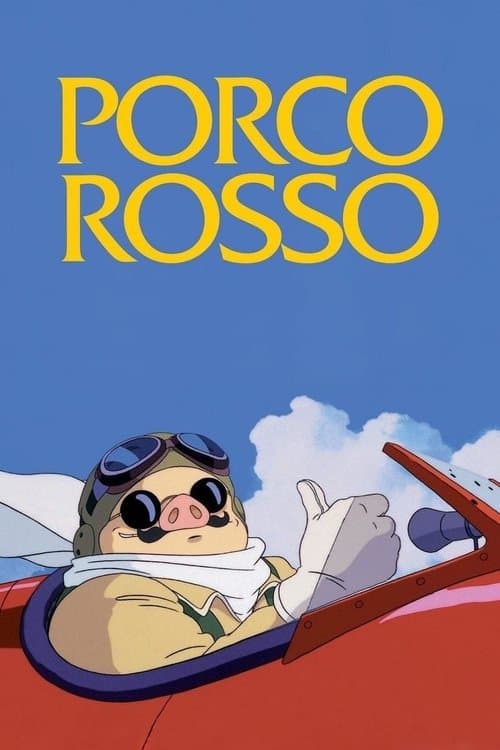
Porco Rosso
紅の豚
Does this age rating seem accurate to you?
Detailed parental analysis
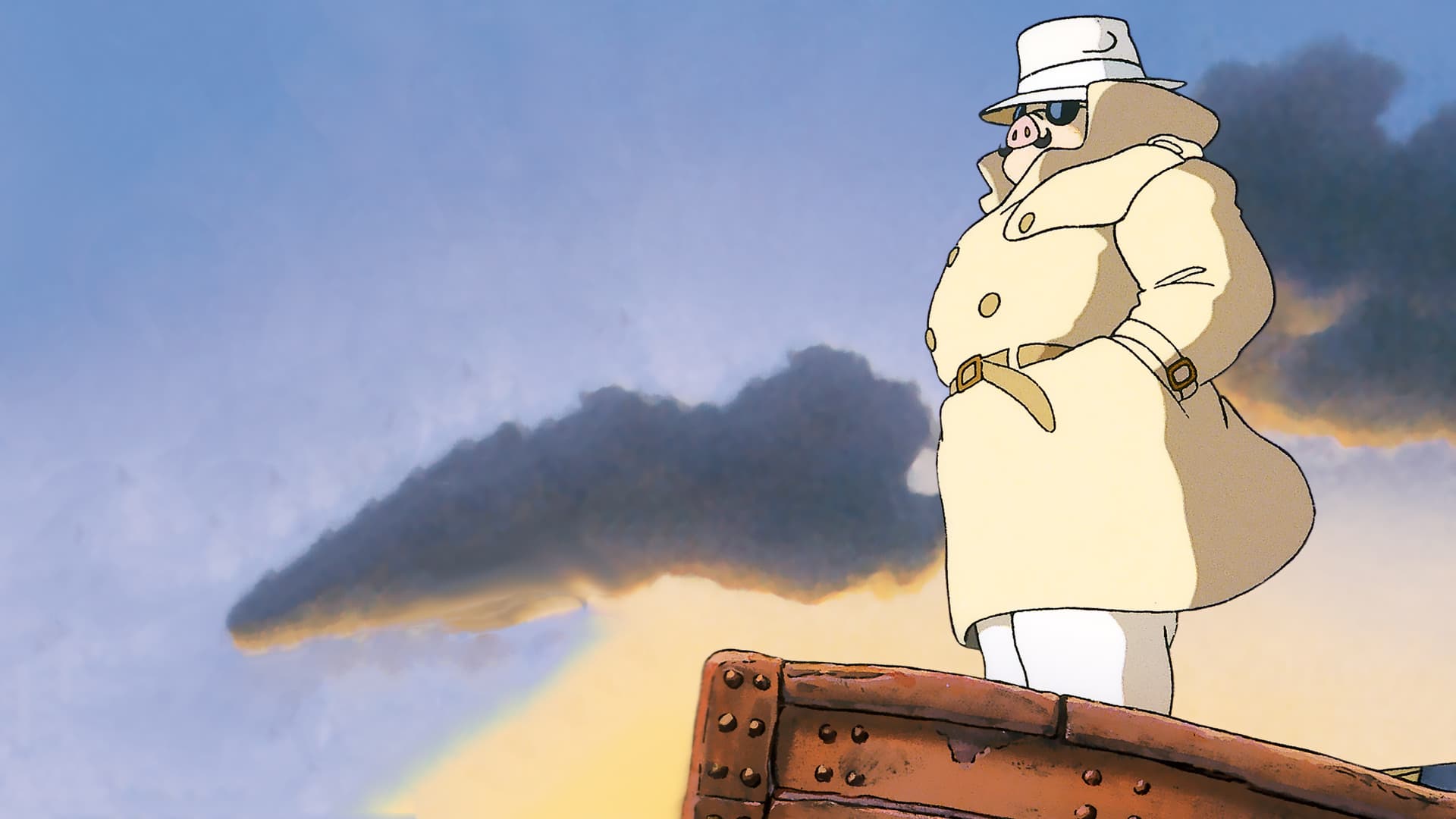
Porco Rosso is an aerial adventure film tinged with melancholy and humour, characterised by a contemplative and slightly nostalgic atmosphere, set within the world of the interwar Adriatic. A solitary pilot, transformed into a pig by a mysterious curse, undertakes mission after mission against air pirates whilst fleeing his own past. The film is a Studio Ghibli production, which serves as a benchmark for families, but it is better suited to preteens and adults than to young children, owing to the thematic density and introspective tone of its narrative.
Social Themes
The film carries an explicit antiwar and antifascist message, articulated without equivocation by the protagonist himself. The rise of fascism in 1930s Italy forms the political backdrop of the narrative, and the hero's refusal to submit to it is presented as a foundational moral choice. War is not glorified: aerial battles are evoked with a gravity that suggests the human cost of conflict without ever transforming it into heroic spectacle. It is one of the rare animated films to address the politics of its era with such candour, making it a solid starting point for a conversation about totalitarianism and individual resistance.
Underlying Values
The film values personal integrity, humility, and the capacity to live at odds with convention, at the expense of social ambition or military glory. The hero embodies a form of ethical individualism: he chooses isolation not out of cynicism but out of fidelity to his own principles. Perseverance and courage are present, but always tempered by an awareness of limitations and griefs that do not resolve themselves. Money, recognition, and victory are never presented as ends in themselves.
Substances
The protagonist drinks wine and smokes cigars recurrently, in bar scenes and during moments of solitude. These behaviours are presented as natural and constitutive of the character, without being explicitly criticised or glorified. For a child under ten, the normalisation of these habits may go unnoticed; for a preteen, it is a point worth mentioning to prevent identification with the character from leading to an uncritical view of these practices.
Violence
Aerial combats are numerous and drive the action, but their treatment remains stylised and cartoonish, without gore or realistic violence. A fistfight between two adult characters results in visible injuries, bruises and light cuts, in a scene that remains in the register of spectacle rather than brutality. Violence is never gratuitous: it is embedded in clear narrative stakes and is often followed by emotional or humorous consequences that limit its anxiety-inducing charge.
Language
The film contains a few expressions of colloquial register, notably equivalents of mild oaths. Nothing overwhelming or particularly coarse, but it is worth noting for families most attentive to vocabulary.
Strengths
Porco Rosso is a film of great narrative finesse, succeeding in addressing disillusionment, grief and political commitment without ever burdening the narrative or preaching. The construction of the main character, paradoxical, solitary and endearing, offers the child or teenager a model of complex adulthood rarely proposed in animation. The humour is authentic, the artistic direction restores interwar Italy with precision, and the soundtrack contributes to a lasting poetic atmosphere. The film offers a reflection on identity, self-betrayal and resistance to mass ideologies that remains relevant well beyond childhood.
Age recommendation and discussion points
The film is suitable from age ten onwards, with fully comfortable viewing around eleven or twelve years old, when the child is able to grasp the political and melancholic depth of the narrative. After viewing, two conversations are worthwhile: ask the child what he or she understands about the hero's choice to refuse fascism and why this refusal costs him something, and discuss how the film shows that courage can resemble retreat or solitude rather than victory.
Synopsis
In Italy in the 1930s, sky pirates in biplanes terrorize wealthy cruise ships as they sail the Adriatic Sea. The only pilot brave enough to stop the scourge is the mysterious Porco Rosso, a former World War I flying ace who was somehow turned into a pig during the war. As he prepares to battle the pirate crew's American ace, Porco Rosso enlists the help of spunky girl mechanic Fio Piccolo and his longtime friend Madame Gina.
About this title
- Format
- Feature film
- Year
- 1992
- Runtime
- 1h 33m
- Countries
- Japan
- Original language
- JA
- Directed by
- Hayao Miyazaki
- Main cast
- Shūichirō Moriyama, Tokiko Kato, Bunshi Katsura VI, Tsunehiko Kamijô, Akemi Okamura, Akio Otsuka, Hiroko Seki, Reizō Nomoto, Osamu Saka, Yu Shimaka
- Studios
- Studio Ghibli, TOHO, Tokuma Shoten, Nibariki, Mitsubishi, Nippon Television Network Corporation
Content barometer
- Violence2/5Moderate
- Fear1/5Mild
- Sexuality0/5None
- Language1/5Mild
- Narrative complexity1/5Accessible
- Adult themes2/5Present
Values conveyed
- Courage
- Perseverance
- friendship
- ingenuity
- loyalty