
Ponyo
崖の上のポニョ
Does this age rating seem accurate to you?
Detailed parental analysis
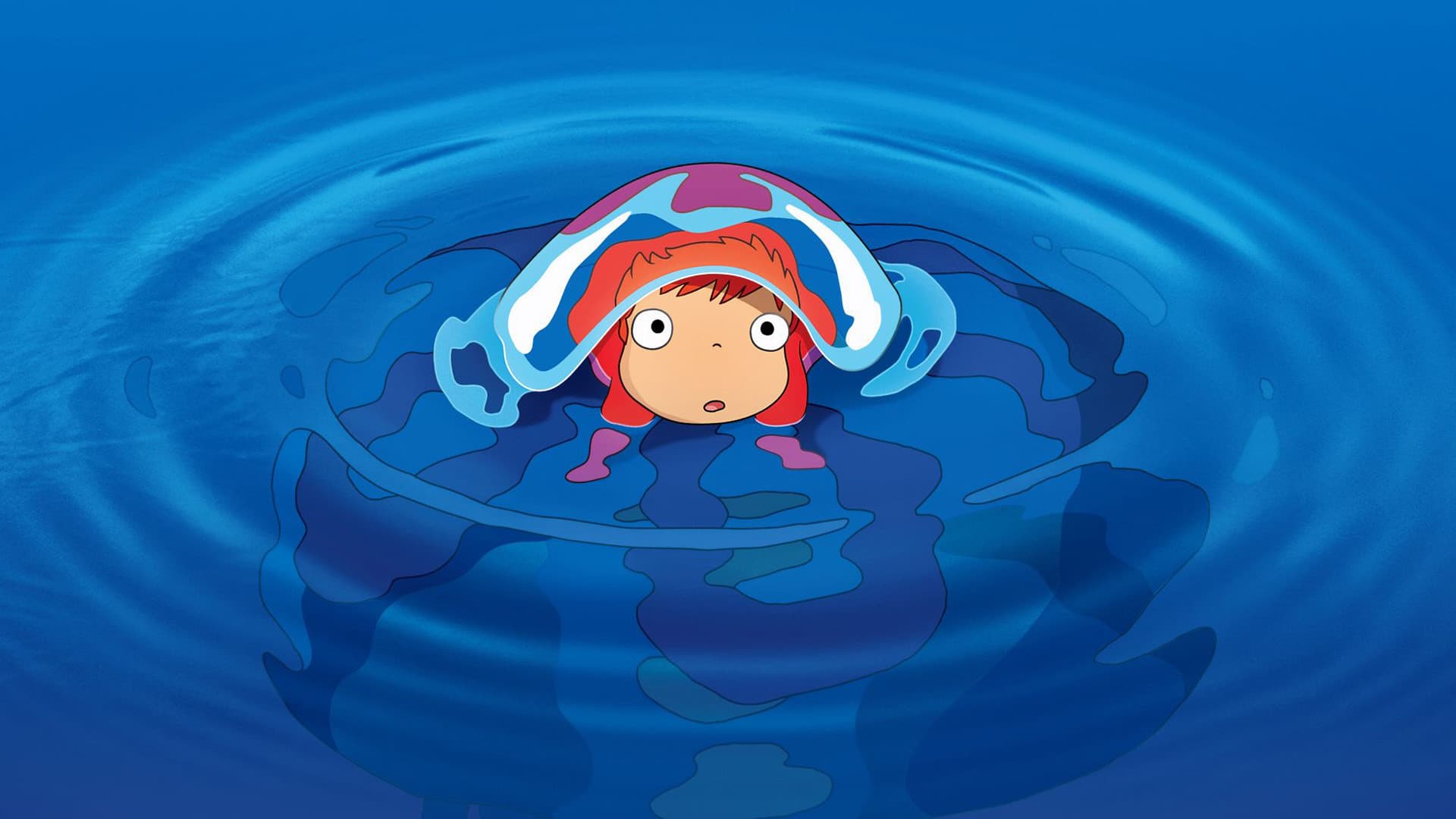
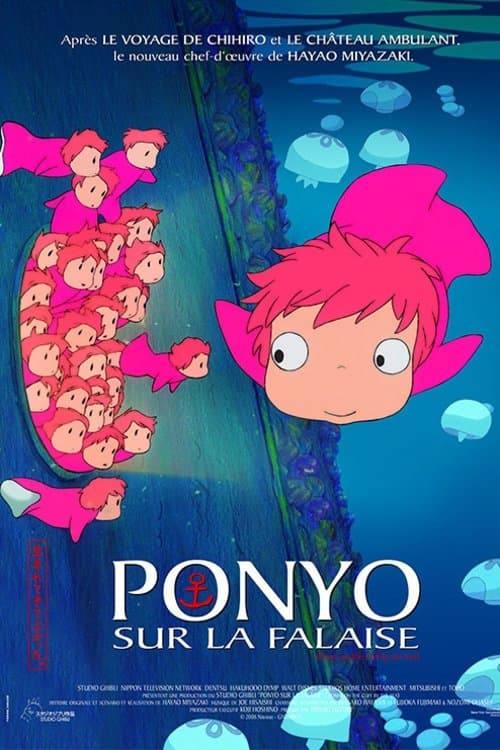
Ponyo on the Cliff by the Sea is a luminous and poetic fantasy tale, sustained by an atmosphere both gentle and subtly unsettling, hovering between childlike wonder and unleashed natural forces. The story follows a five-year-old boy who rescues a small creature that is part fish, part human, and their unusual friendship that disrupts the balance between the human world and the ocean. The film is primarily aimed at young children, though it offers sufficient visual and symbolic depth to hold the attention of adults. It is a Studio Ghibli production, a trusted benchmark for families seeking quality and rigour in animated films.
Social Themes
The film carries a strong and constantly present environmental message: the oceans are polluted by human waste, and this degradation is shown as the direct cause of the natural imbalance that triggers the narrative crisis. The sickened sea is a recurring image, never incidental. Without being didactic in the heavy sense of the term, the film clearly positions human responsibility towards nature as a moral imperative. It is a natural entry point for conversation with a child about the relationship between human activities and the marine environment.
Parental and Family Portrayals
The film's parental figures deserve attention. The mother, Lisa, is portrayed as courageous and independent, but she takes obvious risks: she drives at high speed on a coastal road during a violent storm, leaves her five-year-old son alone at home in dangerous circumstances, and her safety choices are globally reckless. The father, an absent sailor, is affectionate but distant. These behaviours are not condemned by the narrative, which may leave a young viewer with the impression that parental thoughtlessness is acceptable if accompanied by love and good humour. A conversation after the film about the limits of independence and safety rules is warranted.
Underlying Values
The narrative celebrates compassion, courage and curiosity as drivers of action in both child protagonists. The acceptance of the other despite their difference lies at the heart of the plot, without ever being stated explicitly as a lesson. The film also promotes a form of simple living and connection to the natural world, contrary to any logic of consumption or performance. Spontaneous kindness towards frail elderly people is also highlighted, illustrated by Sosuke's behaviour towards the residents of the care home.
Violence
The film contains no violence in the strict sense, but the storm and tsunami sequence, visually intense, may be trying for very young children. Aquatic creatures with tentacular forms and menacing appearance appear in underwater scenes. There is also a moment when a child appears to be in danger of death or lost at sea, which constitutes a real emotional burden for a viewer of five or six years old. These passages are brief and lead to a reassuring resolution, but their impact should not be underestimated with the youngest or most sensitive children.
Substances
The presence of substances is marginal but visible: a character opens a beer can without consuming it, and Ponyo's father ingests alchemical potions whose narrative status is clearly fantastical. These elements carry no moral weight in the narrative and are not valorised. They may, however, prompt questions from an attentive child.
Language
The film contains a few mildly disparaging remarks and a small number of mild insults in the children's register. Nothing that exceeds the usual conventions of the genre, but it is perceptible in the original subtitled version or in some dubbed versions.
Strengths
Ponyo on the Cliff by the Sea is visually sumptuous, with watercolour animation that captures the movement of water with rare expressiveness. The film succeeds in embodying childhood subjectivity with remarkable accuracy: the world is seen at five years old, vast, unpredictable and wondrous. The narrative structure, deliberately simple, leaves ample room for atmosphere and emotion, without resorting to the usual devices of the adventure film. For the adults accompanying, the film offers a melancholic and sincere reinterpretation of the relationship between childhood and nature, between freedom and responsibility. Its mythological dimension, drawn equally from Japanese fairy tales and the European tradition of the little mermaid, enriches the viewing experience without weighing it down.
Age recommendation and discussion points
The film is suitable from five years old for well-tempered children, but those who are more sensitive will be more comfortable from six or seven years old due to the storm scenes and a few unsettling moments. Two angles of discussion are worth pursuing after viewing: asking the child why the ocean was so damaged at the start of the film and what humans might do differently, and returning together to Lisa's decisions to distinguish what constitutes courage from what constitutes recklessness.
Synopsis
When Sosuke, a young boy who lives on a clifftop overlooking the sea, rescues a stranded goldfish named Ponyo, he discovers more than he bargained for. Ponyo is a curious, energetic young creature who yearns to be human, but even as she causes chaos around the house, her father, a powerful sorcerer, schemes to return Ponyo to the sea.
About this title
- Format
- Feature film
- Year
- 2008
- Runtime
- 1h 40m
- Countries
- Japan
- Original language
- JA
- Studios
- Studio Ghibli, TOHO, Nippon Television Network Corporation, dentsu, Hakuhodo DY Media Partners, The Walt Disney Company (Japan), Mitsubishi
Content barometer
- Violence1/5Mild
- Fear3/5Notable tension
- Sexuality0/5None
- Language1/5Mild
- Narrative complexity2/5Moderate
- Adult themes1/5Mild
Watch-outs
Values conveyed
- Friendship
- Acceptance of difference
- Compassion
- courage
- empathy
- ecology