
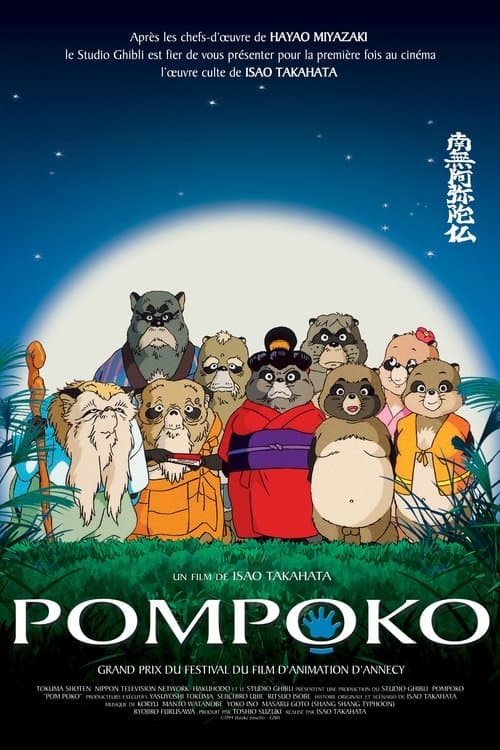
Pom Poko
平成狸合戦ぽんぽこ
Does this age rating seem accurate to you?
Detailed parental analysis
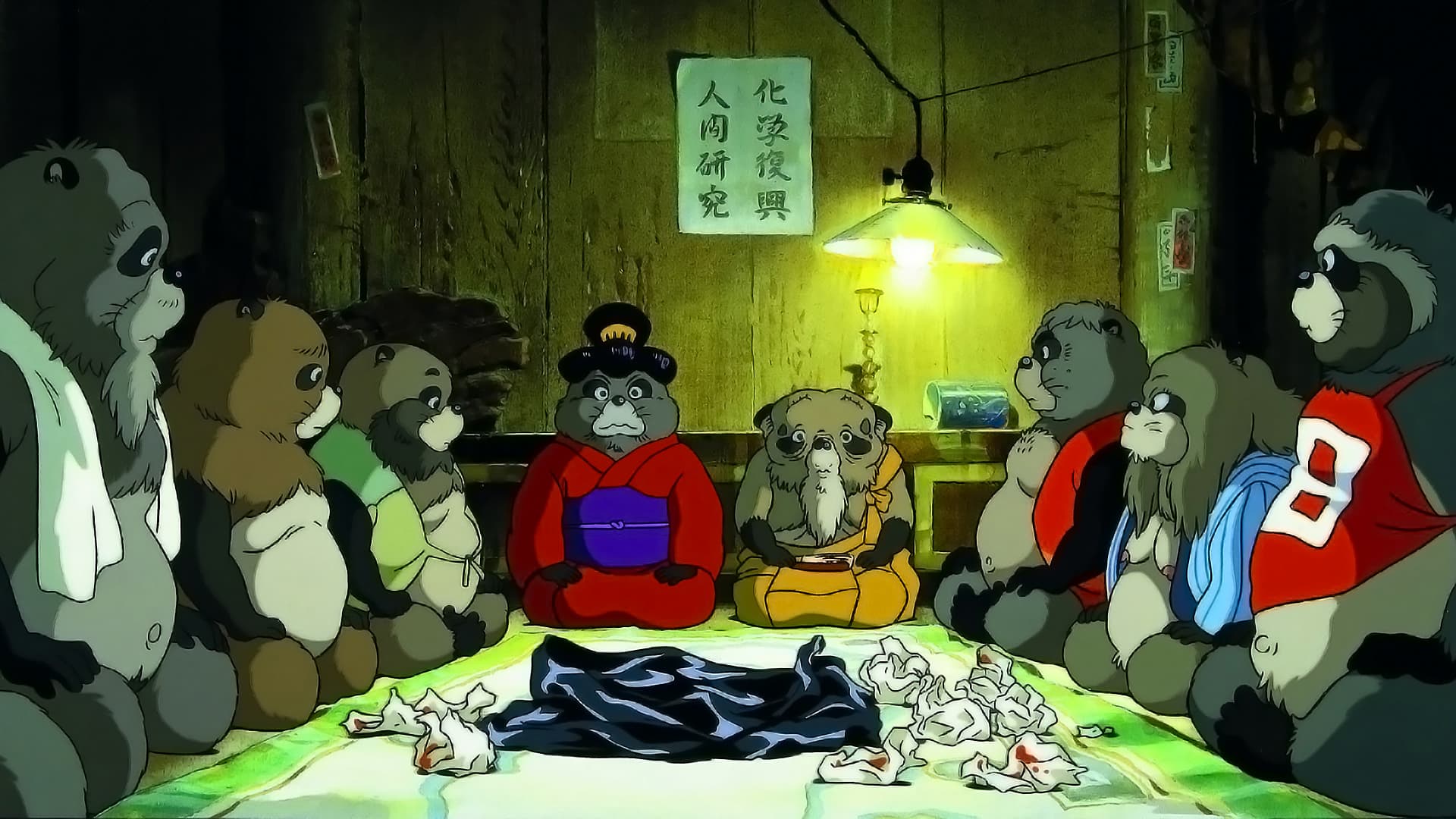
Pompoko is an animated film with a melancholic and abundant atmosphere, blending slapstick comedy, Japanese folklore and poignant social chronicle. The plot follows a community of tanuki, shape-shifting raccoon dogs from Japanese folklore, who struggle to preserve their forest against Tokyo's urban expansion in the 1960s. Despite its colourful appearance and comic sequences, the film speaks more to teenagers and adults than to young children, owing to the depth of its themes and the darkness of its ending. Social Themes Ecology is the absolute heart of the narrative. The film documents with quasi-militant precision the destruction of a forest ecosystem for the sake of residential housing developments, and the tanuki are both its victims and powerless witnesses. What makes the treatment remarkable is its refusal of manichaeism: humans are not monsters, they are simply building houses to live in, which makes the ecological tragedy all the more real and difficult to dismiss. The underlying political question of who can decide the future of a natural habitat and on what grounds remains open at the film's end and naturally invites discussion. Underlying Values The film puts two postures in tension in the face of adversity: collective resistance and individual adaptation. Some tanuki choose to blend into human society, abandoning their nature, whilst others die refusing to surrender. Neither of these paths is presented as triumphant or morally superior. This ambivalence is owned and constitutes one of the film's most honest reflections: collective solidarity is not always enough to overcome structural forces, and adaptation is not a betrayal, but it carries a cost. For a teenager, this is a stimulating framework for thinking about the relationship between identity, survival and conformity. Violence Violence is not spectacular, but it is present repeatedly and realistically. Tanuki die crushed by cars, with visible pools of blood on screen, others perish from hunger, trapped or shot. Piles of tanuki bodies are shown visually without flinching. On the tanuki side, three humans die as a result of deliberate sabotage, which the film does not downplay. This violence is narrative and not gratuitous: it serves to make the real cost of the conflict tangible, on both sides. Nevertheless, it will be too intense for sensitive children or those under 9 or 10 years old. Sex and Nudity The film contains two elements worth flagging. First, the tanuki use their hypertrophied testicles as weapons, shields and gliders, in a register that is explicitly comic and rooted in traditional Japanese folklore, with no sexual connotation whatsoever. It is disconcerting on first viewing, especially for a Western audience, but the sequence calls more for explaining the cultural reference than for concern. Furthermore, displays of magazines with images of naked women are briefly visible in the background of one scene: it is incidental and not eroticised, but noticeable. Strengths Pompoko is a work of great narrative ambition, backed by the Studio Ghibli label, which for parents means author-driven animation in the fullest sense. The film alternates with uncommon ease between popular farce, sharp social satire and genuine tragedy, never betraying one for the other. The transmission of Japanese folklore, kaidan, yôkai, parade of the hundred demons, is dense and generous, and functions as a vivid introduction to a visual culture that few Western films approach. The emotional intelligence of the narrative lies in its ability to endear us to characters who collectively make poor decisions, and to not promise redemption where there is none. It is a rare film that trusts its viewer to bear ambiguity and grief. Age recommendation and discussion points The film is best reserved for children of at least 10 years old for supervised viewing, and can be watched more comfortably from age 12 onwards. Two angles for discussion naturally emerge after viewing: ask the child what he or she thinks of the decision of some tanuki to integrate into human society rather than continue to resist, and ask whether the humans in the film are really the villains of the story, and why it is difficult to answer simply yes or no.
Synopsis
The Raccoons of the Tama Hills are being forced from their homes by the rapid development of houses and shopping malls. As it becomes harder to find food and shelter, they decide to band together and fight back. The Raccoons practice and perfect the ancient art of transformation until they are even able to appear as humans in hilarious circumstances.
About this title
- Format
- Feature film
- Year
- 1994
- Runtime
- 1h 59m
- Countries
- Japan
- Original language
- JA
- Directed by
- Isao Takahata
- Main cast
- Makoto Nonomura, Nijiko Kiyokawa, Shigeru Izumiya, Norihei Miki, Yuriko Ishida, Megumi Hayashibara, Yumi Ichihara, Akira Kamiya, Takehiro Murata, Gannosuke Ashiya
- Studios
- Studio Ghibli
Content barometer
- Violence0/5None
- Fear0/5None
- Sexuality0/5None
- Language0/5None
- Narrative complexity2/5Moderate
- Adult themes0/5None
Values conveyed
- solidarity
- ecology
- resistance
- identity