Pokémon: The First Movie
劇場版ポケットモンスター ミュウツーの逆襲
Does this age rating seem accurate to you?
Detailed parental analysis
Pokémon the Movie: Mewtwo Strikes Back is an animated film with a distinctly darker and emotionally intense tone than the television series from which it derives. The plot follows Ash and his friends confronted by Mewtwo, a cloned Pokémon who, consumed by hatred of his creators and humanity as a whole, triggers a confrontation with devastating consequences. The film is primarily aimed at young franchise fans, but its dramatic tone and themes extend well beyond what one would expect from entertainment aimed at children under eight.
Violence
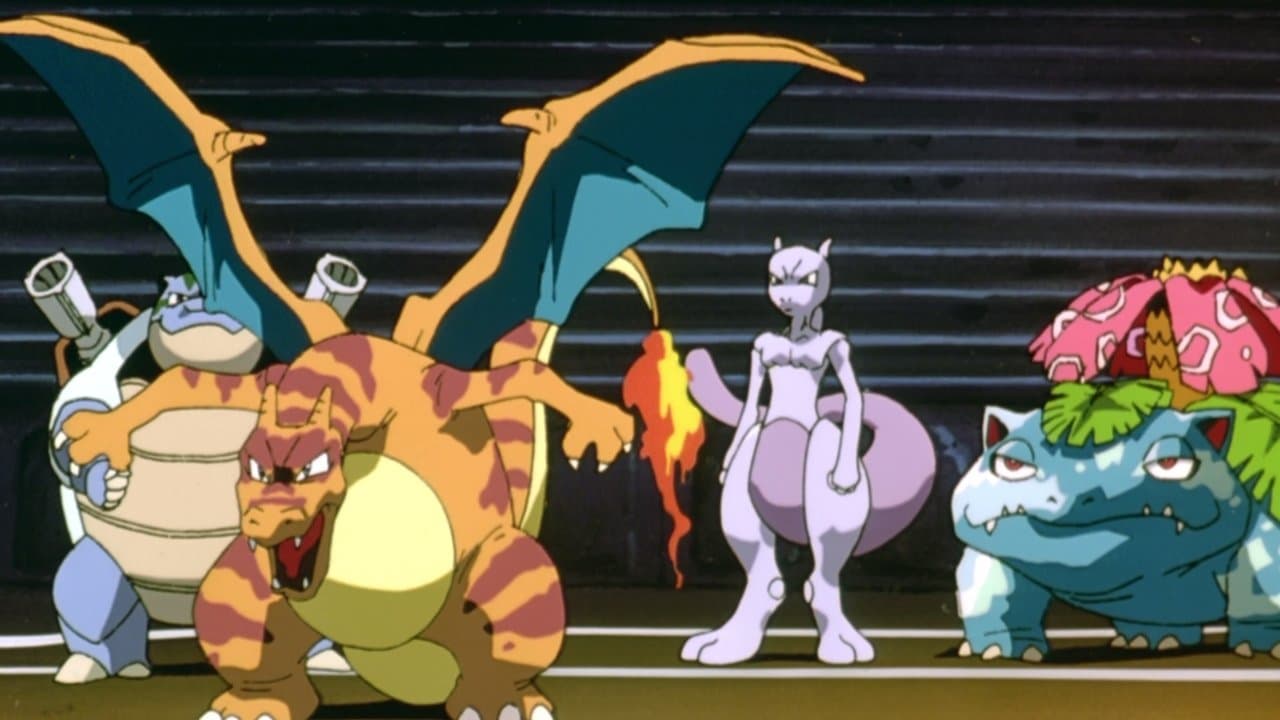
Violence forms the narrative core of the film and is significantly more intense than what the franchise typically prepares its young audience to expect. Prolonged battles pit original Pokémon against their clones in brutal and repeated sequences. Mewtwo's laboratory is destroyed in a succession of explosions and fires during which scientists perish. Characters are repeatedly electrocuted by Pokémon attacks, with pronounced sound and visual effects. The climactic scene, in which the main hero is petrified to stone before the eyes of his friends and his tearful Pokémon, constitutes a strong emotional peak that many young children experience as a genuine shock. This violence serves a clear narrative purpose: it demonstrates that senseless fighting leads only to suffering, which gives it genuine moral weight. Yet the density and duration of the action sequences remain taxing for younger viewers.
Underlying Values
The film carries a sincere and explicit anti-violence message: midway through the narrative, the refusal to fight is presented as the only right response to an absurd war. Mewtwo is an antagonist whose suffering is rendered intelligible, making him less a monster than a victim turned against his oppressors. The film thus poses questions about revenge as a response to injustice, about the legitimacy of anger born from trauma, and about the possibility of forgiveness. Beneath the surface, it criticises the exploitation of living beings as instruments, equating the trainer-Pokémon relationship with a form of domination that the film invites viewers to question. The tension between these messages and the lengthy action sequences that frame them creates an interesting ambivalence to work through with a child.
Social Themes
Cloning and experimentation on living beings sit at the heart of the narrative: Mewtwo is a clone created in a laboratory, and his revolt against those who created him raises concrete ethical questions about genetic manipulation and the responsibility of scientists toward what they create. The film also addresses, in an accessible manner, the notion of identity: does having been manufactured rather than born change an entity's worth? These issues are treated with simplicity suited to a young audience yet seriously enough to nourish genuine discussion.
Parental and Family Portrayals
Adult and parental figures are almost entirely absent from the film, as is standard within the franchise. Young trainers act with complete autonomy, make serious decisions without recourse to any adult authority, and face situations of extreme danger without protection. This pattern of total emancipation is structural to the Pokémon universe and few parents find it surprising in that context, but it is worth being aware of.
Strengths
The film transcends being a mere spin-off by constructing an antagonist whose distress is rendered with genuine depth for the genre. Mewtwo is not a one-dimensional villain: his trajectory as a rejected creature, instrumentalised and then consumed by hatred forms an emotionally coherent and memorable arc. The central scene of the hero's petrification, deliberately slow and silent, draws real narrative effectiveness from its contrast with the agitation that precedes it. The film left a lasting mark on a generation precisely because it refused to remain within expected lightness and posed questions about identity, suffering and the meaning of combat that few animated films for children dared address at the same time. It is a solid object of cultural transmission for parents who grew up with the franchise.
Age recommendation and discussion points
The film is not recommended for children under 7 years of age due to the emotional intensity and sustained violence of certain sequences; for serene and rewarding viewing, 8 to 9 years constitutes a reasonable threshold, accompanied by an adult for the younger end of this range. Two angles merit discussion after viewing: why is Mewtwo angry, and is his anger understandable even when his actions are unjust? And also: what does the child think about the fact that scientists created a living being without wondering what it would feel?
Synopsis
Determined to prove its superiority, a bio-engineered Pokémon called Mewtwo lures Ash, Pikachu and others into a Pokemon match like none before.
About this title
- Format
- Feature film
- Year
- 1998
- Runtime
- 1h 25m
- Countries
- Japan
- Original language
- JA
- Studios
- OLM, Shogakukan Production, TV Tokyo, Pikachu Project '98, Media Factory, Creatures, Nintendo, GAME FREAK, jeki, Shogakukan, Tomy
Content barometer
- Violence3/5Notable
- Fear4/5Intense
- Sexuality0/5None
- Language0/5None
- Narrative complexity1/5Accessible
- Adult themes0/5None