Pocahontas II: Journey to a New World
Does this age rating seem accurate to you?
Detailed parental analysis
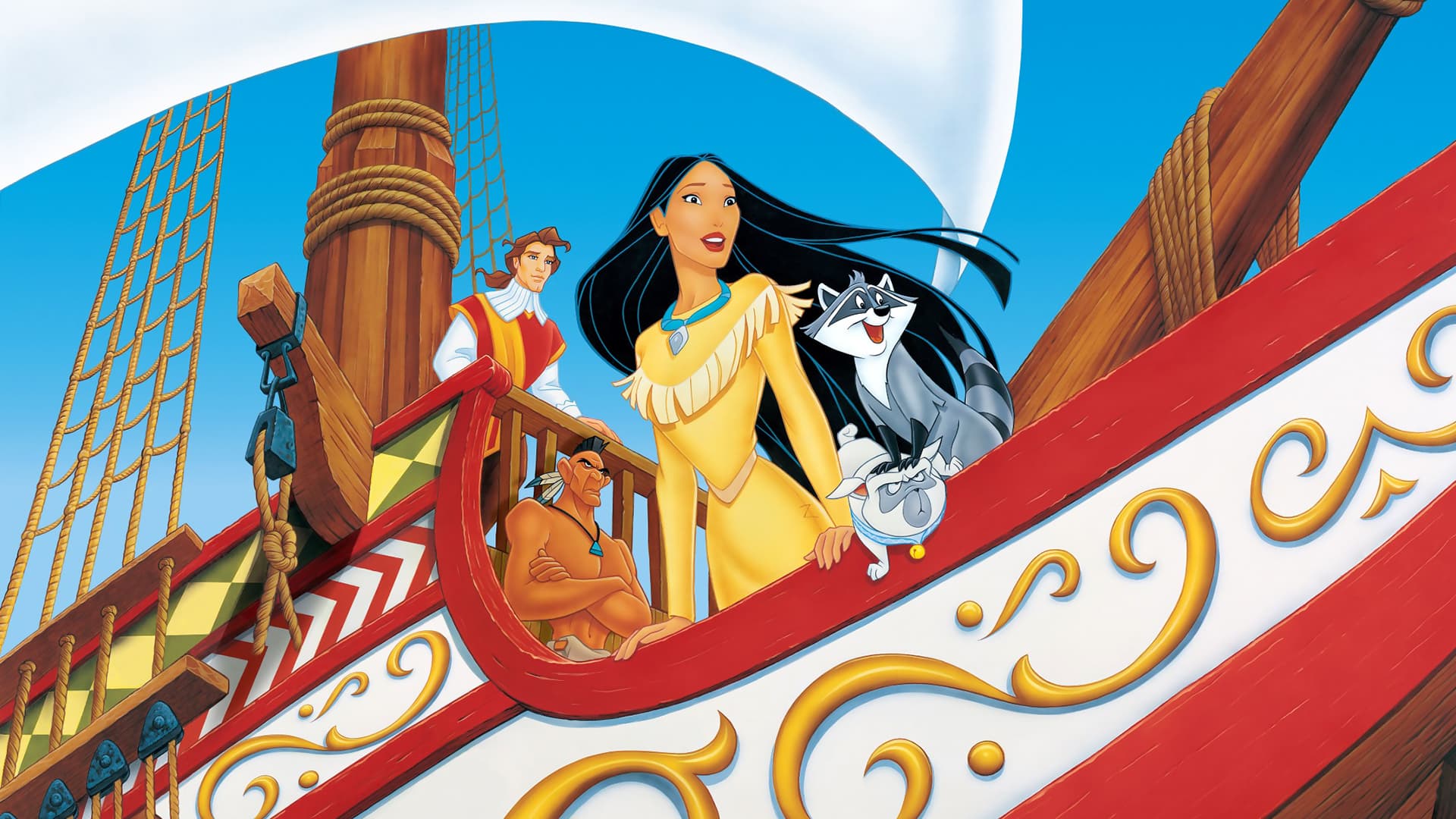
Pocahontas II is a Disney animated sequel with a darker and more diplomatic tone than the first film, carried by an atmosphere of English royal court intrigue mixing political scheming and cultural tensions. The plot follows Pocahontas as she travels to England to plead her people's cause and prevent war. The film targets young children who grew up with the first instalment, but its graver tonality and controversial narrative choices make it difficult to recommend without preparation.
Underlying Values
The film carries a fairly pronounced Manichean vision: Europeans are systematically presented as threatening, arrogant or corrupt, whilst Native Americans embody wisdom and dignity. This imbalance is not without pedagogical interest, as it reverses the usual colonial gaze, but it remains a simplification that deserves to be named with the child. Furthermore, the treatment of the John Smith character poses a real problem of moral coherence: he is deliberately rendered unsympathetic to justify Pocahontas's change of affection, which constitutes a dishonest narrative manipulation. The film does, however, value diplomatic courage and the capacity to defend one's people without resorting to violence, which is a solid message.
Discrimination
The representation of Native Americans as a noble people and the English as a hostile and ignorant mass is an inverted stereotype that structures the entire narrative. If the intention is to criticise colonialism, the result is a symmetrical caricature that serves neither historical complexity nor moral nuance. The scenes at the English court show Pocahontas treated as an exotic curiosity, which reflects a real historical reality but is handled superficially. It is a useful starting point for discussing with a child how cultures regard one another with suspicion or condescension.
Substances
Several characters, including a dog, are shown in a state of intoxication in a comedic scene. Alcohol consumption is presented as a source of gags, without consequence or commentary. It is a light but real presence, worth flagging for younger children who might retain the image of intoxication treated as amusing.
Violence
The film contains sword fights, scenes of betrayal and sustained dramatic tension around imprisonment and the threat of death. Violence remains within the codes of the Disney family animation film, without gore or traumatic representation, but it is more present and less softened than in the first instalment. Governor Ratcliffe, a character of assumed treachery, embodies a credible threat that may worry younger children.
Social Themes
The film addresses head-on the themes of colonialism, diplomacy between cultures and political representation of a minority people. Pocahontas plays the role of ambassador, which is a rare and interesting representation of a woman in a position of political responsibility. These themes are treated in simplified fashion but constitute a genuine entry point for discussing with a child the encounter between cultures and power relations.
Strengths
The film offers few notable narrative or artistic qualities compared to the first instalment. The direction is functional, the songs are forgettable, and the writing lacks the emotional depth that made the original film strong. Its principal interest lies in the representation of a heroine who acts on the political rather than romantic plane, which is a commendable thematic evolution even if poorly executed. For an attentive parent, the film can serve as a support for discussion on colonialism and diplomacy, provided one accepts its numerous approximations.
Age recommendation and discussion points
The film is accessible from age 7 in terms of content, but the narrative disappointment it generates in children attached to the first instalment deserves to be anticipated. It is better to prepare the child for the fact that the story takes a different direction, and to use the viewing as an opportunity to discuss two concrete things: why are all the characters either good or bad depending on their origin, and what does this tell us about the way we represent other cultures?
Synopsis
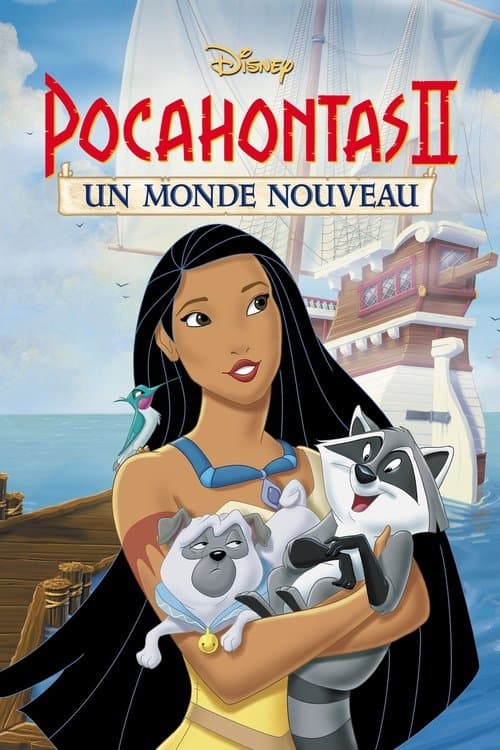
When news of John Smith's death reaches America, Pocahontas is devastated. She sets off to London with John Rolfe, to meet with the King of England on a diplomatic mission: to create peace and respect between the two great lands. However, Governor Ratcliffe is still around; he wants to return to Jamestown and take over. He will stop at nothing to discredit the young princess.
Where to watch
Availability checked on Apr 28, 2026
About this title
- Format
- Feature film
- Year
- 1998
- Runtime
- 1h 12m
- Countries
- United States of America
- Original language
- EN
- Directed by
- Tom Ellery, Bradley Raymond
- Main cast
- Billy Zane, Irene Bedard, Jim Cummings, David Ogden Stiers, Linda Hunt, Judy Kuhn, Jeff Bennett, Jean Stapleton, Donal Gibson, Finola Hughes
- Studios
- Disney Television Animation