Pocahontas
Does this age rating seem accurate to you?
Detailed parental analysis
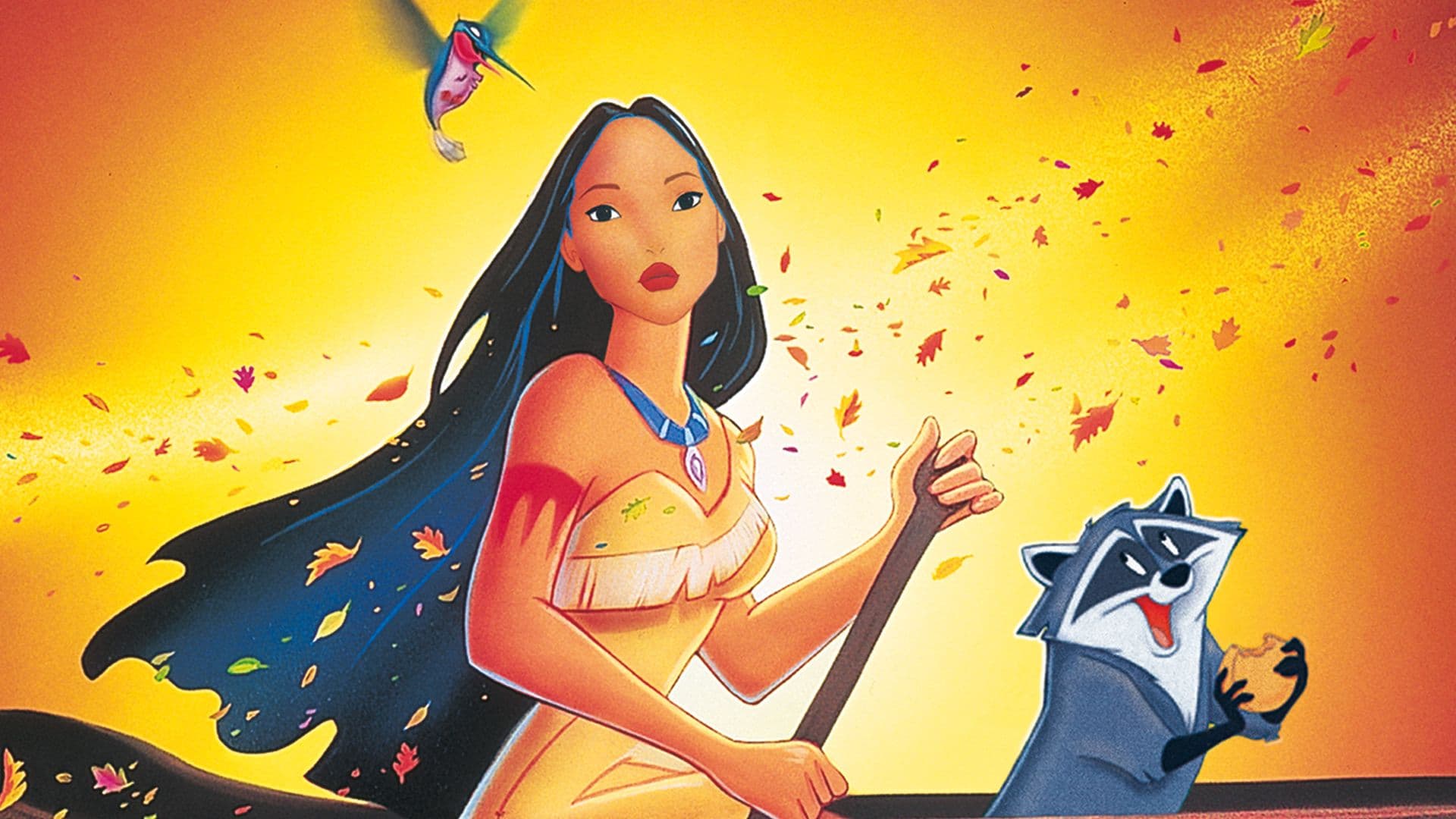
Pocahontas is a Disney animated film with a tone that is both romantic and solemn, driven by careful art direction and a striking original score. The story follows a young Native American woman caught between her people and a group of English settlers who have come in search of gold, set against a backdrop of tensions leading to armed conflict. The film targets a broad family audience, but speaks more directly to children from the age of 7 and pre-teens than to very young children.
Discrimination
This is the heaviest aspect of the film, and the one that most deserves parental attention. The settlers repeatedly use dehumanising language to refer to Native Americans, notably in songs and dialogue that describe them as savages, infidels or barbarians. The film does not endorse these formulations: they are attributed to characters presented as hostile or blinded by greed, and the overall narrative invalidates them. That said, the representation of Native Americans oscillates between two opposing stereotypes: on one hand the colonisers reduce them to sub-humans, on the other the film romanticises them as quasi-supernatural figures in mystical contact with nature. Pocahontas herself is drawn with adult physical features and a sexualised silhouette, whereas the historical figure she is based on was a child. This idealisation is not an innocent counterpoint to the insults: it constitutes another mode of reduction, more subtle, that parents do well to name.
Violence
The film includes scenes of combat between settlers and Native Americans involving firearms, tomahawks and bows, as well as hand-to-hand knife fighting. Three characters are killed by bullets, with no visible blood or realistic depiction of injuries. The violence therefore remains visually restrained, but it is clearly present in the narrative and some scenes of tension may worry sensitive children under 7 years old. The narrative outcome is clear: violence is presented as an avoidable impasse, which gives it moral force rather than spectacle.
Underlying Values
The film champions a worldview founded on dialogue, respect for nature and the rejection of greed. Pocahontas's arc is built around a difficult choice between romantic love and responsibility to her community: she chooses to stay with her people rather than leave with the man she loves, a resolution rare in the Disney register and worthy of discussion. The relationship with nature is omnipresent and carried with sincerity, even if the film casts it as a quasi-mystical attribute of Native Americans rather than a reflection applicable to all. The critique of the colonisers' exploitation of natural resources is explicit and legible for children.
Social Themes
Colonisation, institutional racism, the destruction of indigenous peoples and the exploitation of land are at the heart of the narrative. The film offers a simplified but honest reading in its intentions: the greedy settlers are plainly condemned, and the logic of conquest is presented as morally unjustifiable. These themes, treated within an entertaining and musical framework, provide an accessible entry point for initiating a discussion with a child about the history of Native American peoples, provided it is clarified that the film departs notably from historical reality.
Substances
One scene shows sailors filling their mugs with wine aboard ship. The consumption is normalised without being valorised or commented upon. The element is discrete and without narrative consequence.
Strengths
The art direction of the film is among the most ambitious of the Disney period in the 1990s: aquatic landscapes, interplay of light and movement of natural elements are treated with genuine visual elegance. The original score is solid, with certain songs remaining memorable well beyond the viewing. On the narrative level, the unconventional ending, without a romantic happy ending, constitutes a genuine gesture of maturity rare in this format: it shows the child that a heroine can make a choice that is both courageous and painful. Pocahontas is also one of the rare Disney heroines whose arc is entirely directed towards collective responsibility rather than towards a promise of personal happiness, which gives the film a more durable emotional substance than the average of the genre.
Age recommendation and discussion points
The film is not recommended before age 7 due to scenes of violence and sustained dramatic tension, and can be watched at ease from 8-9 years old with occasional parental support. Two angles merit discussion after viewing: why do the settlers use these words when speaking of Native Americans, and does the film itself represent them fairly, or in its own way does it also reduce them to too simple an image? Second avenue: how does Pocahontas choose at the end, and do we find this choice courageous or sad, and why?
Synopsis
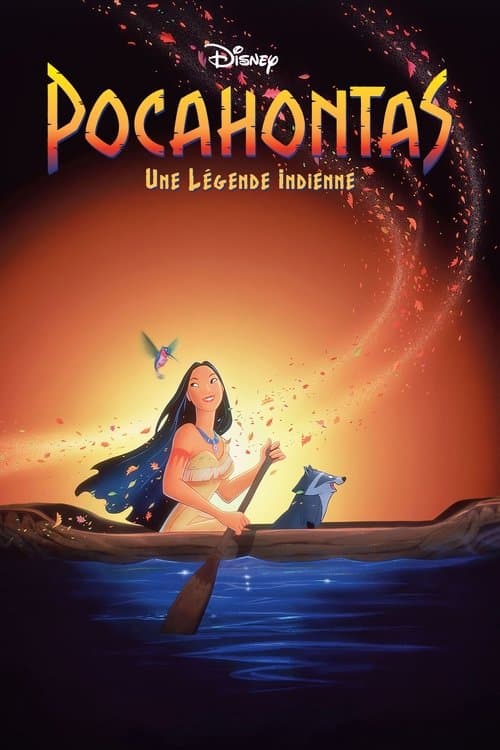
Pocahontas, daughter of a Native American tribe chief, falls in love with an English soldier as colonists invade 17th century Virginia.
About this title
- Format
- Feature film
- Year
- 1995
- Runtime
- 1h 22m
- Countries
- United States of America
- Original language
- EN
- Studios
- Walt Disney Feature Animation