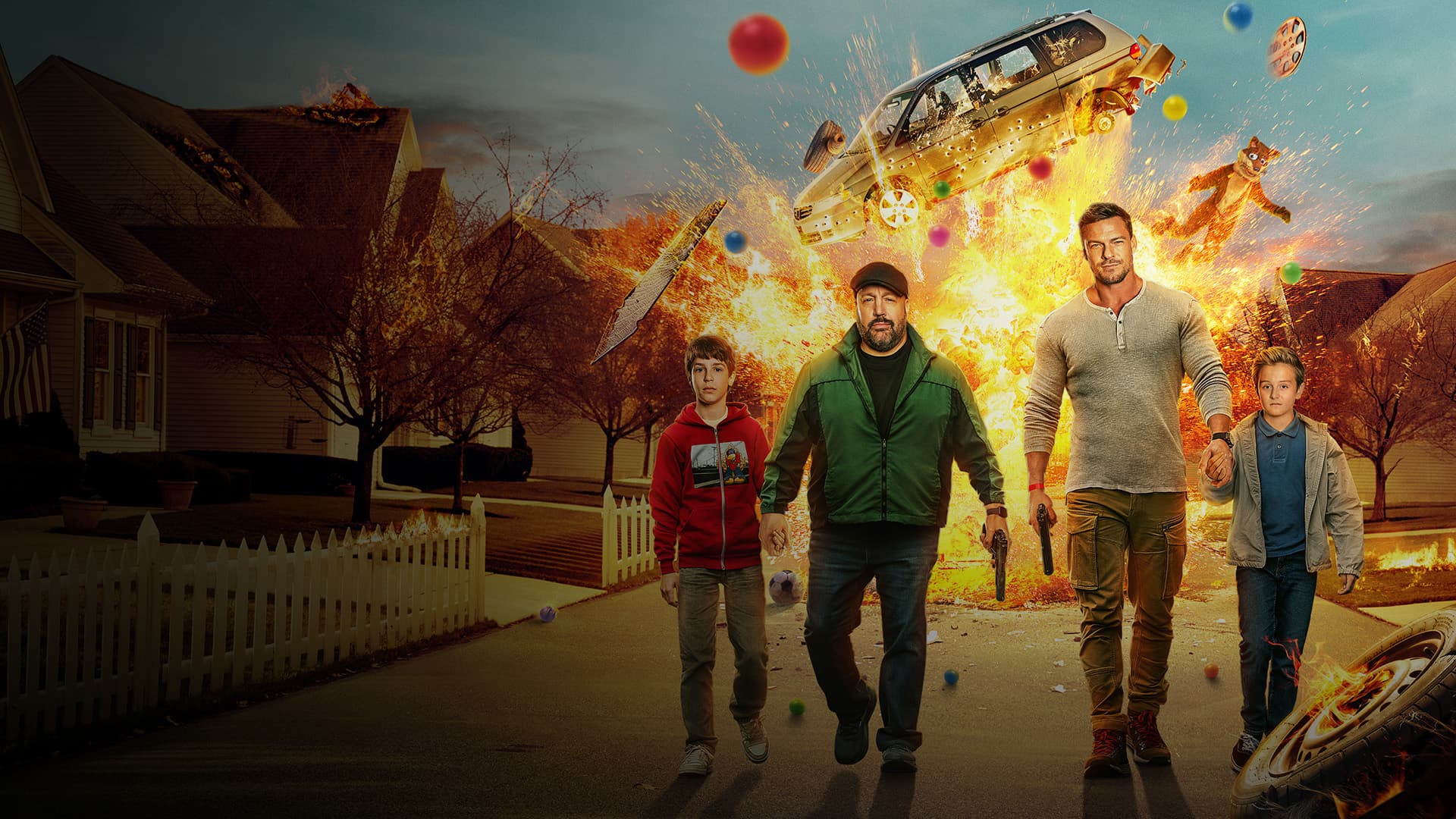


Playdate
Does this age rating seem accurate to you?
Detailed parental analysis
An Uncontrollable Day is an action comedy with chaotic and irreverent overtones, built on the unpredictable escalation of a mundane situation that degenerates into violent farce. The plot follows two fathers who experience a day of play with their children transformed into a series of dangerous and absurd incidents. The film targets an adult male audience around forty years old, and is in no way a family film despite the presence of children on screen.
Violence
Violence is the film's central comedic device and it is both frequent, intense and deliberately presented as funny. The narrative strings together kidnappings, torture threats, knife and gun fights, car chases and explosions, never treating these elements with any measure of seriousness. The most representative case is that of a woman tasered by a child and then hit by a truck, a sequence presented as physical comedy. This violence is never subjected to moral reflection: collateral damage to innocent characters is treated as recurring gags. For a child or preteen, the implicit message is that hurting people can be spectacular and amusing, without real consequence.
Language
The language is crude and omnipresent, with over a hundred obscenities and profanities in total, including numerous repetitions of the f-word and s-word. This register is not confined to a few tense scenes: it runs through the film continuously and constitutes part of the project's stylistic identity. For a teenager, it represents sustained exposure to aggressive vocabulary normalised by the comic context.
Substances
Adults consume alcohol and make explicit references to drugs, including cocaine, methamphetamine and ayahuasca, directly in the presence of children in public spaces. These scenes are neither dramatised nor condemned: they participate in the overall humorous register. Substance consumption is not presented as a problem but as an offbeat adult character trait and potentially comedic.
Discrimination
The film relies on a recurring gender stereotype around the child who enjoys dance in a flamboyant manner. This trait is used as a source of repeated mockery by the boy's stepfather, who implicitly associates this interest with a lack of masculinity. The treatment of this character establishes documented homophobic undertones, without the film ever taking critical distance from this dynamic. Furthermore, the biological father is depicted as structurally incompetent at caring for his children, a gender stereotype presented without nuance or narrative questioning.
Parental and Family Portrayals
Fatherhood is at the heart of the film thematically, but the treatment is profoundly contradictory. On one hand, the narrative celebrates the father-child bond and male camaraderie as sources of meaning. On the other, the fathers on screen steal cars, fight, consume alcohol in front of their children, and their decisions expose the children to objectively dangerous situations. This inconsistency is never resolved: the film valorises fatherhood in words whilst showing failing parental behaviour in deeds, which muddies the message for a young viewer.
Sex and Nudity
Sexual content remains limited but present. There is partial female nudity visible on television, women in provocative attire in the background, and dialogue with explicit sexual connotations, notably a character boasting about having slept with thousands of women, and two characters practising catfishing on dating apps with direct sexual allusions. These elements are clearly aimed at adults and have no narrative value for a child.
Underlying Values
The film attempts to convey values of friendship and engaged fatherhood, but these are constantly undermined by the behaviour of the main characters. Theft, violence, lying and exposing children to dangerous situations are committed by characters presented as likeable and whose arc never passes through genuine self-awareness. Humour functions as permanent absolution: nothing has moral consequence because everything is played on the register of comedy.
Strengths
The film offers no substantive narrative or artistic qualities to note. The escalating chaos comedy can work for an adult audience who enjoy the genre, and the energy of the comic action sequences is technically accomplished. But there is neither writing depth, nor emotional intelligence, nor pedagogical value to extract. The fatherhood theme, potentially rich, remains superficial and is contradicted by the complacent treatment of the characters' behaviour.
Age recommendation and discussion points
This film is not suitable for children or preteens: the comic violence, very crude language, drug references and homophobic undertones make it clearly targeted at adults. For a teenager, not before 15 years old, and with parental accompaniment. If viewing does take place, two questions deserve to be asked afterwards: why does the film make us laugh at people getting hurt, and what does that tell us about what we accept when it is presented as a joke?
Synopsis
When out-of-work accountant Brian joins stay-at-home dad Jeff for a playdate with their sons, he expects a laid-back afternoon. Instead, they're chased by mercenaries, and Brian—totally unprepared—must survive one absurd obstacle after another.
About this title
- Format
- Feature film
- Year
- 2025
- Runtime
- 1h 33m
- Countries
- United States of America, Canada
- Original language
- EN
- Directed by
- Luke Greenfield
- Main cast
- Alan Ritchson, Kevin James, Banks Pierce, Benjamin Pajak, Alan Tudyk, Sarah Chalke, Stephen Root, Isla Fisher, Hiro Kanagawa, Lauren Bradley
- Studios
- Amazon MGM Studios, Nickel City Pictures, A Higher Standard, Wide Awake Pictures, Arcana Studio
Content barometer
- Violence4/5Strong
- Fear2/5A few scenes
- Sexuality2/5Mild
- Language4/5Strong
- Narrative complexity1/5Accessible
- Adult themes3/5Marked
Watch-outs
- Drugs
- Alcohol
- Strong language
- Gender stereotypes
- Sexual orientation stereotypes
- Violence
Values conveyed
- Friendship
- Loyalty
- courage
- self-confidence
- father-son bonding
- teamwork