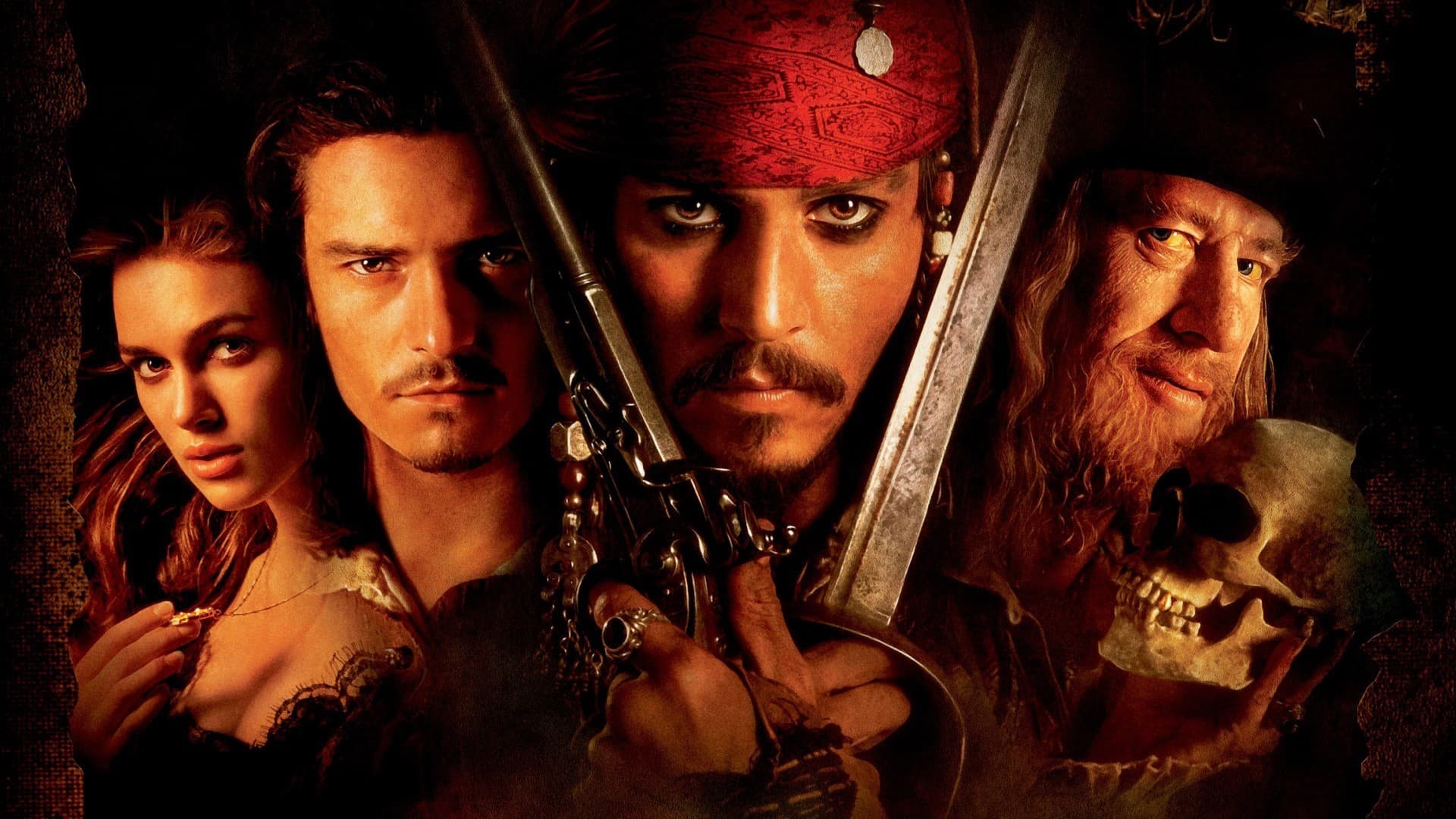
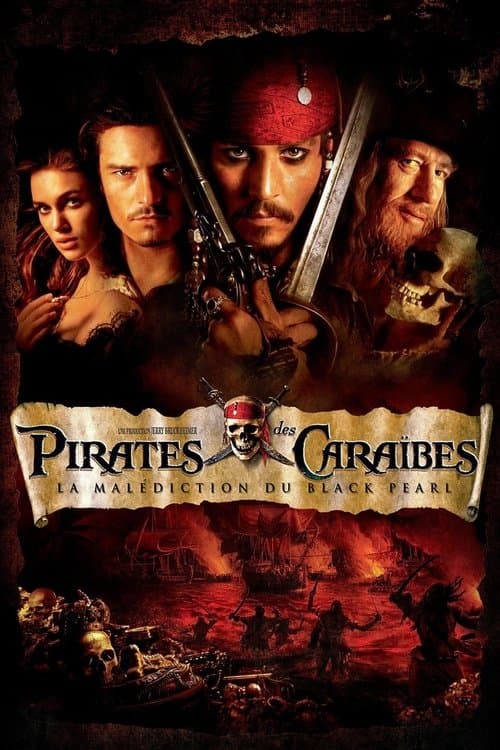
Pirates of the Caribbean: The Curse of the Black Pearl
Does this age rating seem accurate to you?
Detailed parental analysis
Pirates of the Caribbean: The Curse of the Black Pearl is an adventure and maritime fantasy film with an atmosphere that is both spectacular and light-hearted, carried by constant humour that tempers its darkest moments. The plot follows a blacksmith and a governor's daughter who ally themselves with an eccentric pirate to thwart a cursed crew in search of cursed treasure. The film targets a broad family audience, with a marked preference for children aged 10-11 and upwards, and teenagers.
Violence
Violence is present and recurring, but remains within the register of stylised adventure rather than gore. Sword fights are numerous, choreographed and spectacular, with some injuries and visible blood without excess. The village attack scene is the most intense in the film: civilians are killed, a structure collapses on a child, and the atmosphere is frankly threatening. The corpses of hanged pirates appear several times as set dressing, and the transformation of pirates into skeletons in moonlight constitutes the visually most disturbing element for younger viewers. The violence serves the narrative and is never gratuitous, but its accumulation over two hours warrants anticipation for sensitive children.
Underlying Values
The film maintains an interesting tension between two systems of values: the rigid and hypocritical order of British military authority on one side, the claimed freedom and individualism of pirates on the other. Jack Sparrow is presented as sympathetic and charismatic whilst being explicitly cowardly, dishonest and willing to sacrifice innocents for his survival. This gap between the character's charm and his actual deeds is an excellent point for discussion with a child or teenager. The love between Elizabeth and Will valorises the transgression of class boundaries, which is treated with sincerity. The redemption of the cursed characters gives the narrative a clear moral conclusion, without erasing the grey areas.
Substances
Rum consumption is recurring and associated with freedom, good cheer and pirate identity. Several characters appear drunk, and alcohol is treated with a lightness that makes it an almost festive element of the setting. It is not an explicit and moralised valorisation, but the repetition of the image is sufficient to make it a subject worth mentioning with a young child.
Sex and Nudity
Sexual content is very limited and remains in the suggestive register. There is the removal of a corset, a few light allusions to lust and naked female statues as ship decoration. Nothing explicit or insistent: this is not a major concern for this film.
Language
Language is generally clean. A few instances of terms such as 'hell' or 'damned' constitute the bulk of register departures, without notable profanity. This point does not warrant particular reservation.
Parental and Family Portrayals
Elizabeth's father, a benevolent governor attached to social propriety, embodies a parental authority that is affectionate but limited in its understanding of his daughter's desires. Will Turner, meanwhile, is in search of his biological pirate father, which gives the film a coming-of-age dimension around lineage and family heritage. These two parental figures, one present but constraining, the other absent but idealised, offer an interesting counterpoint on what it means to follow or transcend the paternal model.
Strengths
The film succeeds in building a coherent and generous adventure universe, with an effective sense of pacing that alternates action, humour and moments of emotion without ever losing momentum. The characterisation of Jack Sparrow is particularly successful: he is at once comic, unpredictable and morally ambiguous, making him a rare protagonist in mainstream family cinema. The staging of the fights is clear and inventive, and Klaus Badelt's score has become a cultural landmark in its own right. For a child or teenager, the film offers an accessible introduction to the codes of pirate cinema whilst raising questions about freedom, loyalty and the value of an individual beyond their social status.
Age recommendation and discussion points
The film is not recommended for children under 10 years of age due to recurring violence, animated skeletons and the village attack scene, which may affect sensitive children. From 10-11 years onwards, viewing is straightforward for the vast majority of children. Two angles of discussion are worth opening after the film: why Jack Sparrow seems sympathetic to us when he lies and puts people in danger, and what the film says about freedom by embodying it through outlaws rather than representatives of order.
Synopsis
When wily pirate Captain Barbossa seizes Jack Sparrow’s beloved ship, the Black Pearl, and kidnaps the governor’s daughter, Elizabeth Swann, blacksmith Will Turner reluctantly teams up with the unpredictable pirate Jack to rescue her—only to uncover a terrifying curse that turns Barbossa’s crew into the undead.
Where to watch
Availability checked on May 21, 2026
About this title
- Format
- Feature film
- Year
- 2003
- Runtime
- 2h 23m
- Countries
- United States of America
- Original language
- EN
- Directed by
- Gore Verbinski
- Main cast
- Johnny Depp, Geoffrey Rush, Orlando Bloom, Keira Knightley, Jack Davenport, Jonathan Pryce, Lee Arenberg, Mackenzie Crook, Damian O'Hare, Giles New
- Studios
- Walt Disney Pictures, Jerry Bruckheimer Films