
Piper
Does this age rating seem accurate to you?
Detailed parental analysis
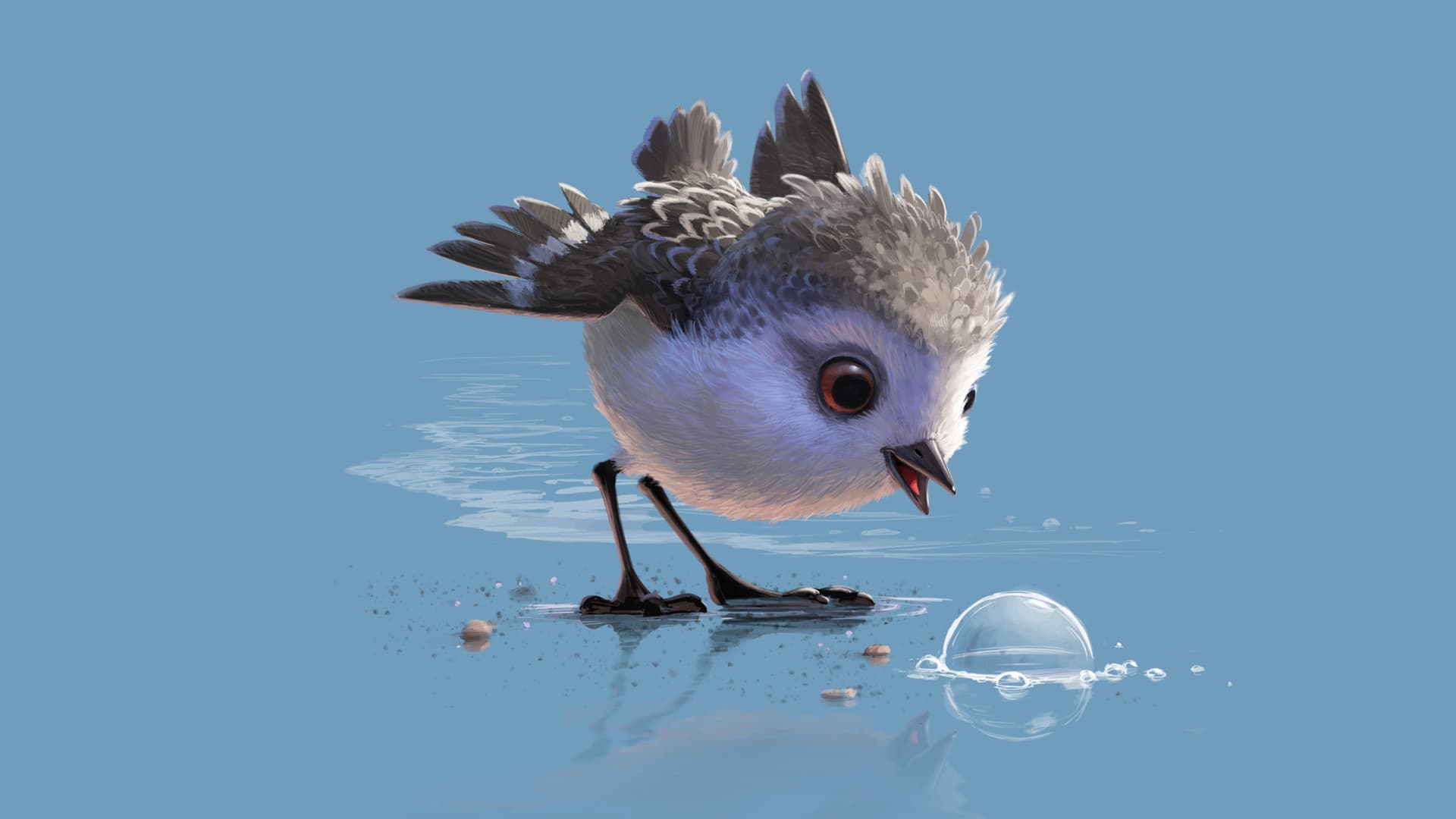
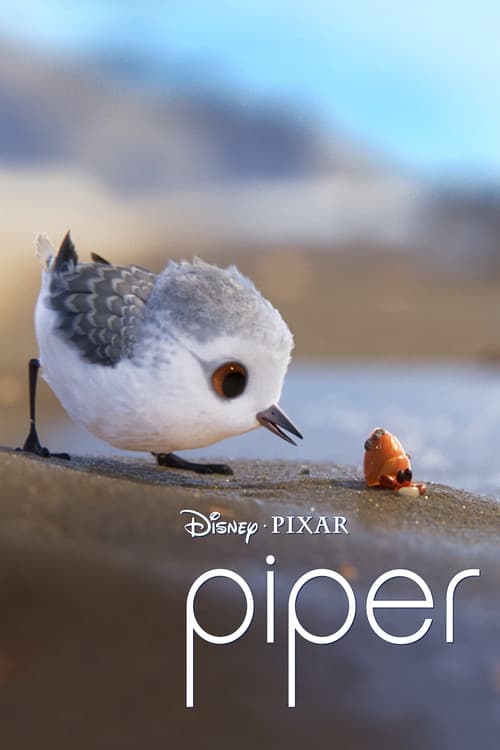
Piper is a Pixar animated short film with a luminous and contemplative tone, carried by an artistic direction of rare visual precision. The story follows a baby shorebird who must overcome his fear of the ocean to learn to feed himself. The film is primarily aimed at young children, but its emotional intelligence and delicacy also touch adults and grandparents.
Underlying Values
The narrative rests on two complementary structural values: perseverance in the face of repeated failure, and learning through observation and imitation rather than direct instruction. The little bird learns by watching a crab, not by following his mother's directions. This narrative choice valorises adaptive intelligence and curiosity as drivers of self-improvement. The film never moralises explicitly, which makes it all the more effective: the lesson emerges from action, not from discourse.
Parental and Family Portrayals
The relationship between mother and chick is central and treated with subtlety. The mother deliberately takes a step back to force her child's independence, a gesture that may seem cold but which the film shows as an act of demanding love. This parental model, both protective and deliberately distant, deserves to be discussed with the child: letting fall so as to learn to get back up is also a form of care.
Strengths
Piper is a remarkable formal achievement for a short film of a few minutes. The entirely visual narrative, without dialogue, compels the young viewer to read emotions in the movement and bodily expression of the bird, which makes it an exercise in attention and empathy that is almost involuntary. The film demonstrates that a universal story can hold without words, without heavy dramatic conflict, and without an antagonist. This is a genuine pedagogical quality: the obstacle is not another character but an inner fear, which naturally opens conversation about what each child feels in the face of their own apprehensions.
Age recommendation and discussion points
Piper is suitable from age three and can be watched as a family without reservation. After viewing, two simple and fruitful angles of discussion: ask the child what is something he struggled to learn but can now do, and ask him why, in his view, the mother bird did not feed her chick instead.
Synopsis
A mother bird tries to teach her little one how to find food by herself. In the process, she encounters a traumatic experience that she must overcome in order to survive.
About this title
- Format
- Short film
- Year
- 2016
- Runtime
- 6m
- Countries
- United States of America
- Original language
- EN
- Directed by
- Alan Barillaro
- Studios
- Pixar
Content barometer
- Violence0/5None
- Fear1/5Mild
- Sexuality0/5None
- Language0/5None
- Narrative complexity0/5Simple
- Adult themes0/5None
Values conveyed
- Courage
- Friendship
- Perseverance
- Autonomy
- independence
- learning