
Pinocchio
Does this age rating seem accurate to you?
Detailed parental analysis
Pinocchio (2022) is a dark and contemplative fairy tale, rooted in fascist Italy of the interwar period, far removed from the luminous and reassuring adaptations of the character. The story follows a wooden puppet carved by a grieving father who seeks to understand what he is and what it means to be human in a brutal world. Despite appearing to be a film for children, the tone, thematic density and violence of certain scenes make it a film intended for pre-adolescents and adults.
Violence
Violence is frequent, varied and sometimes shocking for a fairy tale. Pinocchio dies several times over, in explicit fashion: he is shot, burned, crushed, drowned, before being resurrected each time. One scene shows him tied to a crucifix and set on fire as punishment. A child of around ten years old dies under the bombs of an air raid, in front of his father's eyes. Adults and children die throughout the narrative in a context of war. One adult character repeatedly strikes and tramples a monkey, and slices the tip of Pinocchio's nose with a sword. These scenes serve a real narrative function, they support the film's exploration of death, loss and the brutality of History, but their accumulation and visual intensity can traumatise sensitive children or those under ten years old.
Social Themes
The film sets its action in Mussolini's Italy and does not look away: propaganda posters, fascist speeches, the conscription of children into a militia, bombing of civilians. These elements are not backdrop but moral stakes. The narrative directly interrogates blind obedience to authority, including in its most murderous form, and makes lucid disobedience a virtue. It is a film that speaks of war from a child's perspective without softening it, which makes it a powerful pedagogical tool for adolescents capable of absorbing its density.
Underlying Values
The film offers a radically unconventional reinterpretation of the original tale: here, obedience is not presented as a value in itself, and Pinocchio does not aspire to become a well-behaved child to please his father or society. The narrative values emotional loyalty, the courage to say no to injustice, and the capacity to sacrifice oneself for those one loves. Religion is present as a cultural and symbolic backdrop, notably through the figure of the Fairy and certain charged images, without being either glorified or mocked. The relationship with death is central and treated with a philosophical gravity unusual in a fairy tale.
Parental and Family Portrayals
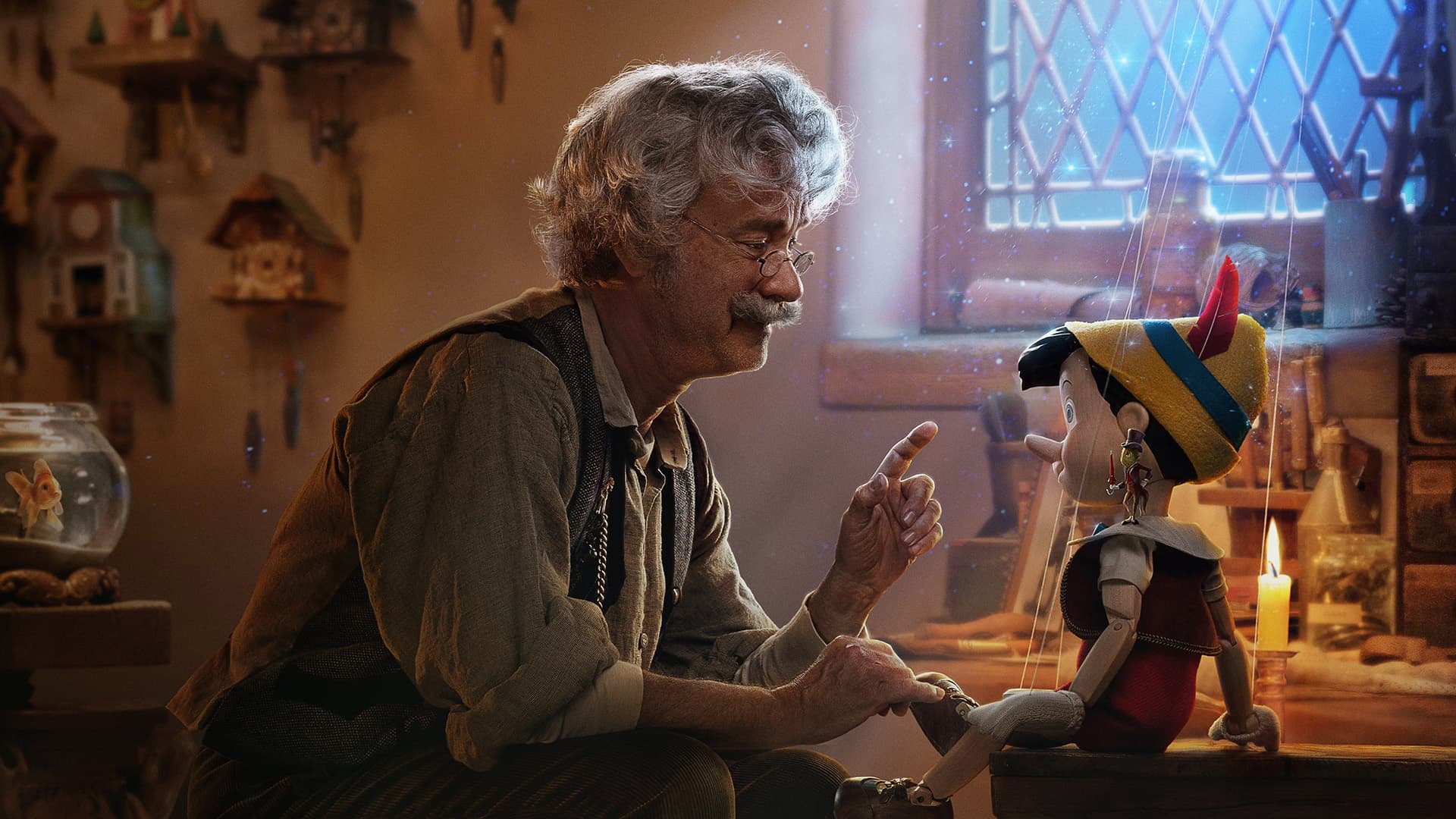
Geppetto is a deeply loving father but broken by grief. He drinks to the point of intoxication and collapses several times under the grip of alcohol, which is shown without complacency but also without excessive moralising judgement. His relationship with Pinocchio is the emotional heart of the film: it explores the difficulty of loving a child who is not the one you expected, and the temptation to want to shape a being in your own image rather than let them become themselves.
Substances
Alcohol occupies a visible narrative place. Geppetto is shown intoxicated on several occasions, shifting from sadness to unconsciousness. It is not an incidental detail: his dependency is directly linked to his grief and illustrates how untreated suffering can spill over onto those one loves. It is worth discussing with a child or adolescent who watches the film.
Strengths
The film is a work of rare artistic and narrative ambition within the animated fairy tale genre. The visual aesthetic is expressionist and coherent, secondary characters are drawn with a formal inventiveness that leaves a lasting mark on memory. The treatment of mortality, grief, the meaning of a brief life and the value of a chosen death rather than an imposed one is handled with a philosophical depth rarely found in a film intended, even partly, for a young audience. The original soundtrack contributes substantially to the atmosphere. For an adolescent able to engage with it fully, this Pinocchio can be a memorable cinematic experience and an invitation to serious conversations about what gives meaning to an existence.
Age recommendation and discussion points
The film is not recommended before age 10, and a serene and fully rewarding viewing is better suited to around 12 to 14 years old, depending on the child's emotional maturity. For younger teens, two discussion angles naturally present themselves after viewing: why does the film argue that it is sometimes right to disobey, and what does that mean concretely when authority is mistaken or does wrong? And what does this tale tell us about the way adults, and parents in particular, project their desires onto their children instead of letting them become themselves?
Synopsis
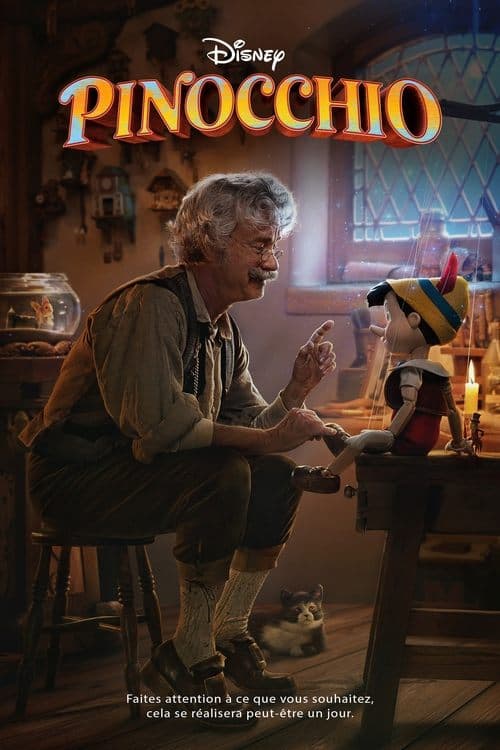
A wooden puppet embarks on a thrilling adventure to become a real boy.
About this title
- Format
- Feature film
- Year
- 2022
- Runtime
- 1h 45m
- Countries
- United States of America
- Original language
- EN
- Directed by
- Robert Zemeckis
- Main cast
- Joseph Gordon-Levitt, Tom Hanks, Benjamin Evan Ainsworth, Angus Wright, Cynthia Erivo, Sheila Atim, Lorraine Bracco, Keegan-Michael Key, Jamie Demetriou, Giuseppe Battiston
- Studios
- Walt Disney Pictures, Depth of Field, ImageMovers