
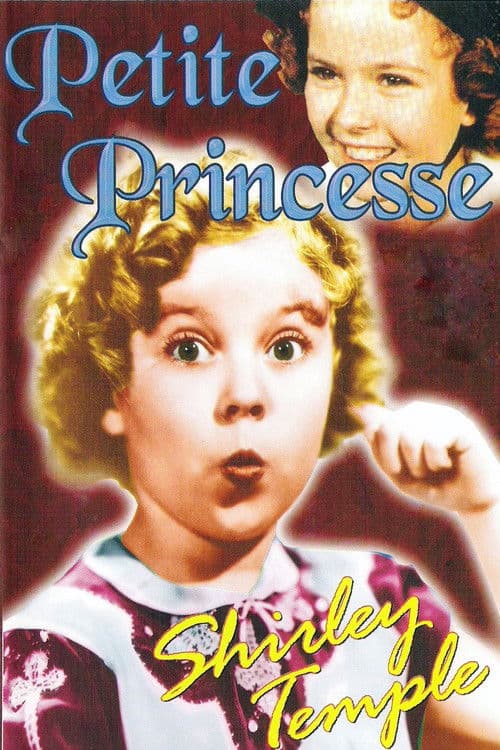
The Little Princess
The Little Princess
Your feedback improves this guide
Your feedback highlights guides that need a second look and keeps the rating trustworthy.
Does this age rating seem accurate to you?
Sign in to vote
Watch-outs
What this film brings
Content barometer
Violence
1/5
Mild
Fear
2/5
A few scenes
Sexuality
1/5
Allusions
Language
0/5
None
Narrative complexity
3/5
Complex
Adult themes
0/5
None
Expert review
This classic adaptation follows a young girl sent to boarding school while her father leaves for war, with a period setting that feels gentle on the surface but carries real sadness underneath. The main sensitive elements are parental separation, the reported death of a parent, harsh treatment from a strict adult, social humiliation, and a few scenes linked to war and hospital settings. Physical violence is limited and not graphic, however the emotional weight appears regularly because the child heroine faces hunger, exhaustion, ridicule, and unfair punishment. For very young viewers, the film is more likely to feel sad and stressful than truly frightening, especially if themes of losing a parent are personally triggering. I would recommend it more confidently from about age 7, with an adult present to explain the historical context, reassure children about the uncertainty around her father, and discuss the harmful behavior of certain adults.
Synopsis
A little girl goes in search of her father who is reported missing by the military during the Second Boer War.
Difficult scenes
One of the most sensitive moments for many children is when Sara is told that her father has apparently died in the war, right in the middle of her birthday celebration. The scene sharply combines a festive setting with grief and sudden loss of security, which can be upsetting for younger viewers even without graphic imagery. Sara is then stripped of her privileged place at school and made to work as a servant. This section clearly shows psychological mistreatment, exhaustion, hunger, and humiliation directed at a child who depends on unfair adults, which may provoke sadness or anger in viewers. Several scenes show Sara searching for her father in military hospitals and other war related places. There are wounded people, an atmosphere of urgency, and the ongoing idea that a parent may be lost or unrecognizable, even though the film stays visually restrained. The conflict with Miss Minchin becomes harsher when Sara is accused, punished, and locked in the attic, with the police being called. For sensitive children, this buildup of injustice, pursuit, and confinement may feel quite stressful even without intense on screen violence.
Where to watch
No verified platform for the US market yet. We keep this section updated as availability changes.
Availability checked on Apr 01, 2026
About this title
- Format
- Feature film
- Year
- 1939
- Runtime
- 1h 33m
- Countries
- United States of America
- Original language
- EN
- Studios
- 20th Century Fox
Content barometer
Violence
1/5
Mild
Fear
2/5
A few scenes
Sexuality
1/5
Allusions
Language
0/5
None
Narrative complexity
3/5
Complex
Adult themes
0/5
None
Expert review
This classic adaptation follows a young girl sent to boarding school while her father leaves for war, with a period setting that feels gentle on the surface but carries real sadness underneath. The main sensitive elements are parental separation, the reported death of a parent, harsh treatment from a strict adult, social humiliation, and a few scenes linked to war and hospital settings. Physical violence is limited and not graphic, however the emotional weight appears regularly because the child heroine faces hunger, exhaustion, ridicule, and unfair punishment. For very young viewers, the film is more likely to feel sad and stressful than truly frightening, especially if themes of losing a parent are personally triggering. I would recommend it more confidently from about age 7, with an adult present to explain the historical context, reassure children about the uncertainty around her father, and discuss the harmful behavior of certain adults.
Synopsis
A little girl goes in search of her father who is reported missing by the military during the Second Boer War.
Difficult scenes
One of the most sensitive moments for many children is when Sara is told that her father has apparently died in the war, right in the middle of her birthday celebration. The scene sharply combines a festive setting with grief and sudden loss of security, which can be upsetting for younger viewers even without graphic imagery. Sara is then stripped of her privileged place at school and made to work as a servant. This section clearly shows psychological mistreatment, exhaustion, hunger, and humiliation directed at a child who depends on unfair adults, which may provoke sadness or anger in viewers. Several scenes show Sara searching for her father in military hospitals and other war related places. There are wounded people, an atmosphere of urgency, and the ongoing idea that a parent may be lost or unrecognizable, even though the film stays visually restrained. The conflict with Miss Minchin becomes harsher when Sara is accused, punished, and locked in the attic, with the police being called. For sensitive children, this buildup of injustice, pursuit, and confinement may feel quite stressful even without intense on screen violence.