Peter & the Wolf
Does this age rating seem accurate to you?
Detailed parental analysis
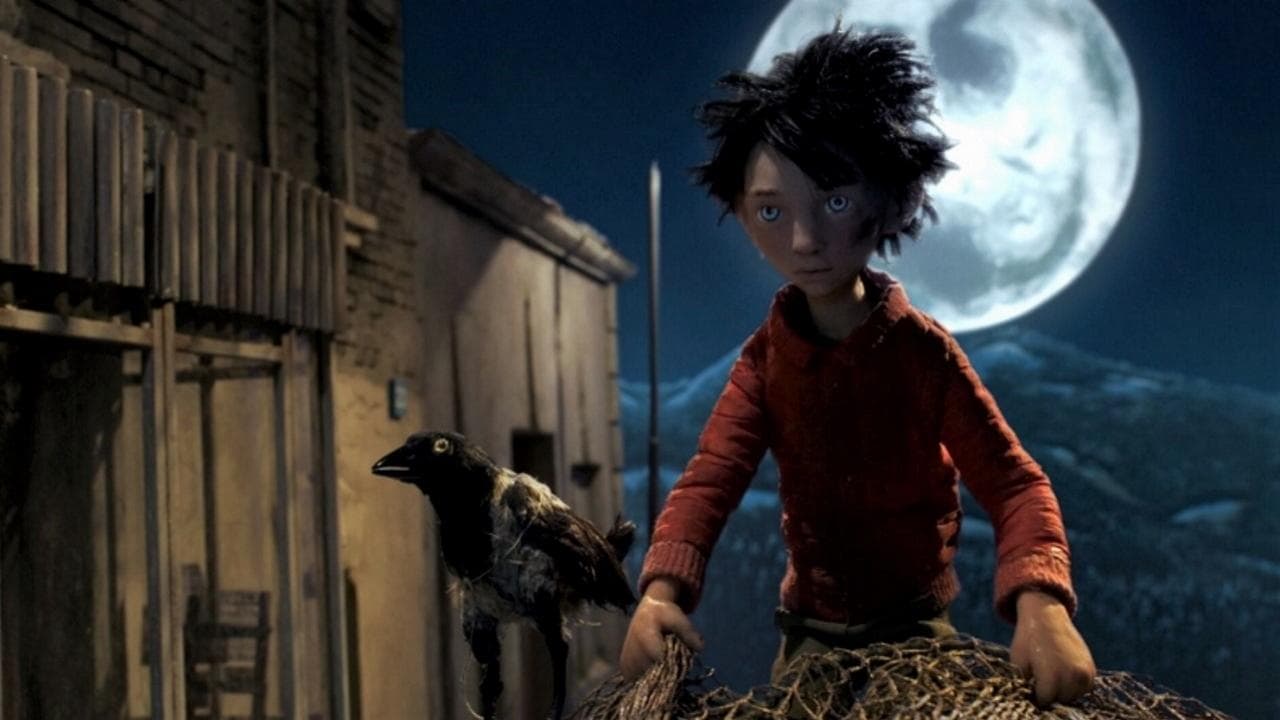
Peter and the Wolf is a stop-motion short film with a dark and unsettling atmosphere, an adaptation of Prokofiev's musical tale transposed to an industrial, grey Eastern Europe. The story follows a solitary young boy who decides to capture the wolf prowling around his village, braving danger and the hostility of the adults surrounding him. The film is aimed at children from 7 or 8 years old, but its heavy visual universe and certain scenes of genuine intensity make it unsuitable for younger viewers.
Violence
Violence is the film's primary point of concern. The wolf swallows the duck entirely on screen, without ellipsis, in a brief but striking scene that may traumatise a sensitive child. Peter is scratched on the face during a physical struggle with the animal. The hunters, presented as threatening characters, point a firearm at Peter, throw him into a rubbish bin, and one of them accidentally shoots the cat, piercing its ear. The cat then falls into a frozen pond and nearly drowns. These scenes unfold in a realistic register, without the distance that humour or stylised drawing typically provides in children's films. The violence is nonetheless narrative rather than gratuitous: it serves to show the brutality of the adult world and to give weight to Peter's final choice to free the wolf rather than hand it over to his tormentors.
Underlying Values
The film carries a clear and coherent moral message: compassion triumphs over vengeance, even in the face of painful loss. Peter chooses to free the wolf despite the death of his friend the duck, an act of adult forgiveness that is demanding for a child character. The narrative explicitly criticises hunting as a violent and pointless practice, with hunters depicted as grotesque and dangerous figures. Peter's autonomy in the face of a hostile and incomprehensible adult world is valued without ambiguity. These values are legible and offer a solid foundation for discussion after viewing, particularly on the difference between justice and vengeance.
Social Themes
The film engages in an implicit but legible critique of hunting and the relationship of human domination over animals. The visual universe, with its shop windows displaying animal carcasses and skins, establishes from the outset an atmosphere of ordinary violence against living creatures. This ecological and animal-rights perspective is consistent with the story's resolution and can open a conversation about our relationship with wild animals, the difference between natural predation and human cruelty.
Parental and Family Portrayals
Peter's grandfather is the only family adult figure present, and he is depicted as authoritarian, fearful and inattentive to the child. Adults in general, whether grandfather or hunters, are either incompetent or threatening. Peter acts alone, without adult support, and it is precisely this solitude that drives him to take risks. This pattern of the child being braver and more just than the surrounding adults is classical in children's literature, but it deserves to be flagged to parents whose children might draw a lesson of systematic opposition to authority from it.
Substances
A hunter smokes a cigarette on screen. The scene is brief and the cigarette is not valued narratively, but it is visible without commentary or distancing.
Strengths
The film is a demanding and coherent work of authorship, whose dark and detailed visual universe creates an immediately recognisable atmosphere. The complete absence of dialogue, compensated by Prokofiev's music, demands a rare visual and emotional attention in productions aimed at young audiences. This formal constraint develops in the child a capacity to read emotions through movement, expression and mise-en-scène rather than through words. The story's resolution, which refuses easy triumph and chooses forgiveness over vengeance, gives the film genuine moral depth. It is also a gateway to Prokofiev's original musical work, which parents can extend by having their children listen to the orchestral version.
Age recommendation and discussion points
The film is not recommended before age 7 and can be watched with ease from 8 or 9 years old for children without particular sensitivity to images of animals in danger. Two angles of discussion merit opening after viewing: why does Peter choose to free the wolf when it has killed his friend, and what does this say about the difference between punishing and understanding? And also: why are the adults in the film so often in the wrong, and does that mean children are always right not to listen to them?
Synopsis
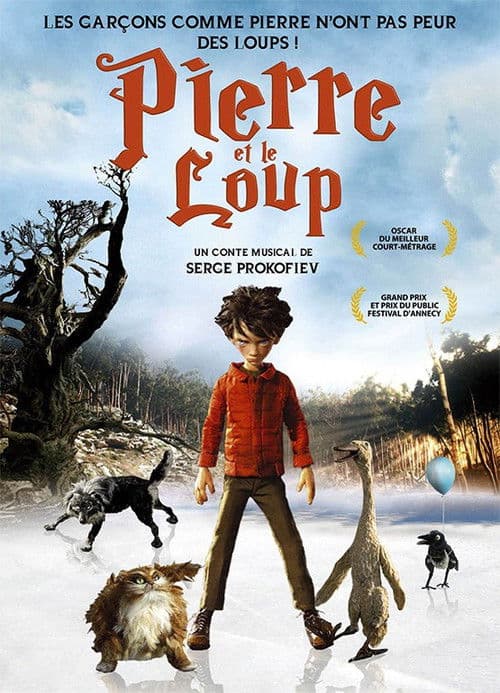
Peter is a slight lad, solitary, locked out of the woods by his protective grandfather, his only friend a duck. In town, he's bullied. When a wolf menaces the duck - as well as grandfather's fat cat and an ill-flying bird that Peter has befriended - Peter bravely tries to tree the wolf. Grandfather, the townspeople, and the hunters who have antagonized Peter figure in the dénouement.
Where to watch
Availability checked on Apr 29, 2026
About this title
- Format
- Short film
- Year
- 2006
- Runtime
- 41m
- Countries
- Poland
- Original language
- EN
- Directed by
- Suzie Templeton
- Studios
- Se-Ma-For, Breakthru Films
Content barometer
- Violence3/5Notable
- Fear4/5Intense
- Sexuality0/5None
- Language0/5None
- Narrative complexity0/5Simple
- Adult themes1/5Mild
Watch-outs
Values conveyed
- Courage
- Compassion
- Autonomy
- Forgiveness
- friendship
- resilience
- empathy