Peter Pan
Does this age rating seem accurate to you?
Detailed parental analysis
Peter Pan is an animated adventure and fantasy film with an overall cheerful atmosphere, punctuated by moments of tension and humour. The plot follows three London children transported to Neverland, the realm of the eternal child Peter Pan, where they are threatened by the formidable Captain Hook. The film is aimed at young children, but several elements warrant attention depending on the child's age and sensitivity.
Violence
Violence is present repeatedly and forms an important part of the narrative. The sword duels between Peter Pan and Hook are staged as heroic contests, without visible blood or injury, which gives them a spectacular rather than brutal character. By contrast, Captain Hook's verbal register is distinctly more unsettling: he explicitly evokes slitting throats, drowning, boiling and dismembering his victims, with an insistence that can leave a mark on a young child. The scene of the plank walk establishes a concrete threat of death hanging over the children, and pirate cannons firing at characters in mid-flight add to the intensity. These passages are framed by the register of classical adventure, which limits their traumatic impact for a 6-7 year old child, but parents of more sensitive or younger children should be warned.
Discrimination
The film bears the mark of the representations of its era on two distinct levels. First, the female characters, whether Wendy, the mermaids, Tinkerbell or Tiger Lily, are all presented as jealous of Peter Pan's attention and in competition with one another, reducing women to a role orbiting around a male figure. Second, the representation of Native Americans is caricatural and racist: indigenous characters are reduced to visual and sonic stereotypes without any nuance, whilst indigenous women are more sexualised than their white counterparts. These elements are not questioned by the film, they are presented as a natural backdrop. With a school-age child, this double bias merits an explicit discussion after viewing.
Sex and Nudity
Nudity remains partial but is clearly present. The mermaids appear with breasts barely covered, in a seductive posture directed at Peter Pan, and Tinkerbell is dressed in a very short skirt that regularly highlights her figure, accompanied by shots that emphasise her silhouette. These graphic choices, common in animation of the era, may surprise parents who are not expecting them. They do not constitute explicit sexuality, but they infuse an aesthetic of feminine seduction into a film intended for children, which is worth noting.
Substances
Two occurrences are worth noting. The children participate in a scene around a Native American ceremonial peace pipe, presented in a festive and naive register, without the film making it a moral issue. A pirate visibly consumes alcohol. These two scenes are brief and without emphatic highlighting, but their presence in a film for a very young audience is worth mentioning.
Underlying Values
The film idealises the refusal to grow up as a form of absolute freedom, which constitutes its central message. The adult world is represented as burdensome, tedious and synonymous with loss, whilst eternal childhood is presented without real shadow. This valorisation of the refusal of maturity is rarely questioned by the narrative. Peter Pan himself is an impulsive character, authoritarian towards the lost boys and indifferent to the consequences of his actions, without the film truly problematising this. These traits can nourish a good conversation about what it means to grow up, what one gains and what one does not necessarily lose.
Parental and Family Portrayals
Wendy's parents and her brothers are affectionate but peripheral to the narrative, quickly set aside to allow for adventure. The father, Mr Darling, is presented in a slightly ridiculous light before the children's departure. This classical pattern of children's adventure, which requires the absence or weakening of parental figures, functions narratively without constituting a strong message about family, but the more attentive will note that the paternal figure is the target of treatment that is not particularly valorising.
Strengths
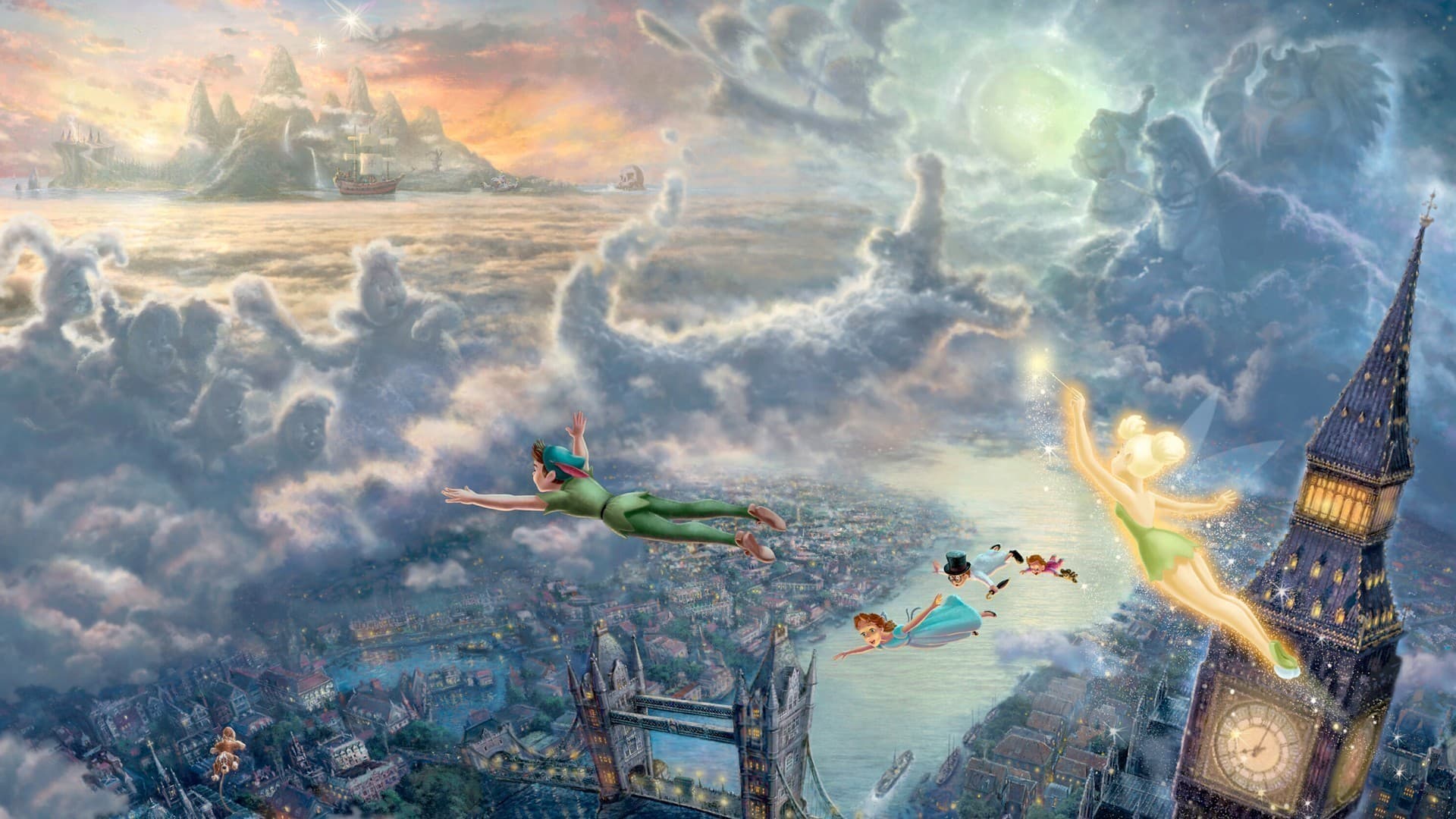
Peter Pan remains a visually refined work whose artistic direction, notably the palette of Neverland and the sequences of flight over nocturnal London, has endured across the decades with genuine elegance. The film captures with real effectiveness the tension between the desire for adventure and the need to return home, offering the growing child an honest emotional mirror. The figure of Captain Hook, both menacing and comic, is one of the best-constructed antagonists in classical animation, capable of being taken seriously without ever losing his absurdity. The narrative also has the honesty not to simply resolve the question of return: Wendy chooses to grow up, and this choice is treated with a quiet dignity that opens a genuine space for reflection for children old enough to feel it.
Age recommendation and discussion points
The film is suitable from age 7 for most children, with parental accompaniment recommended between ages 5 and 7 due to Hook's verbal threats and certain scenes of tension. Two concrete angles merit discussion after viewing: why all the female characters seem to want Peter Pan's attention, and what one feels about the idea of never growing up, what one would gain and what one would lose.
Synopsis
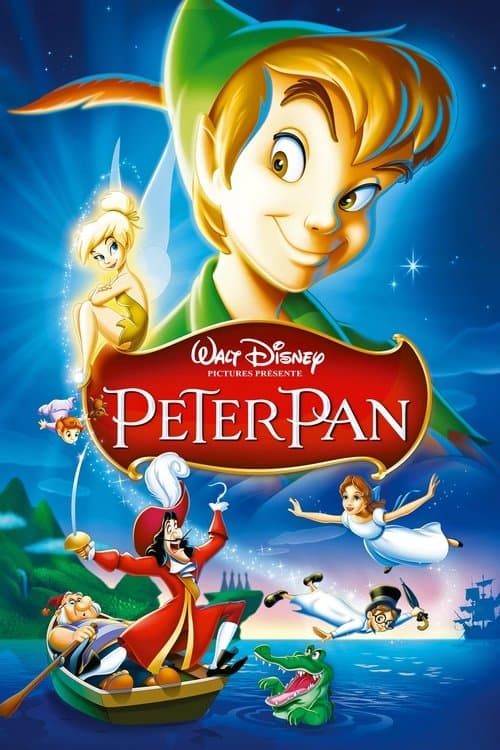
Leaving the safety of their nursery behind, Wendy, Michael and John follow Peter Pan to a magical world where childhood lasts forever. But while in Neverland, the kids must face Captain Hook and foil his attempts to get rid of Peter for good.
About this title
- Format
- Feature film
- Year
- 1953
- Runtime
- 1h 16m
- Countries
- United States of America
- Original language
- EN
- Studios
- Walt Disney Productions