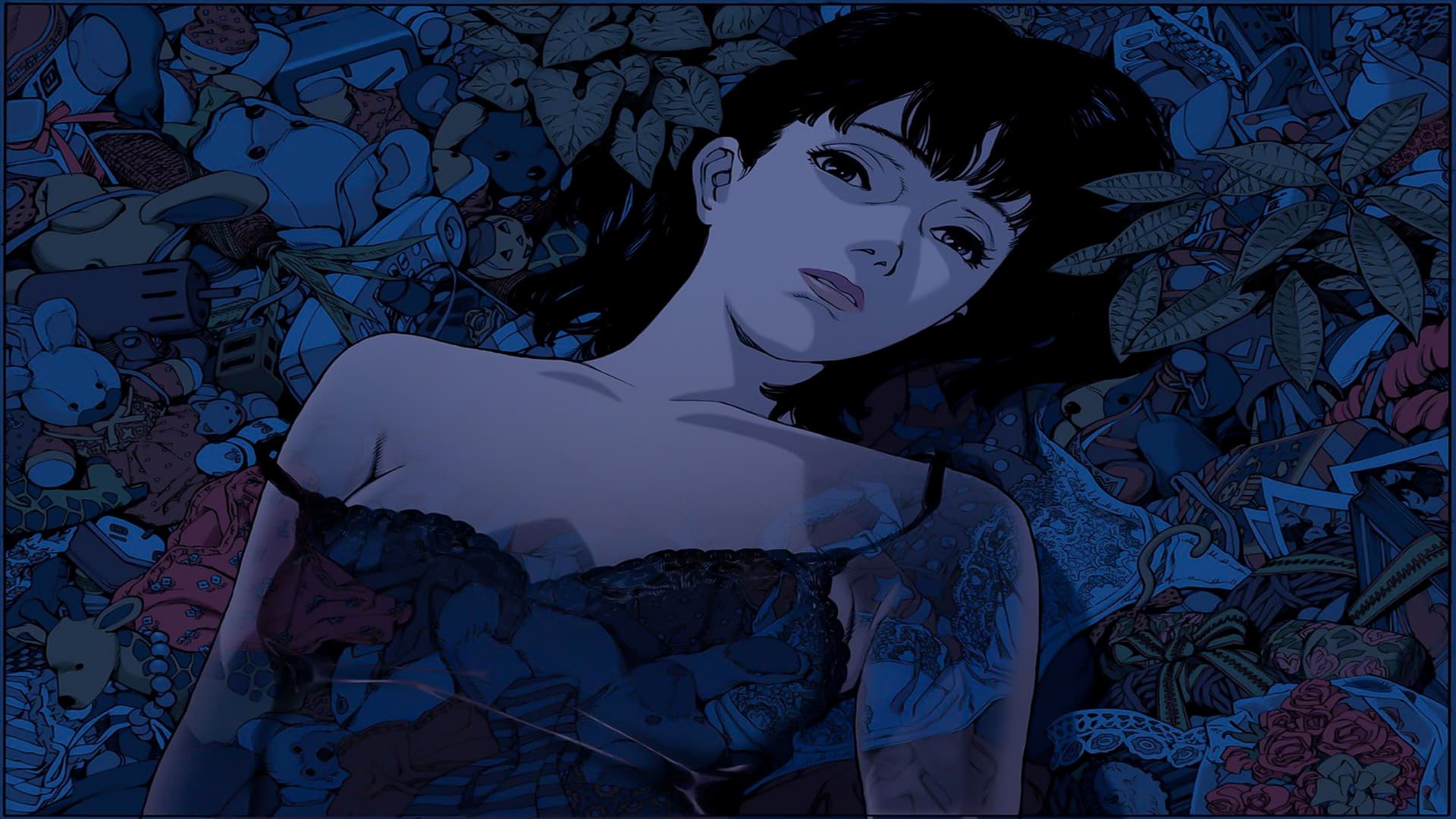

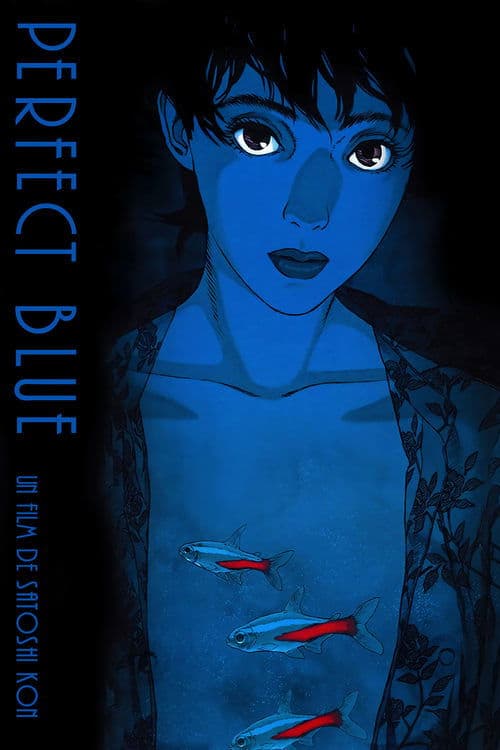
Perfect Blue
PERFECT BLUE
Does this age rating seem accurate to you?
Detailed parental analysis
Perfect Blue is a Japanese animated psychological thriller with an oppressive and destabilising atmosphere that plunges the viewer into a narrative that becomes increasingly impossible to untangle. The story follows a young J-pop idol who abandons her music career to attempt establishing herself as an actress, and who gradually loses control of her own identity under the effects of harassment, fan obsession and roles that draw her into increasingly dark territory. The film is addressed exclusively to an adult audience and to very mature adolescents: it is in no way intended for children or young teenagers.
Violence
Violence is graphic, repeated and explicitly depicted. Stabbings are portrayed with realism: puncture wounds to the eyes, hands, the groin, mutilated and bloodied bodies, eyes torn out. Blood splatters walls, corpses are displayed in states of severe visual degradation. This violence is not purely gratuitous: it serves a narrative about the dissolution of reality and identity rupture, and each murder scene maintains ambiguity about what is fantasised or actually experienced. This does not diminish it on a visual level. The boundary between violence filmed within the fictional shoot and real violence is deliberately blurred, which intensifies the sense of unease further.
Sex and Nudity
The film contains full female nudity in a photoshoot scene with explicitly sexual character, with breasts, buttocks and pubic area visible in conditions that resemble adult content. A collective rape scene is shown as part of a fictional television shoot, represented with deliberate realism and sufficient duration to be distressing. An attempted sexual assault with a knife occurs later in the film. These scenes are not aestheticised for titillating purposes: they document the exploitation of the female body in the entertainment industry and construct the central argument of the film. Their visual impact remains nonetheless very strong, even for an adult.
Underlying Values
The narrative is structured around a clear-eyed critique of the Japanese idol music industry and its mechanisms of exploitation. Managers push the protagonist to abandon her wholesome image against her will, to accept traumatising roles and to conform to the expectations of an audience that does not perceive her as a person but as a fantasy. The film directly interrogates the fabrication of public identities, the commercialisation of the female body and the silent violence of consent under pressure. It also addresses the question of self-image constructed through the gaze of others, and the danger of an identity entirely defined from outside. This is its principal intellectual strength, and a solid entry point for discussion with a sufficiently mature adolescent.
Social Themes
The film addresses online harassment and surveillance at a time (1997) when the internet was still emergent, with troubling prescience: a fan uses the anonymity of the web to usurp the protagonist's identity, create a false diary in her name and maintain an obsessive fixation on her. The culture of possessive fandom, which refuses its idol's artistic evolution and claims a form of ownership over her image, is described with precision and constitutes a warning that has grown in relevance rather than in anachronism.
Discrimination
Power relations between genders are structural in the film: the protagonist is surrounded by men who decide for her regarding her image, her roles and her body, whilst she attempts in vain to retain agency. The film does not present this as normal or acceptable: it makes it the driving force of the tragedy. This imbalance is deliberate and critical, but it is also constant, which creates an impression of near-total female powerlessness that some parents may wish to contextualise.
Language
The language is raw, with frequent use of strong profanity including insults of a sexist character. The register is consistent with the film's world and with the dynamics of domination it depicts, but it is worth noting for parents concerned with this aspect.
Strengths
Perfect Blue is a film of remarkable narrative construction, whose principal quality is to make the viewer experience the same disorientation as its main character. The boundary between dream, shoot and reality dissolves progressively in a rigorously controlled manner, never releasing tension. It is a dense work on fragmented identity, on what it means to see oneself from the outside, and on the psychological price of celebrity built on a fabricated image. For an adolescent old enough to receive it, it is also a rare reflection on the way cultural industries consume young female bodies. The portrayal of mental distress is never reductive or spectacular for its own sake: paranoia and dissociation are rendered with genuine empathy for the protagonist.
Age recommendation and discussion points
This film is not suitable before the age of 16, and remains challenging even for a seasoned adult viewer. For a 16 or 17-year-old who is psychologically resilient and comfortable with demanding works, it can be a rich object of discussion: why do we accept that commercial industries define the identity of young women in their place, and what does our fascination with idols say about the fact that we refuse them the right to evolve?
Synopsis
Rising pop star Mima quits singing to pursue a career as an actress. After she takes up a role on a popular detective show, her handlers and collaborators begin turning up murdered. Harboring feelings of guilt and haunted by visions of her former self, Mima's reality and fantasy meld into a frenzied paranoia.
About this title
- Format
- Feature film
- Year
- 1998
- Runtime
- 1h 21m
- Countries
- Japan
- Original language
- JA
- Studios
- Madhouse, Rex Entertainment, Kotobuki Seihan Printing, Asahi Broadcasting Corporation, Fangs, ONIRO
Content barometer
- Violence5/5Very strong
- Fear5/5Very intense
- Sexuality5/5Very explicit
- Language3/5Notable
- Narrative complexity1/5Accessible
- Adult themes0/5None
Watch-outs
- Bullying
- Gender stereotypes
- Mockery
- Violence
- Sexuality
Values conveyed
- identity
- resilience
- resistance to manipulation