Peppa Pig
Does this age rating seem accurate to you?
Detailed parental analysis
Peppa Pig is a short, light animation series with a resolutely cheerful tone and no dramatic tension, designed for very young children. Each episode follows Peppa, a mischievous little pig, and her family through accessible and repetitive everyday situations, conducive to learning the first social norms. The target audience is clearly children aged two to five, and the series fully embraces this remit without seeking to appeal to a wider audience.
Parental and Family Portrayals
Family occupies the absolute centre of each episode. Mum Pig and Dad Pig are present, attentive and caring, which constitutes a reassuring and stable parental representation for very young children. However, one point deserves attention. When Peppa behaves impertinently or self-centredly, parental correction often remains implicit or absent from the screen. For a child aged two to four, still establishing their behavioural reference points, this gap can make it difficult to distinguish between what is tolerated and what is expected. It is helpful to name verbally with the child what the parents might have said or done in these moments, to turn viewing into active learning.
Underlying Values
The series promotes simple family values: mutual support, shared moments, affection between siblings even in teasing. It also conveys, in a more discreet way, an attitude towards body image that deserves noting. Recurring jokes about Dad Pig's physique, including the creation of humorous wordplay around his belly, normalise commentary on others' bodies. Parents have observed their children reproducing this type of remark towards others. It is not a structuring message of the narrative, but its repetition gives it real weight, and it is better to anticipate it.
Discrimination
The series presents characters in a broadly neutral and inclusive manner. One episode introduces a same-sex couple of parents without making it a dramatic subject, which constitutes a normalised representation rather than a campaigning message. The only notable stereotype remains the one mentioned above concerning weight, sufficiently recurring to be flagged as a discussion point.
Strengths
The series has the merit of speaking to very young children in a visual and narrative language that is perfectly calibrated: short episodes, identifiable situations, stable characters and repeated rituals that provide reassurance. It offers a natural entry point towards the first social conventions, the role of siblings and family dynamics. Its accessible humour also works well in co-viewing between parent and child, making it a support for simple, non-anxiety-inducing conversation. It is not a series of great artistic or narrative ambition, but it fulfils its function effectively for the audience it targets.
Age recommendation and discussion points
The series is suitable from age three onwards for accompanied viewing, with attention paid to Peppa's behaviours that the child might imitate without understanding the limits. Two discussion angles are worth opening: naming with the child what is kind or unkind about Peppa's behaviour, and explaining to them why we do not comment on others' bodies, even in jest.
Synopsis
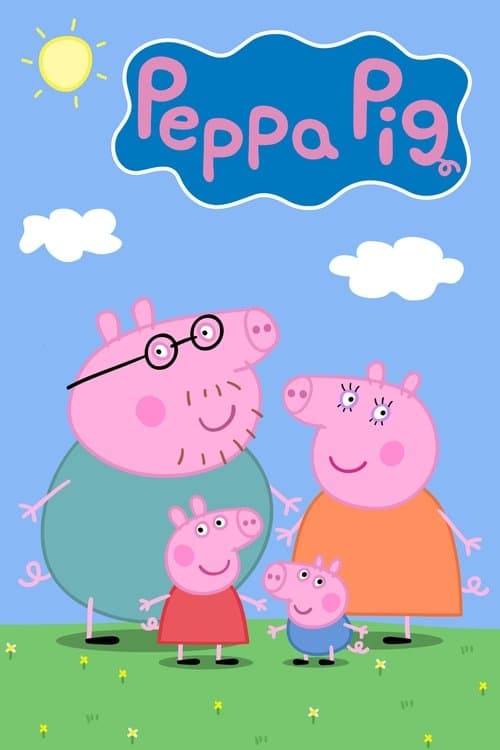
Peppa Pig is an energetic piggy who lives with Mummy, Daddy, and little brother George. She loves to jump in mud puddles and make loud snorting noises.
Where to watch
Availability checked on Apr 09, 2026
About this title
- Format
- TV series
- Year
- 2004
- Countries
- United Kingdom
- Original language
- EN
- Directed by
- Neville Astley, Mark Baker
- Main cast
- John Sparkes, Amelie Bea Smith, Morwenna Banks, Richard Ridings, Kira Monteith, Alice May, Frances White, David Rintoul, David Graham, Sarah Ann Kennedy
- Studios
- Astley Baker Davies, Karrot Animation
Content barometer
- Violence0/5None
- Fear0/5None
- Sexuality0/5None
- Language0/5None
- Narrative complexity1/5Accessible
- Adult themes0/5None
Watch-outs
- Gender stereotypes
Values conveyed
- Friendship
- Acceptance of difference
- Loyalty
- Autonomy
- family life
- imagination
- play
- nature
- sharing
- curiosity