
Paws of Fury: The Legend of Hank
Does this age rating seem accurate to you?
Detailed parental analysis
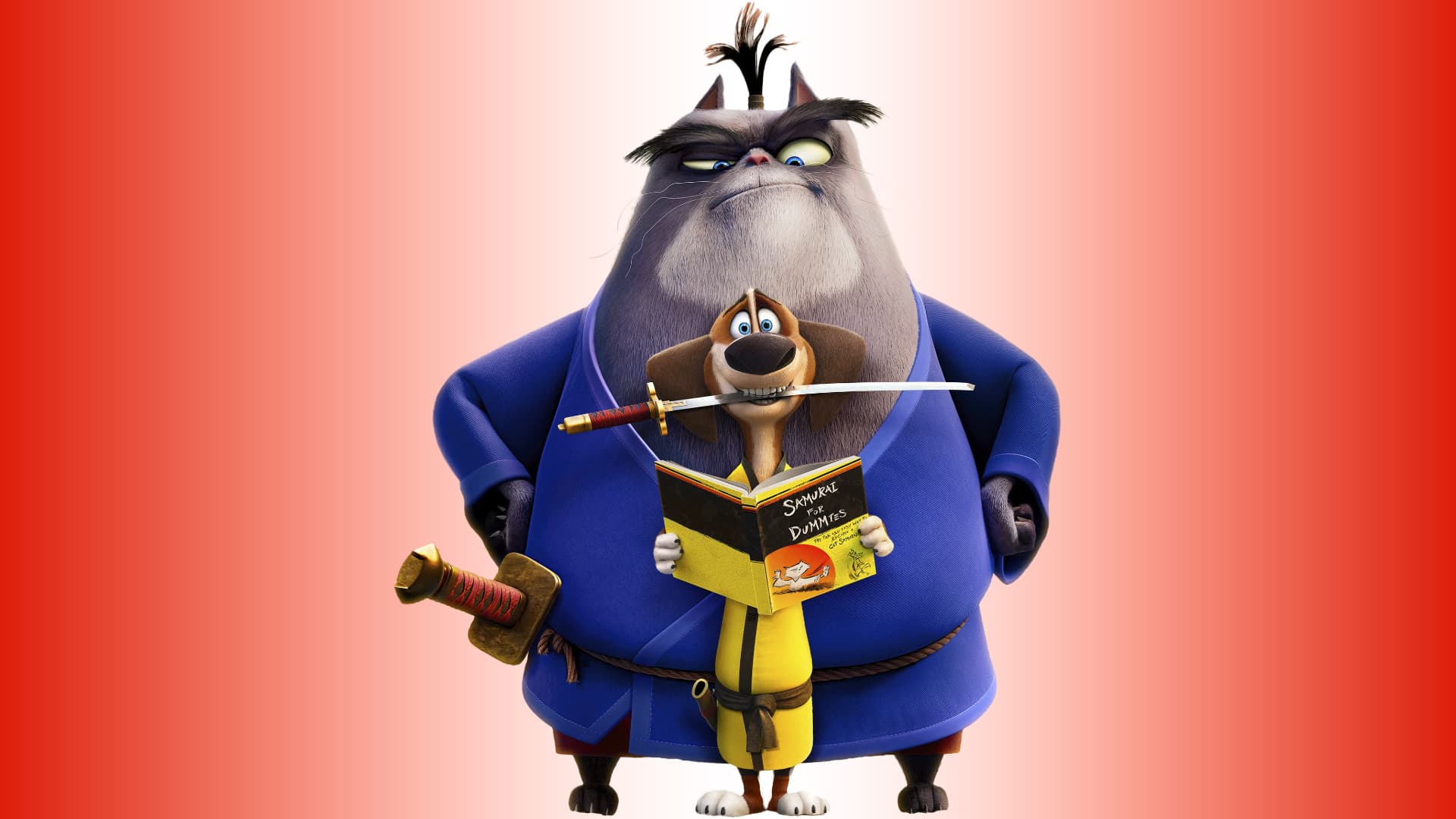
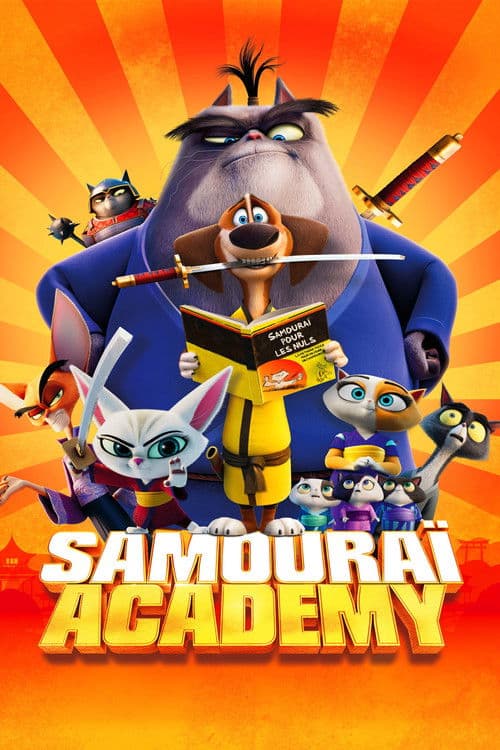
Samurai Academy is a family animated comedy with a deliberately irreverent tone, blending slapstick humour, cartoon gags and parodic winks aimed at adults. The plot follows a dog attempting to become a samurai in a village of cats, despite widespread hostility and a disillusioned master. The film targets a dual audience, children from 7-8 years old and adults nostalgic for 1970s-80s parodies, but this double target creates tonal tensions that parents should anticipate.
Violence
Combat is omnipresent and spans the entire film: swords, arrows, ninja stars, fists and feet follow one another in an exaggerated cartoon style without blood or realistic injuries. Violence remains legible as pure convention of animated genre and never seeks to disturb. It is narratively functional: it structures the hero's learning arc and illustrates his progression. Light peril scenes, including a village attack by fire and a flood where cat children risk drowning, may nevertheless surprise younger children even if the resolution remains reassuring.
Substances
One of the main characters is explicitly depicted as dependent on catnip, treated on screen as an equivalent of alcohol: intoxicated behaviour, admission of relapses, inability to function without the substance. This is not an isolated gag but a recurring narrative arc across several scenes. The film ultimately presents this character in a positive light without truly addressing the dependency as a resolved problem, which warrants a brief discussion with young viewers.
Language
The film avoids explicit swearing through inventive substitutes, including a paraphrase of Samuel L. Jackson's famous expletive using animal-related terms. Insults such as 'idiot', 'imbecile', 'rubbish' are frequent between characters. Humour also relies heavily on scatological jokes and flatulence, including in a finale scene involving an overflowing giant toilet: it is deliberate, repetitive, and constitutes the film's dominant comedic register.
Discrimination
The film borrows Japanese aesthetics, samurai and ninja codes, cherry blossoms, origami and Asian beauty salons to make them into a comedy setting with no serious cultural grounding. Stereotypes are numerous and layered, including a sumo cat character named Sumo and generic representations of feudal Japan. This casual use of identifiable cultural symbols without intent to explore or respect them is a relevant discussion point with a child or teenager curious about world cultures.
Sex and Nudity
Nudity is incidental and harmless: a dress falling off, a character seen from behind, a cat briefly visible in the shower, a sumo's buttocks. The whole remains within cartoon conventions without ever becoming uncomfortable. A few mildly suggestive lines circulate between adults, including references to character sterilisation and comments on physical appearance, but these will largely go over children's heads.
Underlying Values
The narrative carries a clear message about perseverance, courage in the face of exclusion and the ability to overcome prejudices of belonging. The hero's arc is classic but sincere: it concerns an outsider who does not conform to his group's expectations and must earn his place through effort. The mentor-apprentice relationship, though played for comedy, conveys a genuine idea of transmission and self-transcendence.
Strengths
The film draws its best energy from its avowed parodic dimension, particularly in its references to American satirical comedy of the 1970s. The classic underdog construction works well with children, and the dynamic between the naive hero and his cynical master offers some authentically funny exchanges. For an initiated adult audience, additional layers of reading make family viewing enjoyable. However, the film has no notable artistic ambition and its writing remains uneven, with an accumulation of scatological gags that eventually runs out of steam.
Age recommendation and discussion points
The film is accessible from 7 years old, with caution for children more sensitive to light peril scenes or to the catnip dependency arc. Two interesting discussion angles after viewing: ask the child what they think of the way the film represents Japanese culture, and whether it seems accurate or caricatured to them; and return to the dependent character to discuss what it means to struggle to control a habit.
Synopsis
A hard-on-his-luck hound finds himself in a town full of cats in need of a hero to defend them from a ruthless villain's wicked plot to wipe their village off the map. With help from a reluctant mentor, our underdog must assume the role of town samurai and team up with the villagers to save the day.
About this title
- Format
- Feature film
- Year
- 2022
- Runtime
- 1h 43m
- Countries
- Canada, China, United Kingdom, United States of America
- Original language
- EN
- Directed by
- Rob Minkoff, Chris Bailey, Mark Koetsier
- Main cast
- Michael Cera, Samuel L. Jackson, Ricky Gervais, Kylie Kuioka, Mel Brooks, George Takei, Gabriel Iglesias, Djimon Hounsou, Michelle Yeoh, Aasif Mandvi
- Studios
- Flying Tigers Entertainment, Aniventure, HB Wink Animation, Cinesite Animation, Align, GFM Animation, Brooksfilms Ltd., Mass Animation, Blazing Productions, Paramount Pictures, Nickelodeon Movies
Content barometer
- Violence2/5Moderate
- Fear2/5A few scenes
- Sexuality1/5Allusions
- Language2/5Moderate
- Narrative complexity2/5Moderate
- Adult themes2/5Present
Watch-outs
- Alcohol
- Ethnic or racial stereotypes
- Violence
Values conveyed
- Courage
- Acceptance of difference
- Perseverance
- friendship
- teamwork