Panda! Go Panda!
パンダコパンダ
Does this age rating seem accurate to you?
Detailed parental analysis
Panda! Go Panda! is a Japanese animated film with a cheerful and whimsical tone, tinged with a few mildly thrilling adventure sequences. The plot follows Mimiko, a young girl left alone at home for several weeks, who befriends a baby panda and its father, forming an improvised family together. The film is aimed primarily at young children, with a warm and good-natured atmosphere that remains broadly accessible from an early age.
Parental and Family Portrayals
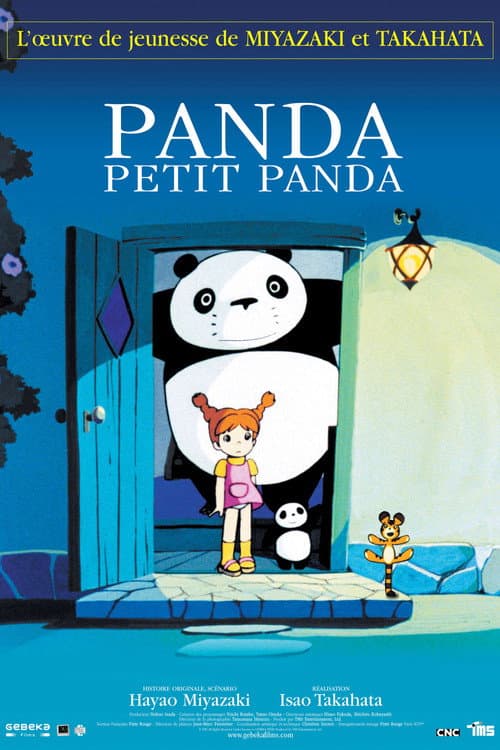
The heart of the film rests on an atypical family configuration: Mimiko lives alone, without parents, her grandmother being absent for several weeks. Far from being presented as a dramatic situation, this solitude is treated lightly, even as an enviable freedom. The film then constructs a substitute family between Mimiko, the baby panda and the adult panda, whom Mimiko spontaneously calls 'father'. This dynamic is the emotional engine of the narrative and carries a sincere message: family is built through affection and choice, not solely through blood. This is a rich angle to explore with a child, but it is worth noting that the complete absence of a responsible adult figure for weeks is presented without any concern, which may warrant parental comment.
Underlying Values
Mimiko is a model of autonomy and resourcefulness: she manages her daily life alone, takes initiatives, welcomes strangers with confidence and never allows herself to be overwhelmed by events. The film clearly values this independence as an admirable quality. Compassion and curiosity are also at the heart of the narrative, particularly in the way Mimiko treats animals. These values are conveyed naturally and without didacticism, which makes them all the more effective.
Violence
The film contains several sequences of physical peril: a confrontation with a tiger, a passage at the edge of a waterfall, a flooding scene where a character is swept underwater, and an episode aboard a runaway train. These moments are treated in an adventure register rather than genuine danger, and the tension remains moderate. The characters are clearly in distress only in a single scene. For a very young or sensitive child, some of these sequences may still provoke mild fright, but they fit within a coherent narrative logic and are resolved positively.
Sex and Nudity
Mimiko wears a short dress and her underwear is visible on several occasions, notably during cartwheels and tumbles. These images are not sexualised in the film's intent, which simply reflects the graphic standards of 1970s Japanese animation. They may nonetheless surprise a contemporary parent. There is nothing explicit or suggestive in the treatment of the character, but the point is worth flagging so that the parent is not caught off guard.
Substances
The adult panda smokes a pipe and clearly expresses his pleasure in doing so. The scene is not central but it is sufficiently present to be noticed by a child. In a film aimed at the very young, this implicit valorisation of tobacco by a positive and affectionate character is worth mentioning and, if necessary, commenting on.
Language
A few mild insults such as 'idiot' or 'stupid' appear in the dialogue. Nothing striking for the intended age group, but their presence is real.
Strengths
The film possesses a frank narrative energy and an emotional generosity that work well for young children. The relationship between Mimiko and the pandas is built with genuine tenderness, without excessive sentimentality. The treatment of the blended family is particularly successful: it is never moralising, it simply shows that love and shared responsibility are enough to create a home. For a child, this is an intuitive introduction to the idea that emotional bonds matter as much as biological ones. The pace is brisk, the adventure sequences are well balanced, and the whole remains coherent despite its short length.
Age recommendation and discussion points
The film is accessible from age 4 or 5 for children comfortable with mild sequences of tension, and without major reservations from age 6 onwards. Two angles of discussion are worth pursuing after viewing: ask the child what makes a family truly a family in his or her view, and return to the adult panda's pipe to remind them that smoking is not a nice habit, even in a character one likes.
Synopsis
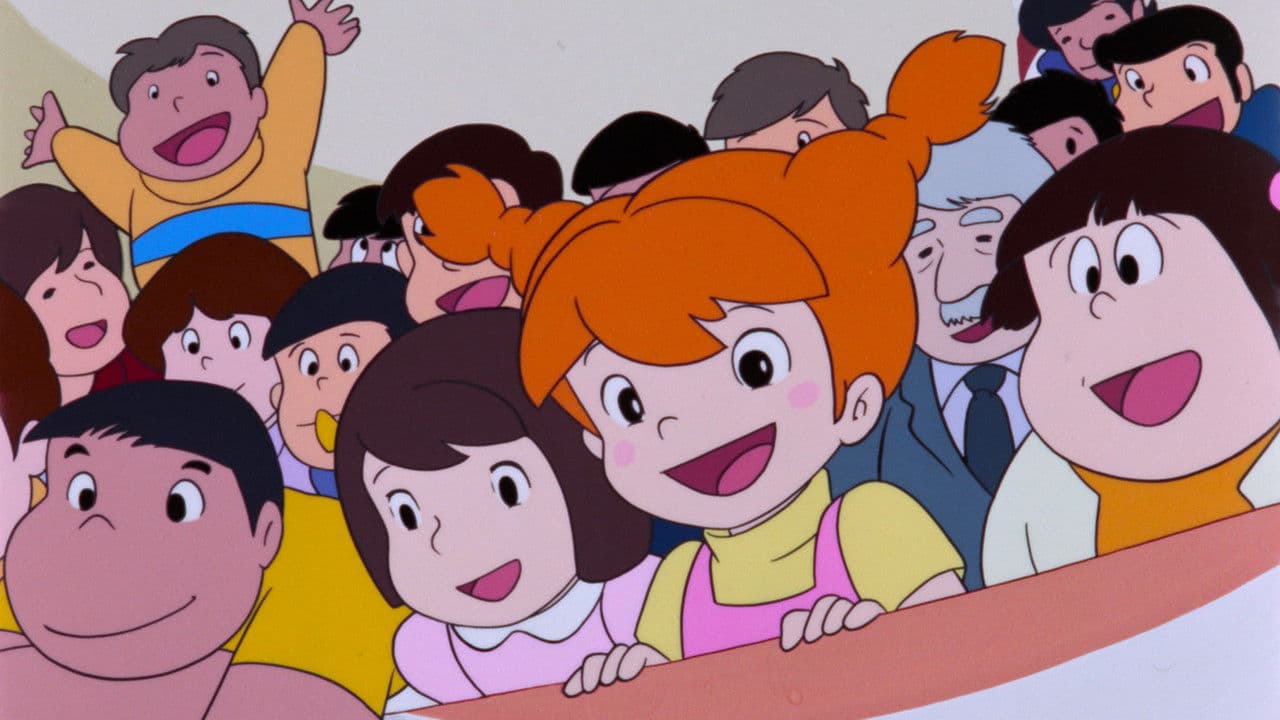
Cheerful Mimiko has a wonderfully strange family—a Panda for her Papa; and his son Panny, calls her Mom! When Panny follows Mimiko to school, he must pretend to be a teddy bear so Mimiko won't get into trouble. Despite his efforts to behave, Panny causes trouble in school and now the school is after Panny! Then, Panny makes a new friend, Tiny, a baby tiger who's wandered off from the circus.
About this title
- Format
- Feature film
- Year
- 1972
- Runtime
- 1h 11m
- Countries
- Japan
- Original language
- JA
- Directed by
- Isao Takahata
- Main cast
- Kazuko Sugiyama, Kazuo Kumakura, Yoshiko Ohta, Yuko Maruyama, Yasuo Yamada, Osamu Ichikawa, Tetsuya Kaji, Hiroko Maruyama, Yoneko Matsukane, Eken Mine
- Studios
- TOHO, Tokyo Movie
Content barometer
- Violence2/5Moderate
- Fear2/5A few scenes
- Sexuality1/5Allusions
- Language1/5Mild
- Narrative complexity0/5Simple
- Adult themes1/5Mild
Watch-outs
Values conveyed
- Courage
- Acceptance of difference
- Compassion
- Autonomy
- friendship
- helpfulness
- imagination
- family