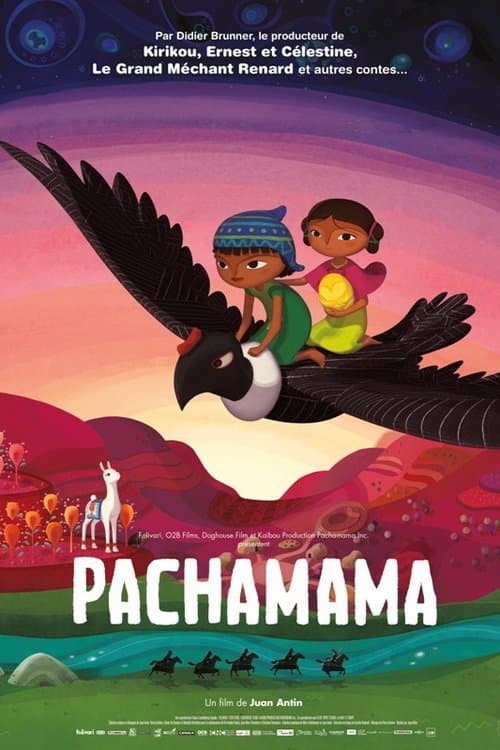
Pachamama
Does this age rating seem accurate to you?
Detailed parental analysis
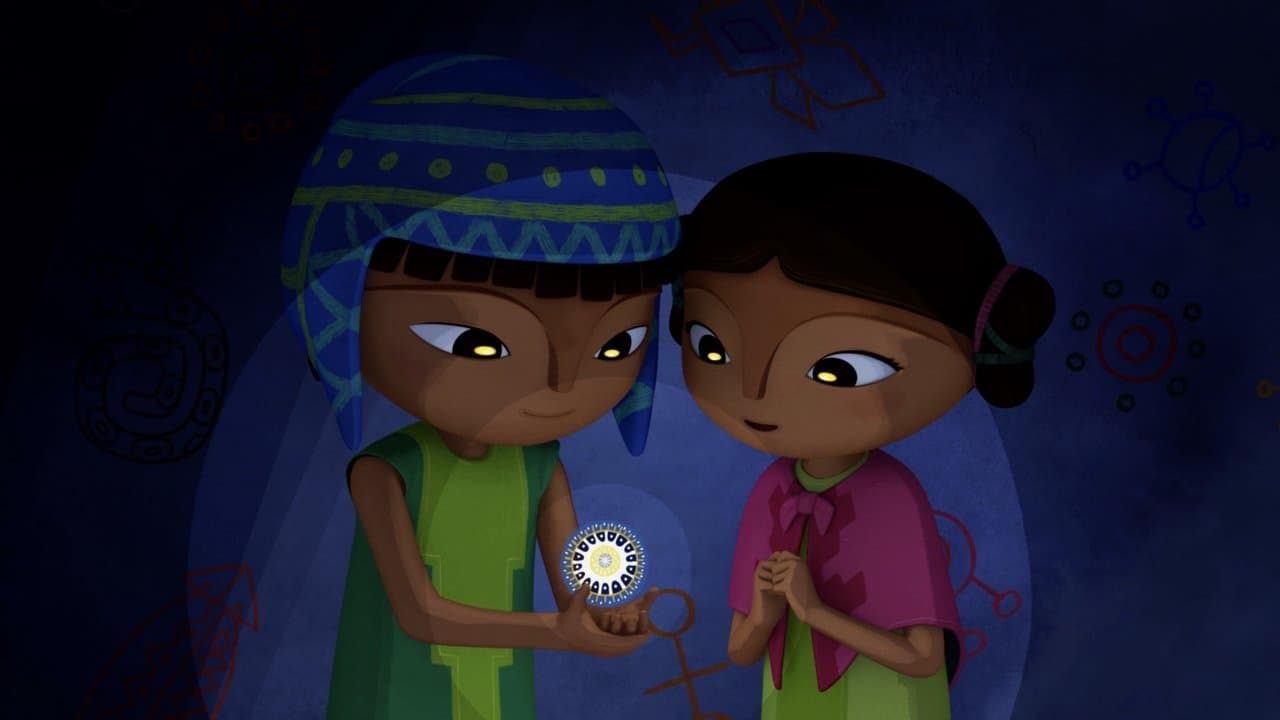
Pachamama is an adventure animation film bathed in vivid colours and an atmosphere that is both poetic and tense, rooted in the pre-Columbian culture of the Andes. The plot follows two children who set out to recover the sacred statue of their village, stolen by Spanish conquistadors, in a coming-of-age quest that confronts them with the violence of the adult world. The film is aimed primarily at young children and families, without entirely softening its message.
Underlying Values
The film carries a coherent and sincere ecological and anti-greed message: the pursuit of gold, whether from conquistadors or from the Incas themselves, is presented as a destructive force that sets men against nature and against one another. This nuanced positioning avoids the simplism of a purely colonialist discourse to point out greed as a universal flaw. Moreover, the journey of the two protagonists clearly values humility, a sense of community and the capacity to question one's own certainties. For Naïra in particular, disobedience takes the form of self-assertion against a rigid social order, which offers a useful angle for discussion with children about the boundary between blind obedience and responsible autonomy.
Violence
Violence is present in a significant way for a film intended for young children. The conquistadors shoot at children, decapitate serpents and burn maize fields before the viewer's eyes. A scene of a fall into a canyon keeps the viewer on edge. These sequences are not gratuitous: they serve to make the threat real and to give weight to the protagonists' quest. They remain stylised and do not descend into gore, but their intensity exceeds what a child under 6 years old can process serenely. This is an element to anticipate, especially for children who are sensitive to scenes of physical danger.
Social Themes
Spanish colonisation is the dramatic driving force of the film, and the cultural and environmental destruction it brings about is shown in a forthright manner. The conquistadors burn, plunder and destroy without meeting effective resistance from the outset. The film thus addresses, at a child's level, weighty historical realities such as conquest, the erasure of indigenous cultures and the devastation of the environment. These themes offer a valuable entry point for discussing history, power dynamics and respect for cultures with older children.
Discrimination
The conquistadors are constructed as antagonists without nuance, the collective embodiment of conquering evil, facing an indigenous village that embodies wisdom, spirituality and simplicity. This assumed manichaeism is functional for the target age, but it deserves to be flagged: the vision of Andean culture, whilst respectful in its intention, remains idealised. It may be useful to discuss this with older children, not to defend the conquistadors, but to teach them to recognise that a narrative can simplify a complex reality even with good intentions.
Substances
Villagers in a state of intoxication appear during a ritual. The scene is not flattering but it is visible and identifiable by an attentive child. Alcohol is associated with a context of collective celebration without being glorified or explained.
Parental and Family Portrayals
The film fits within the tradition of coming-of-age quests where children act in the absence of protective adults. Parental figures and village elders are present but overwhelmed or powerless in the face of external threat. It is precisely this absence of an adult safety net that forces the two protagonists to grow. The figure of grandmother Walumama, an ancestor and bearer of tradition, is by contrast treated with considerable respect, her death being evoked in a sober and dignified manner.
Strengths
The film distinguishes itself through remarkable artistic direction that draws on Andean iconography to offer visually rich settings and characters, with deep colours and careful symbolism. The music supports the atmosphere with genuine poetic coherence. On the narrative level, the dual arc of the two protagonists is well constructed: their initial differences in character and values create a convincing dynamic, and their respective evolution is clear without being over-explained. The film treats death, loss and collective responsibility with a restraint that respects the intelligence of young viewers. For families interested in pre-Columbian history or American Indian cultures, it is a rare and stimulating point of entry, far removed from habitual representations.
Age recommendation and discussion points
The film is suitable from age 7 for a child without particular sensitivity to scenes of physical danger, rather 8 or 9 years old for fully serene viewing. Two angles are worth opening up after viewing: ask the child why both sides, conquistadors and Incas, are fighting over gold, and what that says about greed in general; and discuss Naïra's decision to disobey in order to do what she believes is right, distinguishing wilful disobedience from that grounded in values.
Synopsis
A young boy living in a remote village in the Andes Mountains dreams of becoming shaman.
About this title
- Format
- Feature film
- Year
- 2018
- Runtime
- 1h 10m
- Countries
- Canada, France, Luxembourg
- Original language
- FR
- Directed by
- Juan Antín
- Main cast
- Andrea Santamaria, India Coenen, Saïd Amadis, Marie-Christine Darah, Alex Harrouch, Vincent Ropion, Gérard Surugue, Nola Klop
- Studios
- Folivari, O2B Films, Doghouse Films, Kaïbou Production
Content barometer
- Violence3/5Notable
- Fear3/5Notable tension
- Sexuality0/5None
- Language0/5None
- Narrative complexity0/5Simple
- Adult themes1/5Mild
Values conveyed
- Courage
- Friendship
- Autonomy
- respect for nature
- cultural identity
- perseverance
- solidarity
- humility
- belonging