
Over the Garden Wall
Does this age rating seem accurate to you?
Detailed parental analysis
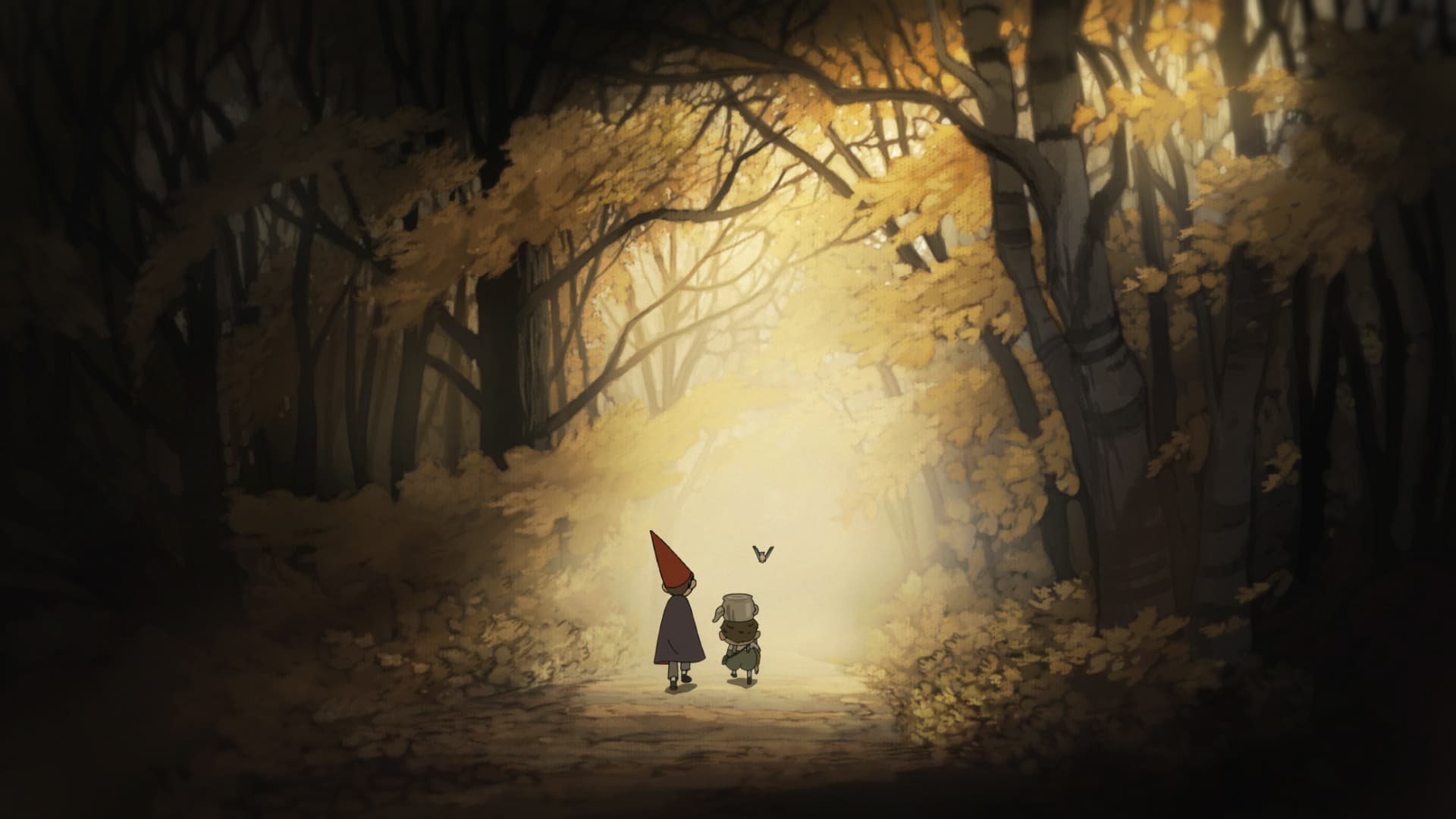
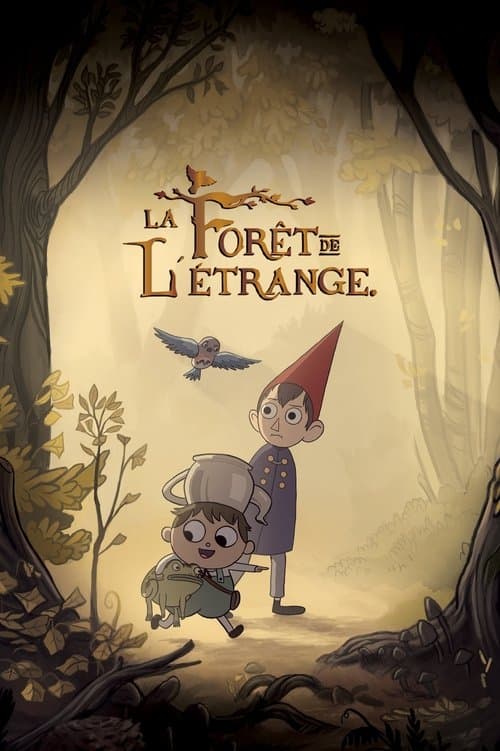
Over the Garden Wall is an American animated miniseries with a deliberately twilight atmosphere, blending winter tales, 19th-century American folklore and absurd humour within a setting that is both enchanting and unsettling. The plot follows two half-brothers lost in a mysterious and threatening forest, seeking their way home whilst a dark presence stalks them. Despite its charming visuals and often light-hearted tone, the series is primarily aimed at children aged 9 and above, pre-teens and adults drawn to strange literature.
Violence
Violence is presented in a fantastical rather than realistic manner, but certain sequences are genuinely harrowing for young children. A creature with luminous eyes like an infernal beast physically threatens the characters, an adult character is incapacitated by a blow to the head, and a scene of a witch melting to death is shown in grotesque and visual fashion. The final revelation that the entire adventure was actually unfolding during the boys' progressive drowning constitutes potentially disturbing content for those under 8 or 9 years old. These elements are never gratuitous: they serve the logic of an initiatory tale in which death is a real, unvarnished presence, which gives the narrative its density and emotional resonance.
Underlying Values
The moral heart of the series rests on fraternal responsibility: Wirt, the older brother, gradually learns to take on his role as protector rather than evade it, and the two boys ultimately come to risk their lives for each other. The series also questions the refusal to grow up, the fear of commitment and the temptation to let oneself drift into the stillness of a fantastical world rather than confront reality. The character of Beatrice, who betrays the children to serve her own interests before redeeming herself, offers a nuanced moral arc on guilt, reparation and forgiveness. These are exceptional materials for discussion between a parent and a child or pre-teen.
Parental and Family Portrayals
Protective adult figures are either absent, threatening or deceptive. The witch Adelaide initially appears as a kindly old woman before revealing she wants to reduce the children to servitude, which constitutes a deliberate subversion of the protective adult motif. The adult guide whom the boys encounter, the woodcutter, is himself lost and trapped in an illusion. This structure, typical of fairy tales, places children in a position of forced autonomy where they can rely only on themselves. It is an ancient literary convention, but one worth naming explicitly with young children who are anxious about the reliability of adults.
Social Themes
The series draws from 19th-century North American folklore and the tradition of Eastern European winter tales, which gives it genuine cultural dimension. It constitutes a living introduction to an aesthetic of strangeness that has informed children's literature for two centuries. For a curious pre-teen, it is a gateway to a broader literary and musical imagination.
Strengths
The series is a rare artistic achievement in the landscape of children's animation. Its writing is dense, its pacing controlled, and its soundtrack, combining American folk, a cappella singing and uneasy ballads, contributes powerfully to the atmosphere. The humour is authentic and never condescending: it coexists with anxiety without defusing it, which is the hallmark of serious narrative work. The ten-episode structure functions like a novel in chapters, with a final revelation that compels one to reread the entire adventure from another perspective. It is one of the rare animations that rewards rereading and which treats children as capable of tolerating ambiguity and emotional discomfort.
Age recommendation and discussion points
The series is not recommended before age 8 and fully suitable from age 9 to 10 for a child comfortable with unsettling atmospheres, rather 11 or 12 for calm and unaccompanied viewing. Two angles of discussion are particularly valuable after watching: ask the child why Wirt struggles to be an older brother at first and what causes him to change, and explore together why the adults in the tale are almost never genuine protectors, drawing links with other stories they know.
Synopsis
Two brothers, Wirt and Greg, find themselves lost in the Unknown; a strange forest adrift in time. With the help of a wise old Woodsman and a foul-tempered bluebird named Beatrice, Wirt and Greg must travel across this strange land, in hope of finding their way home. Join them as they encounter surprises and obstacles on their journey through the wood.
Where to watch
Availability checked on Apr 21, 2026
About this title
- Format
- TV series
- Year
- 2014
- Runtime
- 12m
- Countries
- United States of America
- Original language
- EN
- Directed by
- Patrick McHale, Katie Krentz
- Main cast
- Elijah Wood, Collin Dean, Melanie Lynskey
- Studios
- Cartoon Network Studios
Content barometer
- Violence2/5Moderate
- Fear4/5Intense
- Sexuality0/5None
- Language0/5None
- Narrative complexity1/5Accessible
- Adult themes0/5None
Watch-outs
- Death
- Abuse
Values conveyed
- Courage
- Loyalty
- Autonomy
- Forgiveness
- brotherhood
- hope
- friendship
- perseverance
- self-acceptance
- sacrifice