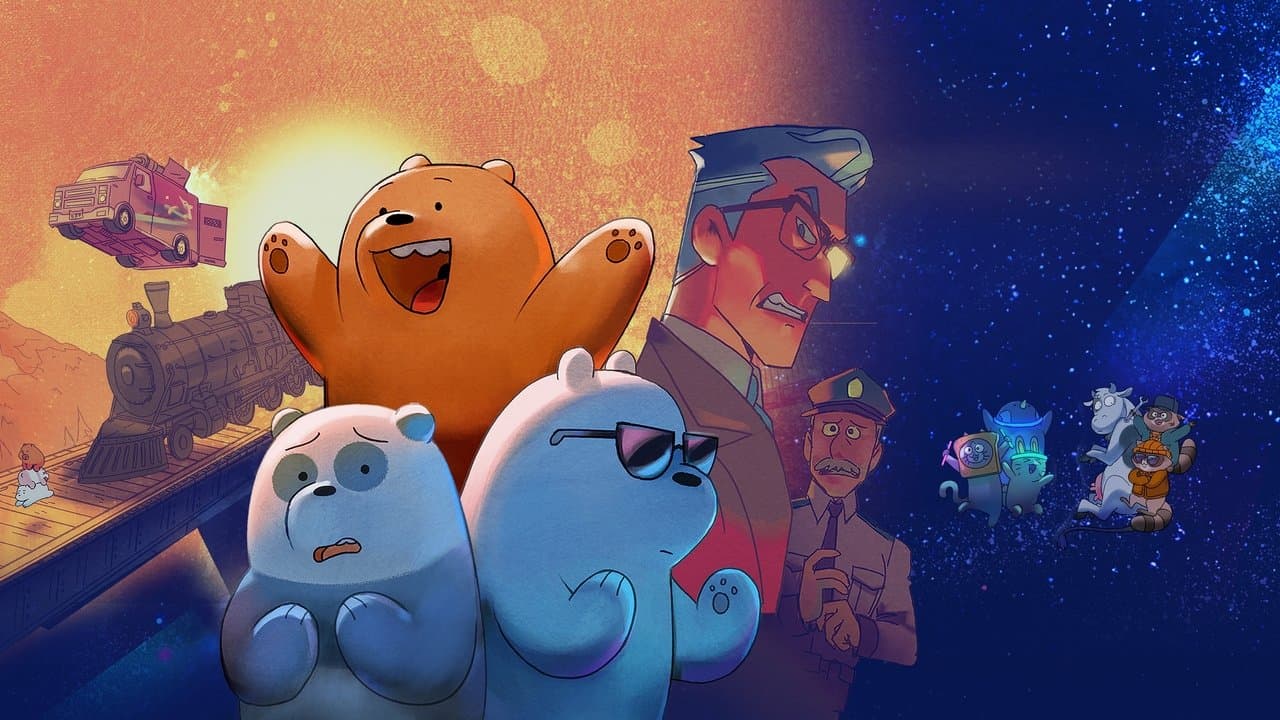


We Bare Bears: The Movie
We Bare Bears: The Movie
Your feedback improves this guide
Your feedback highlights guides that need a second look and keeps the rating trustworthy.
Does this age rating seem accurate to you?
Sign in to vote
Watch-outs
What this film brings
Content barometer
Violence
2/5
Moderate
Fear
2/5
A few scenes
Sexuality
0/5
None
Language
0/5
None
Narrative complexity
0/5
Simple
Adult themes
0/5
None
Expert review
This animated movie keeps the fast, playful spirit of the three bears while expanding it into a larger road adventure built for family viewing. The main sensitive elements are repeated chases, arrests, cages, separation between the brothers, and a strict human antagonist who may feel intimidating to very young children, even though the presentation stays highly stylized and non graphic. The overall intensity is moderate, because the danger appears regularly but is framed in a cartoon mode, with limited visible harm and a tone that remains energetic more than frightening. There are also emotional moments involving rejection, helplessness, and conflict when the bears feel unwanted or blamed by others. Parents may want to watch alongside children who are sensitive to injustice, capture scenes, or sibling separation, and help them process the movie's message about belonging, loyalty, and fear of those who seem different.
Synopsis
When Grizz, Panda, and Ice Bear's love of food trucks and viral videos get out of hand, the brothers are now chased away from their home and embark on a trip to Canada, where they can live in peace.
Difficult scenes
Early in the film, a nightmare shows the bears as cubs trapped near a fast approaching train. The sequence is brief and cartoon styled, but the idea of sudden danger may unsettle younger viewers, especially because it later returns as an anxious memory. After a major public mistake, the bears become targets of the authorities and are treated as a civic problem. Several scenes involve pursuit, animal control vehicles, threats of capture, and a strong sense of unfairness that may affect children who are sensitive to rejection or punishment. At an important point in the journey, the brothers argue sharply because of stress and exhaustion. The scene stays appropriate for children, yet it includes anger, sadness, and fear of separation, which may land more strongly than the slapstick action around it. The movie also shows animals being locked in cages and prepared to be sent far away from home. Even without graphic violence, the imagery of captivity and forced separation may raise worry or questions for younger children.
Where to watch
No verified platform for the US market yet. We keep this section updated as availability changes.
Availability checked on Apr 01, 2026
About this title
- Format
- Feature film
- Year
- 2020
- Runtime
- 1h 9m
- Countries
- United States of America
- Original language
- EN
- Studios
- Cartoon Network Studios
Content barometer
Violence
2/5
Moderate
Fear
2/5
A few scenes
Sexuality
0/5
None
Language
0/5
None
Narrative complexity
0/5
Simple
Adult themes
0/5
None
Expert review
This animated movie keeps the fast, playful spirit of the three bears while expanding it into a larger road adventure built for family viewing. The main sensitive elements are repeated chases, arrests, cages, separation between the brothers, and a strict human antagonist who may feel intimidating to very young children, even though the presentation stays highly stylized and non graphic. The overall intensity is moderate, because the danger appears regularly but is framed in a cartoon mode, with limited visible harm and a tone that remains energetic more than frightening. There are also emotional moments involving rejection, helplessness, and conflict when the bears feel unwanted or blamed by others. Parents may want to watch alongside children who are sensitive to injustice, capture scenes, or sibling separation, and help them process the movie's message about belonging, loyalty, and fear of those who seem different.
Synopsis
When Grizz, Panda, and Ice Bear's love of food trucks and viral videos get out of hand, the brothers are now chased away from their home and embark on a trip to Canada, where they can live in peace.
Difficult scenes
Early in the film, a nightmare shows the bears as cubs trapped near a fast approaching train. The sequence is brief and cartoon styled, but the idea of sudden danger may unsettle younger viewers, especially because it later returns as an anxious memory. After a major public mistake, the bears become targets of the authorities and are treated as a civic problem. Several scenes involve pursuit, animal control vehicles, threats of capture, and a strong sense of unfairness that may affect children who are sensitive to rejection or punishment. At an important point in the journey, the brothers argue sharply because of stress and exhaustion. The scene stays appropriate for children, yet it includes anger, sadness, and fear of separation, which may land more strongly than the slapstick action around it. The movie also shows animals being locked in cages and prepared to be sent far away from home. Even without graphic violence, the imagery of captivity and forced separation may raise worry or questions for younger children.