
Open Season
Does this age rating seem accurate to you?
Detailed parental analysis
Forest Rebels is a lighthearted family animated comedy with a playful, deliberately silly tone, driven by humour rooted in physical comedy and absurd situations. The plot follows a domesticated bear forced to survive in wild forest alongside an overexcited squirrel, as hunting season opens around them. The film targets children aged 6 to 10 primarily, with some knowing winks for parents.
Violence
Violence is omnipresent but systematically treated in cartoon fashion: acorns hurled as projectiles, vehicle explosions, falls into rapids, and above all a hunter who actively pursues the animal protagonists with gunfire throughout the narrative. This hunter character, presented as a constant and unambiguous threat, is the principal vehicle of narrative peril. His aggressive and repeated behaviour may worry more sensitive children, even though the visual treatment remains firmly in burlesque register. A recurring gag involves rabbits being launched, struck and used as objects, which, beneath its comedic veneer, normalises a form of violence inflicted on defenceless characters. For children aged 6 and above, this cartoon framework is generally sufficient to defuse any lasting anxiety.
Underlying Values
The film constructs its central arc around an improbable friendship and the necessity of letting go of those we love, two solid messages accessible to young children. The group dynamic towards the film's end, in which animals organise collectively to resist hunters, endorses solidarity and collective action. However, the narrative presents hunting in univocal fashion, exclusively from the perspective of the prey, which is not problematic in itself but merits flagging to families whose culture includes hunting practices. Self-confidence and autonomy are likewise narrative drivers for the main character, whose arc of progression is clear and well-constructed for young audiences.
Discrimination
The film readily exploits cultural stereotypes in constructing its secondary characters: squirrels are given Scottish accents and mannerisms, ducks are afforded French affectation, and male deer are presented as arrogant, superficial jocks. These caricatures stem from lazy writing rather than malicious intent, but they reproduce shortcuts that children absorb without critical distance. This is a concrete point worth raising after viewing to help the child distinguish joke from stereotype.
Language
Humour is largely rooted in the physical: flatulence, excrement, snot, underwear and spitting constitute a recurring comedic thread running through the entire film. A few double entendre wordplays trade in slightly ribald adult register, notably around the English word 'nuts', exploited for its double meaning. One line delivered with a Scottish accent has been flagged as phonetically resembling a crude English word. None of these elements constitutes a serious pitfall for children aged 6 and above, but parents sensitive to scatological humour should know it is here particularly abundant and unapologetic.
Sex and Nudity
The film contains no explicit nudity or sexuality. The few adult allusions remain veiled and will pass over the heads of the intended child audience. A light flirtatious register is present between certain characters, without development or consequence.
Strengths
The film honestly fulfils its contract as an unpretentious family comedy. The central duo works thanks to a well-exploited contrast of temperaments, and the pace is sufficiently brisk to hold young viewers' attention. The mechanics of friendship between two beings in whom everything opposes works well and offers genuine emotional progression. The film lacks the depth of major animated productions in its genre, but it delivers a message about letting go emotionally that rings true for a child of the target age.
Age recommendation and discussion points
The film is suitable from age 6 onwards, with caution for children particularly sensitive to threatening characters, owing to the hunter whose presence is sustained throughout. Two angles of discussion merit attention after viewing: why are secondary characters constructed from national clichés and what does the child make of these shortcuts, and what does it mean to want to keep someone you love versus allowing them their freedom.
Synopsis
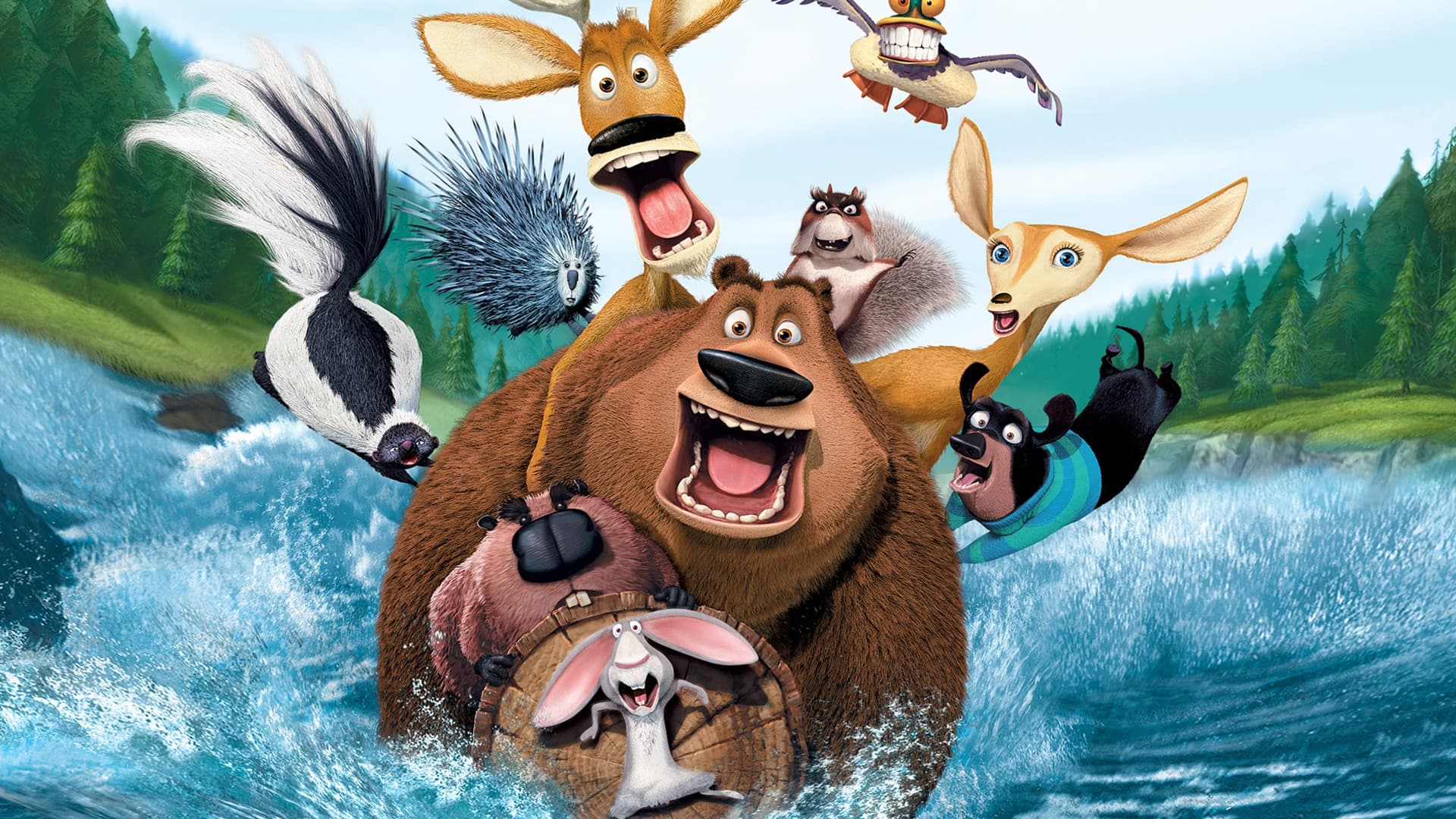
Boog, a domesticated 900lb. Grizzly bear finds himself stranded in the woods 3 days before Open Season. Forced to rely on Elliot, a fast-talking mule deer, the two form an unlikely friendship and must quickly rally other forest animals if they are to form a rag-tag army against the hunters.
Where to watch
Availability checked on Apr 26, 2026
About this title
- Format
- Feature film
- Year
- 2006
- Runtime
- 1h 30m
- Countries
- United States of America
- Original language
- EN
- Directed by
- Roger Allers, Jill Culton
- Main cast
- Martin Lawrence, Ashton Kutcher, Gary Sinise, Debra Messing, Billy Connolly, Georgia Engel, Jon Favreau, Jane Krakowski, Gordon Tootoosis, Patrick Warburton
- Studios
- Sony Pictures Animation, Columbia Pictures
Content barometer
- Violence2/5Moderate
- Fear2/5A few scenes
- Sexuality1/5Allusions
- Language2/5Moderate
- Narrative complexity1/5Accessible
- Adult themes0/5None
Watch-outs
- Ethnic or racial stereotypes
- Gender stereotypes
- Violence
Values conveyed
- Friendship
- Acceptance of difference
- Perseverance
- Autonomy
- teamwork
- courage
- acceptance