
One Piece
ワンピース
Does this age rating seem accurate to you?
Detailed parental analysis
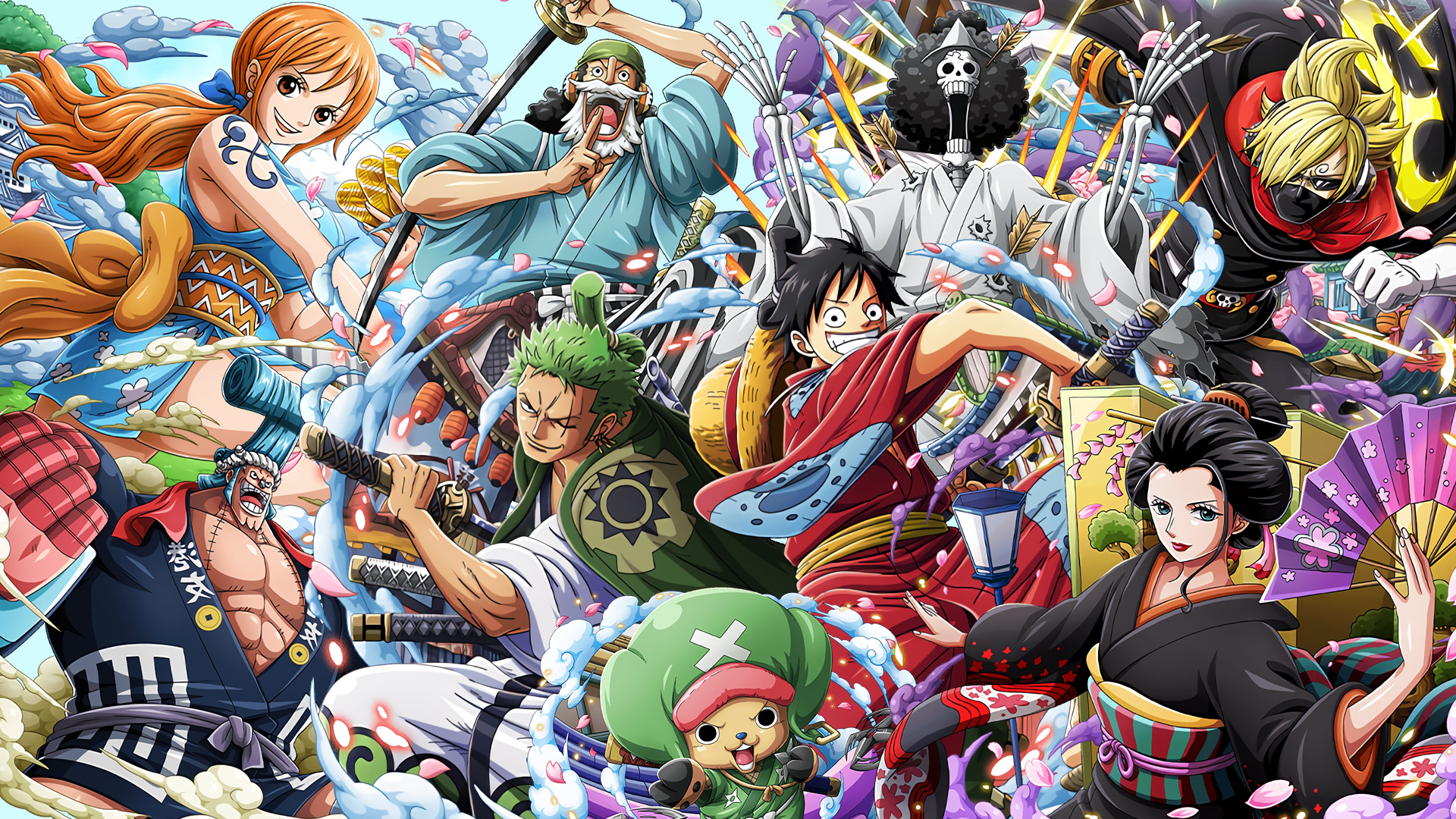
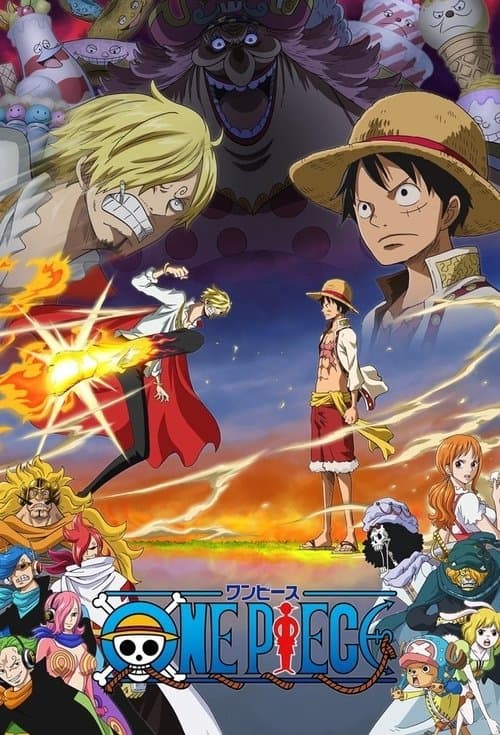
One Piece is an animated adventure and action series with an overall upbeat tone, driven by overflowing energy and recurring humour, but it does not shy away from plunging into dark and violent sequences. The plot follows Monkey D. Luffy, a young boy with supernatural abilities, who sets out to sea to recruit a crew and become the King of the Pirates by finding the legendary treasure One Piece. The series is designed for a preteen and teenage audience, but its genuine violence and growing moral complexity make it unsuitable for young children despite its colourful appearance.
Violence
Violence is one of the most salient elements of the series and deserves serious attention from parents. Fights are frequent, often intense, and accompanied by visible blood on screen, sometimes in significant quantities. Certain scenes reach a marked level of severity: a public execution by sword stabbing is cited among the most disturbing passages, and a child character practises self-harm with a blade in an emotionally charged narrative context. These moments are not gratuitous in the strict sense; the series lends them genuine dramatic weight, but their visual intensity remains strong. Child self-harm in particular deserves to be anticipated by parents before viewing with a sensitive or young child.
Underlying Values
The heart of the narrative rests on solid and legible values: unshakeable friendship, loyalty to one's group, perseverance in the pursuit of a dream, and self-sacrifice to protect those one loves. This foundation is consistent and sincerely conveyed throughout the series. The morally ambiguous dimension comes from the status of the heroes: they are pirates, officially criminals in the eyes of the law, but they act with a sense of fair play and an ethics that their official adversaries, often corrupt, do not possess. The series thus constructs an explicit critique of governmental authority and argues for individual freedom against institutional oppression, a message that deserves to be discussed with children to prevent them from drawing too simple an equivalence between outlaws and the virtuous.
Sex and Nudity
The sexualisation of female characters increases progressively as episodes advance. It is absent or discreet in the early arcs, but becomes increasingly pronounced over time: suggestive clothing, stereotyped attitudes, staging of female bodies for spectacle purposes. The phenomenon is not explosive in the opening episodes but becomes firmly established in the series' aesthetic. This is a useful angle for discussion with teenagers, particularly regarding how female characters are represented in comparison to their male counterparts.
Social Themes
The series develops a coherent political vision centred on the corruption of institutions and the legitimacy of resisting unjust power. The World Government and its representatives are frequently depicted as forces of oppression, whilst outcasts and outlaws often embody genuine justice. These themes deepen as narrative arcs progress and offer rich material for discussions on politics, justice, and the legitimacy of civil disobedience.
Substances
Alcohol and tobacco are present in the series without being particularly dramatised or condemned. Certain characters smoke or drink regularly, and these behaviours are treated as ordinary character traits rather than as subjects of concern. It is not a matter of explicit valorisation, but of normalisation through natural integration into the universe.
Language
Coarse language is present in uncensored versions of the series, with terms such as 'bitch', 'shit', 'bastard' or 'damn' audible in the original or alternative voice dubs. The French version may vary depending on the edition, but parents who watch with their children uncensored English-language versions should expect a verbally pronounced register.
Strengths
One Piece is a work of rare narrative ambition for the animated serial format. Character construction is progressive and thorough: each crew member possesses a painful backstory treated with genuine emotional depth, and their relationships evolve with a consistency that rewards viewers over time. The series excels at alternating absurd humour and sincere gravity without one neutralising the other, lending it a unique tone difficult to find elsewhere in the genre. It also develops a mythology of considerable richness, with narrative arcs that interlock across dozens of episodes and pose lasting questions about freedom, justice, and solidarity. For a teenager capable of sustaining engagement over the long term, it is a solid initiation into complex serialised narration.
Age recommendation and discussion points
The series is best reserved for children of 12 years and above, with a preference for 14 years for fully serene viewing given the intensity of certain violence scenes and the self-harm scene. Two concrete discussion points to open after the opening episodes: why can the heroes be pirates and remain morally admirable, and what does this tell us about the difference between law and justice? And, later in the series, how does the image of women evolve in relation to that of men, and why?
Synopsis
Years ago, the fearsome Pirate King, Gol D. Roger was executed leaving a huge pile of treasure and the famous "One Piece" behind. Whoever claims the "One Piece" will be named the new King of the Pirates. Monkey D. Luffy, a boy who consumed a "Devil Fruit," decides to follow in the footsteps of his idol, the pirate Shanks, and find the One Piece. It helps, of course, that his body has the properties of rubber and that he's surrounded by a bevy of skilled fighters and thieves to help him along the way. Luffy will do anything to get the One Piece and become King of the Pirates!
Where to watch
Availability checked on Apr 09, 2026
About this title
- Format
- TV series
- Year
- 1999
- Runtime
- 24m
- Countries
- Japan
- Original language
- JA
- Main cast
- Mayumi Tanaka, Kazuya Nakai, Akemi Okamura, Kappei Yamaguchi, Hiroaki Hirata
- Studios
- Toei Animation, Fuji Television Network, Avex Trax, Shueisha, ADK
Content barometer
- Violence4/5Strong
- Fear3/5Notable tension
- Sexuality2/5Mild
- Language2/5Moderate
- Narrative complexity1/5Accessible
- Adult themes2/5Present
Watch-outs
- Death
- Violence
- Gender stereotypes
Values conveyed
- Courage
- Friendship
- Perseverance
- Loyalty
- solidarity
- freedom
- dreams