
Once Upon a Time... Life
Does this age rating seem accurate to you?
Detailed parental analysis
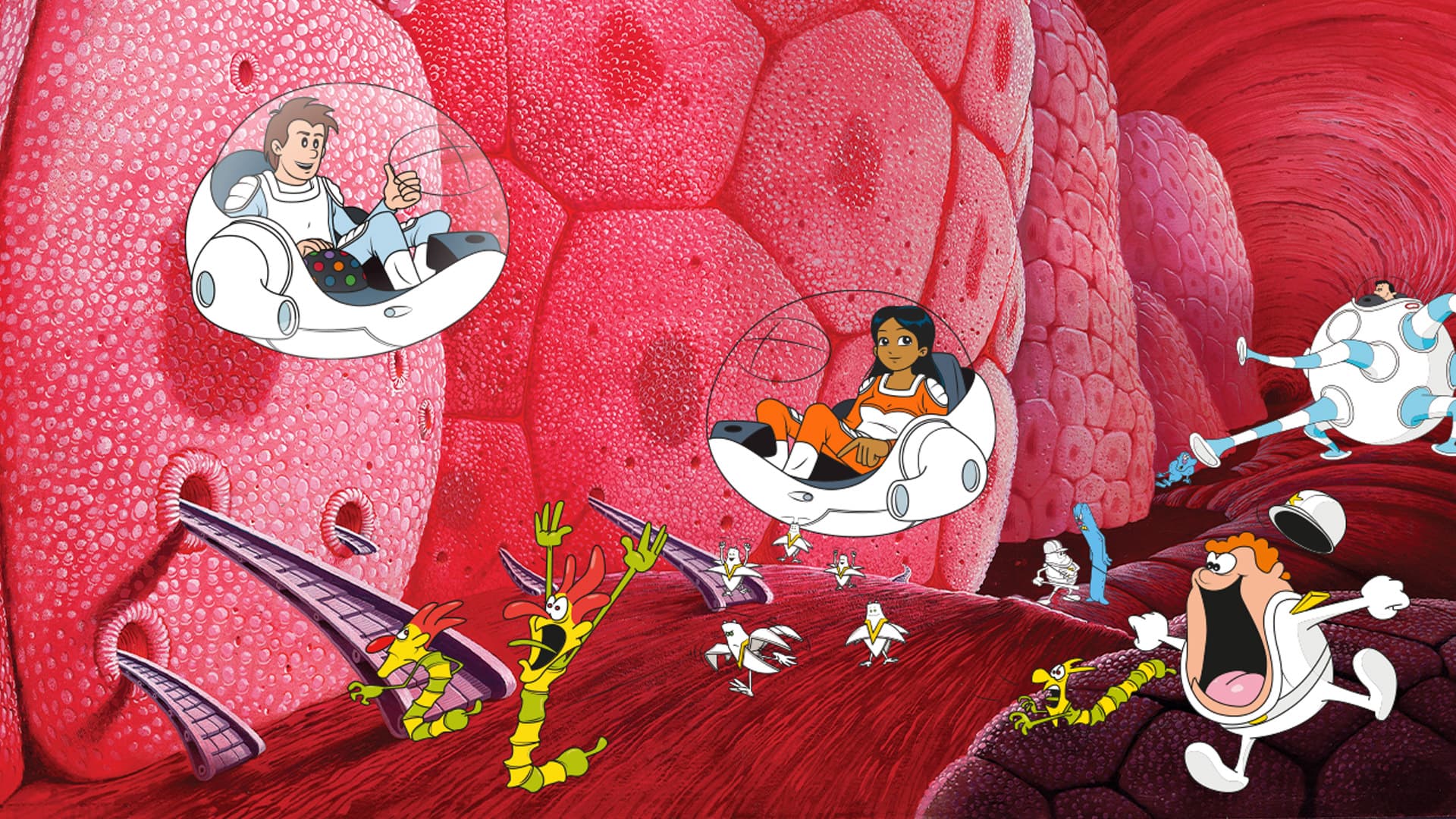
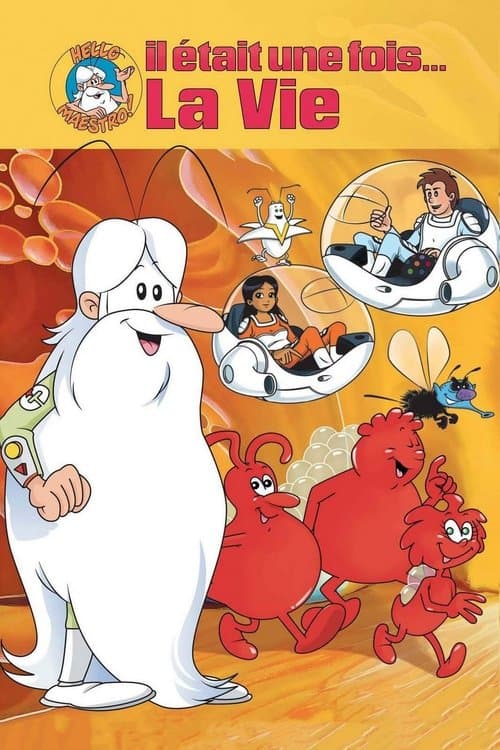
Once upon a time... Life is an educational animated series with a warm and playful tone, designed to explain to children how the human body works through characters embodying red blood cells, antibodies and other cells. Each episode takes viewers inside the body to show how it defends itself, repairs itself and functions day to day. The series is aimed primarily at school-age children, with a clearly educational ambition that makes it as much a learning tool as entertainment.
Underlying Values
The series is entirely structured around cooperation: each type of cell has a precise role, and it is their collective action that allows the body to survive external threats. Individualism has no place here, and no character manages alone. This model of functional solidarity is coherent and never preachy: it flows naturally from the biology represented. In parallel, the series explicitly promotes good hygiene practices and behaviours that preserve health, with an acknowledged pedagogical intention. It is a form of benevolent conformism, oriented towards self-care, which deserves to be discussed with children so as not to reduce health to mere obedience to rules.
Violence
Some episodes show confrontations between the body's immune defences and animated pathogens, bacteria or viruses. These combat scenes are stylised and integrated into a clear narrative logic: the body defends itself, the enemies are repelled. The violence remains symbolic and never gratuitous, but younger children or those sensitive to tense situations could be momentarily disturbed by the intensity of certain sequences. The effect is generally positive in the medium term: understanding why the body fights helps to demystify these representations.
Social Themes
The series addresses public health issues indirectly, notably bodily hygiene, diet and the effects of external threats on the organism. Some episodes tackle themes such as pollution or substances harmful to the body, rooted in an environmental and health consciousness particular to their era. These angles offer good opportunities for discussion about the relationship between individual behaviours and collective health.
Strengths
The series built a visual pedagogy that was remarkably effective for its time: by personifying each component of the body, it makes complex subject matter accessible without compromising scientific accuracy. The analogy between the cell and the character is consistently maintained throughout the series, allowing children to retain actual biological mechanisms through memorable narrative situations. Several generations of children have indeed absorbed notions of physiology thanks to this series, making it a rare case of animation with lasting educational reach. The emotional dimension of the characters, despite dated graphics, remains functional and is enough to sustain engagement and curiosity.
Age recommendation and discussion points
The series is suitable from age 7 onwards for relaxed viewing, and can be introduced from age 5 or 6 in the presence of an adult to accompany the combat sequences. After viewing, two angles of discussion are particularly fruitful: asking the child to explain in their own words what white blood cells do, to consolidate biological understanding, and exploring with them why taking care of one's body is a responsibility to oneself and not merely a rule imposed from outside.
Synopsis
Attention please! Are you ready for an adventurous tour through the human body? With a lot of humour, our physical appearance is being introduced from head to toe along cells and organs in an educational way. The heart, blood, nerves and kidneys, each single one is a miracle which renders life possible.
About this title
- Format
- TV series
- Year
- 1987
- Runtime
- 26m
- Countries
- France, Belgium, Canada, Italy, Japan, Netherlands, Spain
- Original language
- FR
- Directed by
- Albert Barillé
- Main cast
- Roger Carel, Gilles Laurent, Marie-Laure Beneston, Alain Dorval, Henry Djanik
- Studios
- Procidis, Eiken
Content barometer
- Violence1/5Mild
- Fear1/5Mild
- Sexuality0/5None
- Language0/5None
- Narrative complexity1/5Accessible
- Adult themes0/5None
Watch-outs
Values conveyed
- Courage
- Acceptance of difference
- Perseverance
- Autonomy
- curiosity
- health
- learning
- cooperation